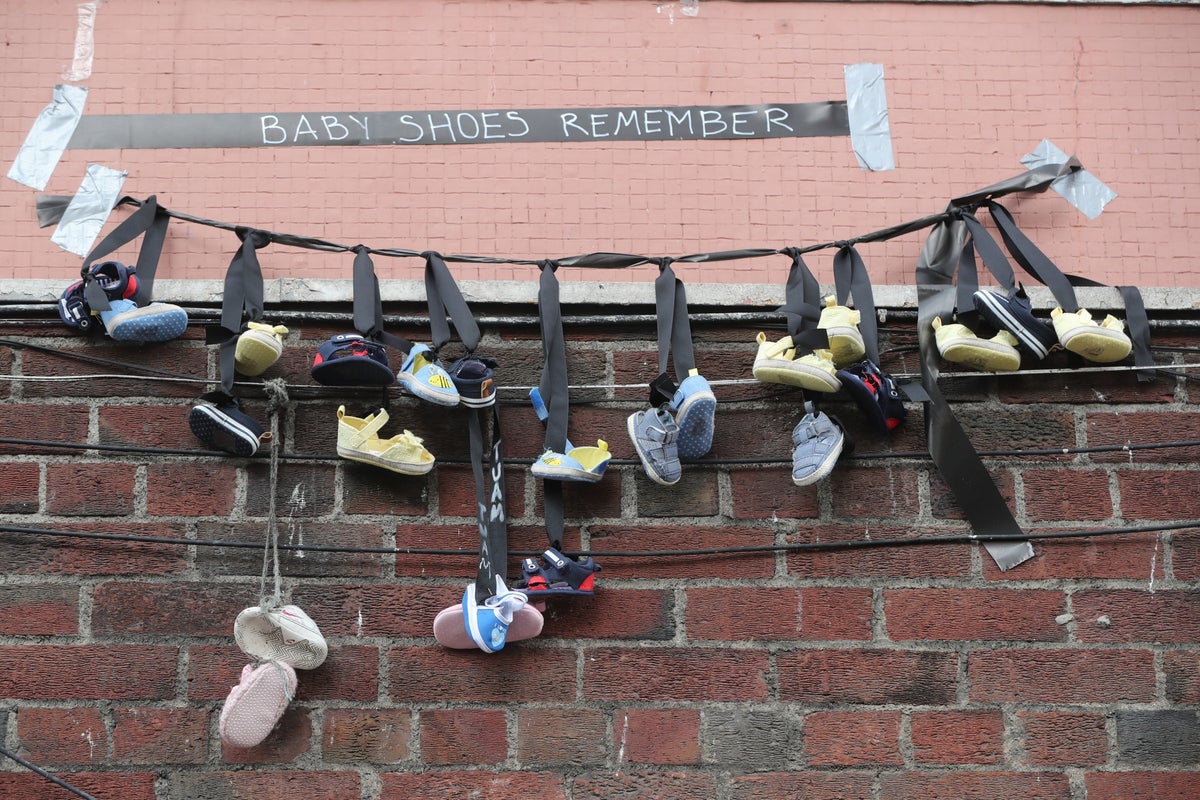
Forensic teams in County Galway just uncovered the remains of 22 more infants at the former St Mary's Mother and Baby Home. That brings the total count to 99 sets of infant remains recovered since formal excavations began in July 2025.
If you've followed this story over the years, you might assume every discovery happens inside the notorious underground sewage tanks. That isn't what happened here.
This latest recovery happened in a spot that had been covered in gravel and used as a drive-through access area for vehicles. No headstones marked the soil. No cemetery walls gave a hint of what lay underneath.
For decades, families were told vague stories about where their missing children ended up. Now, precise forensic archaeology is replacing decades of silence with physical evidence.
What the Excavation Teams Found Outside the Memorial Garden
Between June 1 and July 15, 2026, workers carefully dug through an outer patch of the property near the Dublin Road site. They were searching an area identified on a 1970s Galway County Council planning map that hinted at a potential burial zone.
Instead of mass uncoffined burials, the team found small, individual wooden coffins buried closely together. Most were single-shouldered coffins painted white, though previous reports from the site noted rare instances where two or three infants rested in a single coffin. Time had rotted the wood, but the distinct archaeological outlines remained intact.
Daniel MacSweeney, who heads the Office of the Director of Authorised Intervention Tuam (ODAIT), pointed out that starting the search outside the central memorial garden was a calculated risk that paid off. Leaving the complex subterranean chambered tanks for later gave his team room to establish a methodical rhythm.
Finding 99 infants in a zone where nobody knew burials existed proves how widespread the interments were across the entire property.
The Physical Obstacles Facing the Forensic Team
This isn't an open field in the middle of nowhere. The former institution sits right in the middle of a modern residential housing estate.
Senior forensic consultant Dr. Niamh McCullagh described how back gardens literally abut the excavation boundaries. That tight space creates major logistical headaches.
Beyond the spatial limits, the physical conditions are brutal for archaeological work.
- The remains sit tightly packed together, requiring hand tools and agonizingly slow brush work.
- Each individual grave represents its own distinct archaeological context that must be logged and mapped independently.
- The main chambered septic tanks located in the memorial garden sit more than three meters underground, split into 20 adjacent concrete chambers.
Workers aren't just digging up dirt. They're reconstructing individual crime scenes across decades of neglect.
Moving from Recovery to Forensic Identification
Unearthing the remains is only step one. The real challenge is giving these children back their identity.
At the end of July 2026, a dedicated forensic facility and mortuary at the HSE Toghermore site on the outskirts of Tuam opens its doors. Up to this point, recovered remains were stored at a temporary facility in Headford. Now, experts will analyze the bones in a purpose-built laboratory.
Genetic mapping plays the starring role here. Over the recent digging period, the team gathered seven additional family DNA reference samples, bringing the total collected reference samples to 62. Forensic Science Ireland works with ODAIT to match DNA from surviving relatives in Ireland, the UK, and the United States against genetic material extracted from the bones.
It's slow, painstaking work. Nobody expects answers overnight, but the infrastructure is finally in place to deliver actual results.
How Catherine Corless Exposed the Truth
To understand why this excavation matters so deeply, you have to look back at how it started.
In 2014, local historian Catherine Corless spent years digging through local archives and death registries. She discovered death certificates for 796 children who died at St Mary's between 1925 and 1961. The causes of death ranged from severe malnutrition and measles to tuberculosis and gastroenteritis. Average death rates worked out to roughly two babies every week.
Yet, when Corless looked for burial records, she found nothing. Zero official entries detailing where those 796 children were buried.
Her relentless research forced the Irish state to launch a commission of investigation. In 2017, test probes confirmed "significant quantities" of human remains inside disused underground sewage tanks on the site. State apologies followed in 2021, but actual physical recovery took nearly another decade to begin.
Why the Tuam Investigation is Far From Over
Initial timelines suggested the recovery process might wrap up within two years. Daniel MacSweeney already confirmed that estimate was overly optimistic. The excavation will extend past its original timeframe because the sheer density of burials demands extra caution.
If you suspect you have a family member who died at the site or was born at St Mary's, contact the ODAIT team directly to discuss providing a DNA reference sample. Spreading accurate details about the ongoing DNA collection campaign remains the most effective way to help match the remaining 800 unaccounted-for children with their living families.