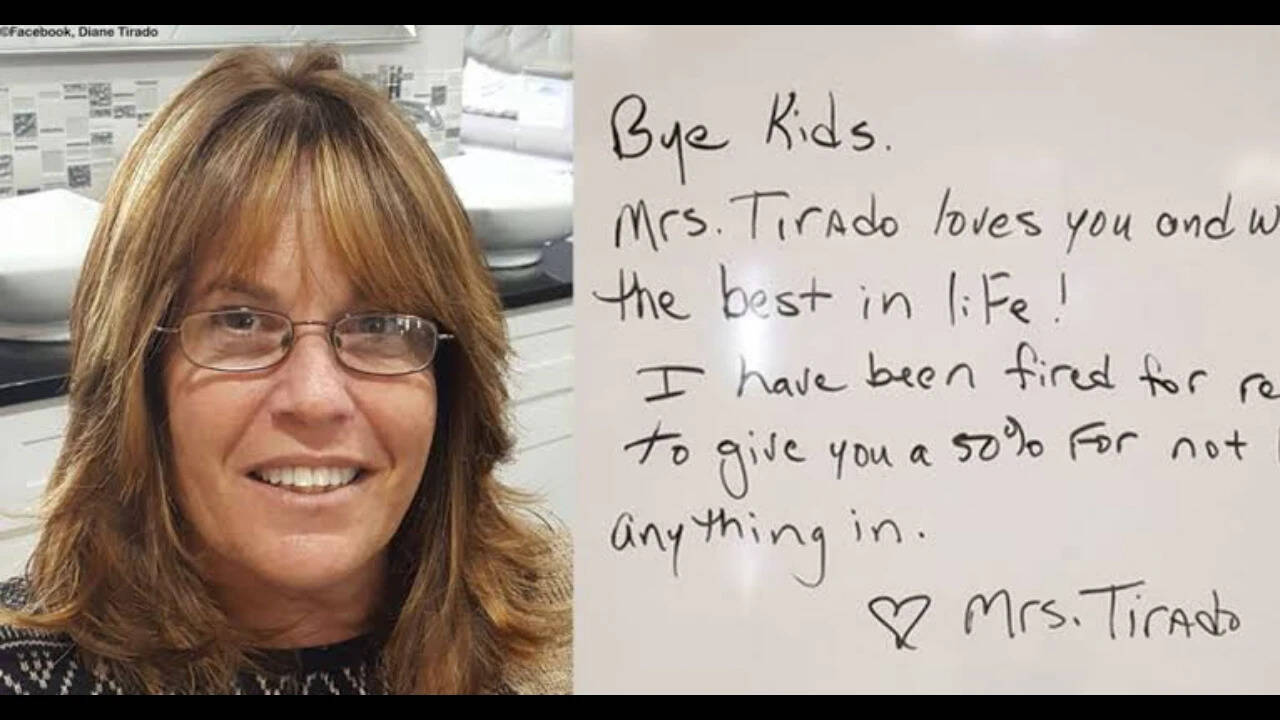
A whiteboard message turned a routine classroom dispute into a national media firestorm. Back in September 2018, eighth-grade social studies teacher Diane Tirado was let go from West Gate K-8 School in Port St. Lucie, Florida, after just five weeks on the job. Before walking out the door for good, she grabbed a dry-erase marker and scrawled a blunt goodbye to her students on the classroom board: she had been fired for refusing to give kids a 50 percent grade when they handed in nothing at all.
The story exploded online overnight. Millions of people weighed in on the ethics of grading policies, student accountability, and modern education trends. But once the viral dust settled, what actually happened to Diane Tirado? The real story goes far beyond a simple internet headline. Recently making waves recently: Why Taiwan Just Snubbed The Nagasaki Memorial Ceremony.
The Spark Behind the Controversy
To understand the uproar, you have to look at what triggered the clash. Tirado had assigned her students a two-week explorer's notebook project. When several kids failed to turn anything in, she assigned them zeros.
That routine grading choice ran smack into school policy. According to the student handbook, the institution utilized a "no zero" rule stating that the lowest possible grade for any task was 50 percent. Tirado balked. To her, giving half credit for zero effort made no sense. Further information regarding the matter are explored by Reuters.
When administrators enforced the policy, Tirado pushed back. Because she was a newly hired teacher still serving her probationary period, the principal terminated her contract without needing to list a formal cause in the official letter. That is when she snapped a photo of her whiteboard note, uploaded it to Facebook, and watched it trigger a massive public debate about academic standards.
The School District Fired Back
Public opinion initially rallied hard behind Tirado, viewing her as a lone warrior standing up for traditional accountability. However, the school district quickly added context that complicated the narrative.
Administrators stated that Tirado's dismissal wasn't purely about grading discrepancies. According to district spokespersons, her performance during her brief tenure was deemed substandard. They received numerous complaints from students, parents, and fellow teachers arguing that her classroom interactions lacked professionalism and created a toxic environment. There were even internal reviews regarding administrative and conduct concerns.
The district maintained that the grading policy itself didn't entirely forbid zeros, but rather that Tirado's overall conduct and refusal to follow individualized student education plans were the true drivers behind her release.
Legal Battles and Professional Fallout
The fallout didn't end with a viral blog post or a local news segment. The friction between Tirado and the educational system persisted for years through official channels.
In 2020, Florida’s Commissioner of Education brought an administrative case against Tirado over alleged violations of state professional conduct rules. By January 2022, the Florida Education Practices Commission concluded that she had indeed violated state principles of professional conduct. They issued a formal reprimand that went directly into her state certification file.
Not backing down, Tirado pursued her own legal action. She filed a federal civil-rights lawsuit against the school district, arguing she was wrongfully fired in retaliation for exercising her free speech rights when she criticized the grading policy.
The federal court ultimately ruled against her. The magistrate judge found that while Tirado's outspoken disagreement with the grading rule might have factored into the tensions, the school district provided ample evidence that administrative complaints and performance issues gave them legitimate grounds to terminate her contract anyway.
Where Does the Debate Stand Now?
Diane Tirado is no longer teaching inside a traditional public school classroom. Her case remains a flashpoint whenever educators, parents, and administrators argue over grade inflation, minimum grading floors, and student responsibility.
Some see her as a martyr for academic integrity who tried to shield students from a culture of unearned rewards. Others view her case as a cautionary tale about workplace insubordination and the complex reality of managing classroom culture under strict district guidelines.
The whiteboard message is long erased, but the argument it started is still wide open. Make sure you understand the whole picture before picking a side.