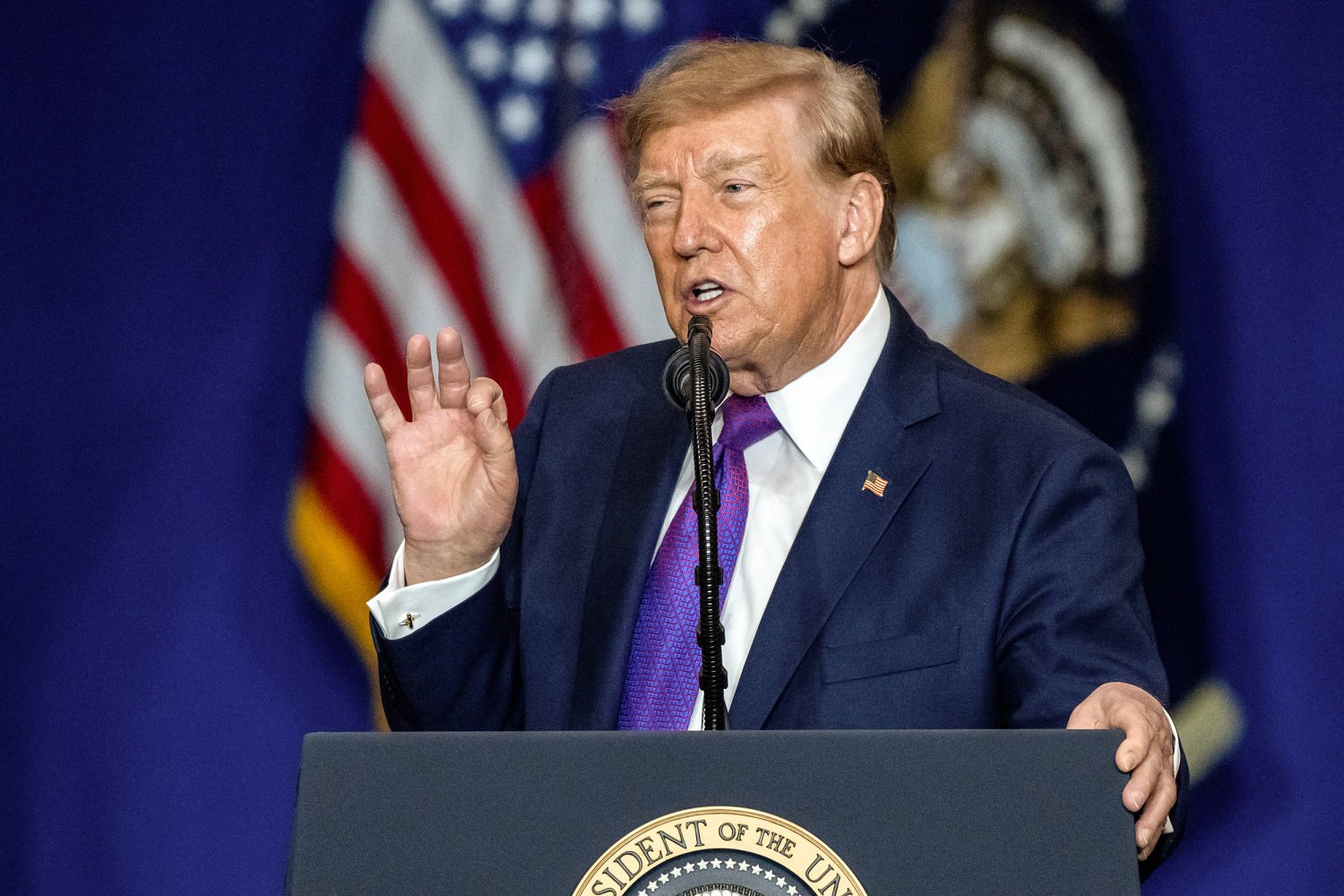
Standing behind a podium at the Department of Justice isn't a casual choice for any president. Every seal, every flag, and every marble column in that building projects federal authority and the rule of law. So when President Donald Trump stepped up to a DOJ lectern to tear into California Governor Gavin Newsom over death row commutations, he wasn't just making a stray campaign remark. He was deliberately using the nation's highest law enforcement headquarters as a stage to prosecute a political rival in the court of public opinion.
Most coverage of that speech focused on the predictable sparks between two longtime political adversaries. That misses the bigger picture. To understand why Trump picked that specific venue—and why the clash over California's death row resonates far beyond Sacramento—you have to look at the intersection of executive power, state sovereignty, and a multi-year war over capital punishment in America.
Why the DOJ Backdrop Matters So Much
Presidents visit the Justice Department all the time. Usually, they stick to broad themes like violent crime initiatives, judicial appointments, or institutional independence. Since the Watergate era, both Republican and Democratic administrations have maintained at least the appearance of a firewall between the White House's political messaging and the DOJ's day-to-day prosecutorial work.
Trump has never cared much for Washington's unwritten etiquette. By attacking Newsom directly from inside the Justice Department, he blurred the line between federal law enforcement policy and partisan warfare. If you've ever watched how modern political messaging gets engineered, you know the visual framing does half the work before a single quote hits the evening news. Putting a president in front of DOJ signage while he accuses a Democratic governor of coddling murderers sends an unmistakable message to voters. It frames a state-level policy dispute as a federal public safety crisis.
And it wasn't an isolated shot. Throughout his return to the White House, Trump has repeatedly treated California as Exhibit A for what he calls failed progressive governance. Crime, homelessness, immigration, and criminal justice reform sit at the top of that list. Newsom, widely viewed as a leading Democratic voice with national ambitions of his own, makes the ideal foil.
The History Behind California's Death Row Fight
To grasp what Trump was actually attacking, you have to rewind the clock. California holds the largest death row population in the United States, even though the state hasn't executed a single person since 2006.
In March 2019, shortly after taking office, Gavin Newsom signed an executive order placing a moratorium on the death penalty in California. He didn't abolish capital punishment outright—a governor can't unilaterally erase a statute approved by voters—but he halted all executions, withdrew the state's lethal injection protocol, and ordered the dismantling of the execution chamber at San Quentin State Prison. At the time, more than 700 inmates sat on California's death row.
Newsom didn't stop there. Over the next several years, his administration began dismantling the physical infrastructure of death row itself. Under a pilot program that expanded statewide, the California Department of Corrections and Rehabilitation started transferring condemned inmates out of San Quentin's notorious solitary housing units and integrating them into general population prisons with maximum-security wings. Under California law, those prisoners must work and pay restitution to victims' families—something they didn't do while sitting idle on death row.
Critics, including prosecutors, crime victims' advocates, and Republican lawmakers, saw those moves as a backdoor commutation of sentences that juries had lawfully handed down. When Trump targeted Newsom at the DOJ over death row commutations and clemency decisions, he was tapping directly into years of built-up frustration among law-and-order conservatives and families of murder victims who felt the state had pulled the rug out from under them.
Two Completely Different Visions of Justice
Here's where things get interesting, and where mainstream reporting often flattens a complex legal clash into a simple shouting match. Both Trump and Newsom have used their executive clemency and administrative powers aggressively on capital punishment, just in opposite directions.
Look at the record:
- Trump's approach to capital punishment centers on deterrence, finality, and victims' rights. During his first term, his administration restarted federal executions after a 17-year hiatus, carrying out 13 executions between July 2020 and January 2021. He has consistently argued that stalling executions denies closure to victims' families and weakens the rule of law.
- Newsom's approach to capital punishment rests on moral opposition, racial disparity data, and cost arguments. Newsom has called the death penalty irreversible, discriminatory against Black and brown defendants, and a massive drain on taxpayer money that could otherwise fund crime prevention and victim services.
- The Biden-era contrast added even more fuel to the fire. Just before leaving office, President Joe Biden commuted the sentences of 37 of the 40 men on federal death row to life without parole, leaving only three mass shooters facing execution. Trump fiercely condemned those commutations, promising to pursue the death penalty vigorously wherever federal law allows.
When Trump stands at the DOJ and blasts Newsom over death row commutations, he's lumping state and federal clemency debates together into a single moral indictment. Voters watching a 15-second clip don't distinguish between a state governor's moratorium, prison housing transfers, and a presidential commutation. They hear one core argument from Trump: Democrats are letting killers off the hook, and we're putting a stop to it.
What the Legal Reality Actually Looks Like
Can a president overturn a governor's death row moratorium or state-level commutations? No. Not even close.
Under the U.S. Constitution, state crimes prosecuted in state courts fall squarely under state sovereignty. The president's pardon and clemency powers under Article II apply strictly to federal offenses. Likewise, a governor's clemency power—and administrative control over state prisons—belongs to the state's executive branch, subject only to the state constitution and state courts.
In California, the state constitution actually places a notable guardrail on the governor. While Newsom can issue a unilateral reprieve or moratorium, he cannot commute the sentence of anyone with two or more felony convictions without the written recommendation of a majority of the California Supreme Court. That legal nuance rarely survives a political speech, yet it shapes everything Newsom can and cannot do on death row.
So why did Trump use the DOJ stage if he can't directly reverse California's death row policies? Because federal leverage works through other channels. The Justice Department controls federal grant funding for local police departments, oversees federal task forces, and decides when to bring parallel federal charges in high-profile violent crime cases. Even more importantly, a president sets the national narrative. By turning the DOJ into a bully pulpit against Newsom, Trump forces Democrats onto defensive terrain over public safety—an issue where voters consistently give Republicans an edge.
Why Newsom Welcomes the Fight
If you think Newsom hates being singled out by Trump at the Justice Department, you haven't been paying attention to California politics. Every time Trump attacks Newsom from Washington, Newsom raises money, dominates national headlines, and cements his status as the Democratic Party's chief counter-puncher.
Newsom's team has turned sparring with Trump into an art form. Whenever the White House criticizes California's criminal justice policies, Newsom points to violent crime data showing that several red states actually suffer higher per-capita homicide rates than California. He argues that clinging to capital punishment doesn't make communities safer, citing decades of criminological research—including reviews by the National Research Council—that found no credible evidence that the death penalty deters murder more effectively than life imprisonment.
That dynamic explains why this clash keeps escalating. Neither man loses political capital by fighting the other. Trump rallies his base by portraying himself as the defender of law and order against California liberalism. Newsom rallies his base by standing up to federal intimidation and defending progressive criminal justice reform.
How to Read the Next Phase of This Battle
Political speeches at the DOJ aren't just theater—they're early warning signals for policy fights ahead. If you want to track where this conflict goes next rather than getting swept up in daily cable news outrage, watch three concrete developments:
- Federal prosecution overrides. Watch whether Trump's DOJ increasingly seeks federal death penalty indictments in states like California where local prosecutors or governors refuse to pursue capital punishment. Under dual sovereignty doctrine, federal prosecutors can bring separate charges when a crime crosses state lines, involves federal property, or violates federal civil rights and terrorism statutes.
- Department of Justice grant conditions. Keep an eye on federal public safety grants flowing to California cities and state agencies. Future funding formulas often reveal how aggressively an administration plans to penalize states whose criminal justice policies clash with White House priorities.
- California ballot measures and court challenges. California voters narrowly rejected initiatives to repeal the death penalty in 2012 and 2016, even passing a measure in 2016 meant to speed up executions. Watch for renewed legal battles from district attorneys and victims' groups testing the limits of Newsom's executive authority over San Quentin's condemned inmates.
Strip away the podium optics and the partisan applause lines, and what happened at the Justice Department comes down to a fundamental collision over who defines justice in America—and how far a president is willing to bend institutional norms to win that argument.