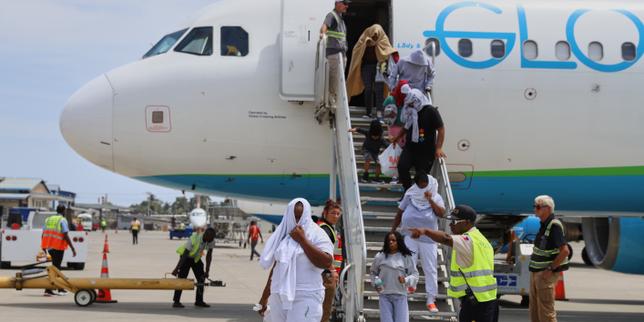
Planes keep landing in Port-au-Prince, and every single one carries people who built a life elsewhere. If you've been following U.S. immigration policy lately, you know the stakes couldn't be higher. Washington has dramatically accelerated forced returns to Haiti, turning temporary protections upside down and leaving hundreds of thousands of people in total limbo.
Let's look at what's really happening behind the official press releases. The decision to dismantle temporary relief measures has sent shockwaves through immigrant communities from Ohio to Florida. People who spent years working legally, paying taxes, and raising families are suddenly staring down the barrel of immediate removal. You might also find this related article insightful: Why The Houthi Strikes Near Riyadh Change The Middle East Conflict Forever.
The Human Cost of Policy Shifts
Numbers on a spreadsheet don't tell the whole story. When programs like Temporary Protected Status (TPS) face termination or restrictions, real lives unravel overnight. You're talking about individuals who fled profound instability, only to find themselves thrust back into a nation still grappling with extreme violence, systemic collapse, and rampant gang control.
Organizations like the Haitian Bridge Alliance have raised alarms over the severe psychological toll this creates. When you force people out of a stable environment and into a crisis zone, tragedy follows. It's not just a logistical hurdle for border agencies. It's a humanitarian emergency that gets glossed over in standard news briefs. As highlighted in detailed articles by USA.gov, the effects are worth noting.
What Washington Gets Wrong About Haiti's Reality
Politicians love to talk about security and border control as if they exist in a vacuum. They claim conditions have stabilized enough to justify mass expulsions. Anyone who looks at the ground level knows that narrative is completely detached from reality. Port-au-Prince and surrounding regions remain heavily impacted by armed groups, rendering safe reintegration practically impossible for returnees.
When federal authorities argue that these flights are routine administrative enforcement, they ignore the unique vulnerability of those being sent back. You can't treat Haiti like a standard destination country when basic infrastructure barely functions and local authorities struggle to guarantee public safety.
How Communities Are Responding
Communities across the United States aren't just sitting back. Local advocacy groups are scrambling to provide legal aid, mental health support, and emergency resources to families facing sudden deportation orders. Navigating these abrupt policy changes takes precise legal steps, and missing a deadline can mean instant detention.
If you or someone you know is caught up in these shifting rules, waiting for clarity is a losing strategy. Legal experts advise consulting accredited immigration attorneys immediately to explore alternative relief avenues, keep documentation updated, and track ongoing court injunctions that might temporarily halt specific removals.
The pressure on Washington to rethink these sweeping measures is mounting, but flights continue to depart. Until policy aligns with ground truths, thousands remain trapped in a relentless cycle of uncertainty.