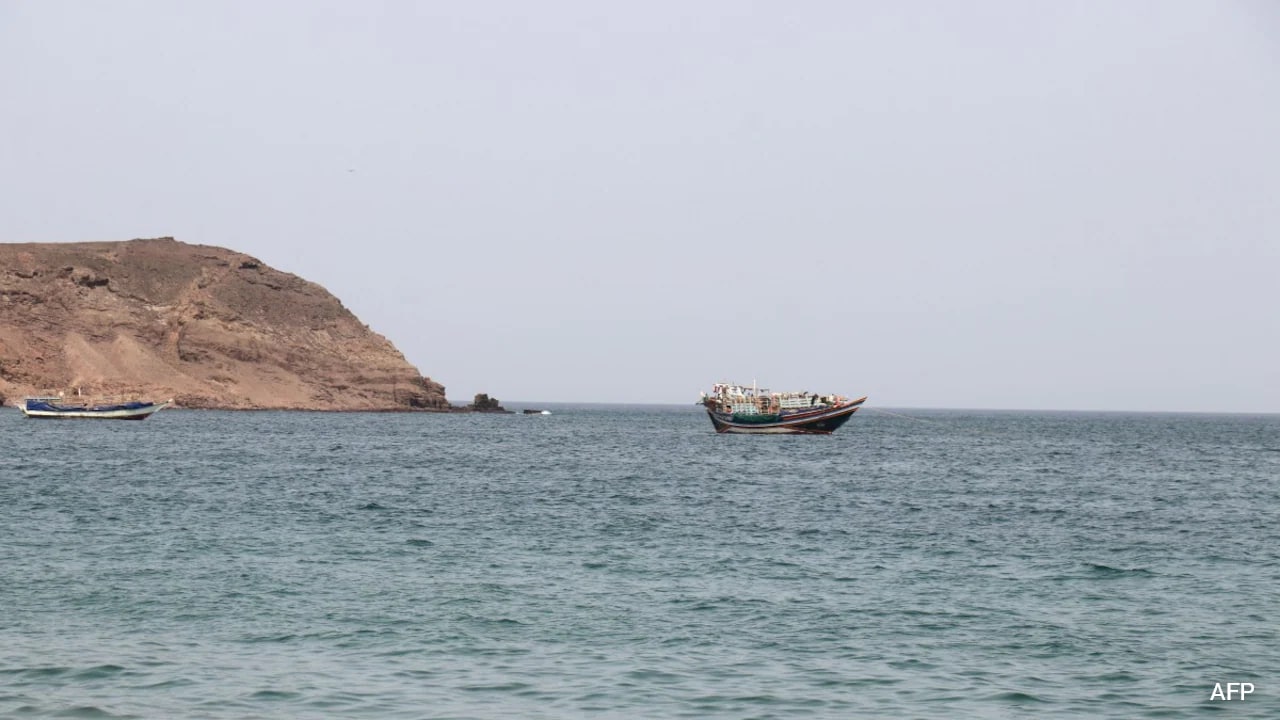
Commercial shipping is a brutally pragmatic business. When a vital maritime corridor turns into a war zone, operators stop caring about geopolitics and start caring about survival. Right now, that survival means sending an email to an inbox run by Yemen's Houthi movement.
Instead of relying purely on Western naval escorts or hoping for the best, shipping companies are quietly adopting an informal digital checkpoint. They are writing straight to the Humanitarian Operations Coordination Center (HOCC) in Sanaa to ask for permission before their vessels enter the Red Sea.
How the Red Sea Email Clearance System Actually Works
If you want to move cargo through one of the busiest chokepoints on the planet without taking a missile hit, you apply for a transit permit. Operators send an email to a specific government address with a subject line like "Safe Transit Coordination Request".
The application requires details proving the vessel has no ties to the United States, the United Kingdom, Israel, or Saudi Arabia. If the paperwork checks out, a response typically lands back in the inbox within 24 hours.
Approved ships receive a seven-day transit window. But approval comes with strict operational strings attached:
- Captains must keep their Automatic Identification System (AIS) transponders switched on for the entire journey.
- Vessels are ordered to maintain active contact on VHF Channel 16.
- Crews must stay rigidly on designated international shipping lanes and steer clear of any military hardware.
It is an absurd reality for modern logistics. A multi-billion-dollar global supply chain is now navigating security clearances managed through standard email threads.
The Breakdown of Traditional Maritime Security
Why are major operators resorting to this? Because traditional deterrence has failed to secure the corridor completely. The collapse of the 2022 UN-brokered truce triggered a fierce resurgence of hostilities, expanding the danger zone. When the Houthis added Saudi-linked shipping to their target list, the risk profile shifted overnight.
Western coalitions offer naval protection, but warships cannot be everywhere at once. Insurance premiums for Red Sea transits skyrocketed, and many major liners simply gave up, choosing to route ships all the way around Africa's Cape of Good Hope instead.
For the regional operators, grain carriers, and independent tramp steamers that cannot afford the massive fuel costs of the African detour, emailing the HOCC became a calculated risk. They aren't doing it out of political alignment; they are doing it because a digital permit feels like a functional shield when navigating hostile waters.
Washington Gives the Exact Opposite Advice
The United States government sees this digital compliance quite differently. Official maritime advisories tell U.S.-flagged and associated vessels to ignore Houthi communications entirely. Western authorities warn that engaging with these informal channels validates a militant blockade and offers a false sense of security.
Risk analysts echo that skepticism. Security experts point out that relying on promises from an armed group offers cold comfort to a crew sitting on a tanker full of fuel. Yet, economic pressure speaks louder than advisory warnings. When the alternative is a multi-week delay or bankruptcy, captains are going to use whatever communication channel keeps their hulls intact.
The Red Sea is no longer governed solely by international maritime law. It is managed by an ad-hoc system of digital permissions, where a simple email inbox holds more sway over a cargo ship's route than a naval fleet.


