Mainstream high schools aren't built for everyone. When a student struggles with severe trauma, addiction, or poverty, the standard public school system usually pushes them out. For decades, Regina's Cornwall Alternative School stepped in to catch these kids, but the help came with a major catch.
The school didn't have a Grade 12 program.
For 53 years, Cornwall would stabilize students through Grade 10 or 11 and then force them to transfer back into the massive public high schools where they originally fell behind. The results were devastating. Principal Andrew Irwin-Pasloski points out that when Cornwall had to refer students out after Grade 10, the graduation rate plummeted to around the 20 percent range. You read that right. Eighty percent of those kids dropped out completely because they lost their go-to support system.
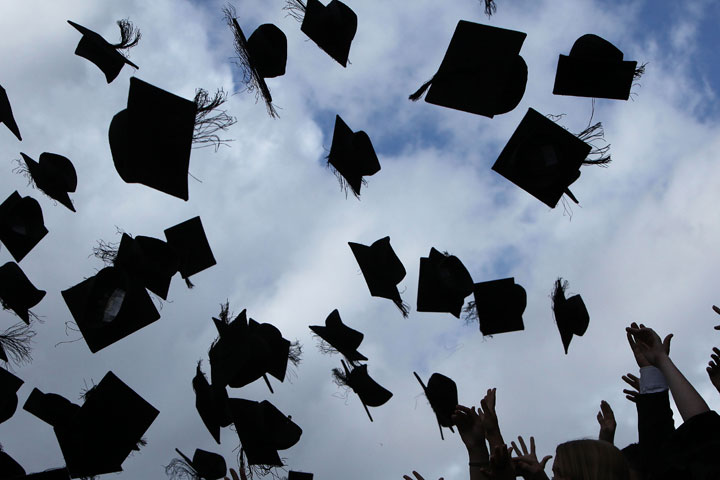
That institutional failure finally ended. Cornwall Alternative School expanded its curriculum to offer a full Grade 12 program, and the school just celebrated its first-ever graduating class.
The Shocking Cost of Forced High School Transfers
It is heartbreaking to send a vulnerable teenager back to an environment where they previously failed. For decades, Cornwall operated capped at 60 total students, maintaining tiny class sizes of no more than 12 kids. It functioned as a tight-knit surrogate family.
But until recently, that family had an expiration date.
When a student left the school, they didn't just change buildings. They lost daily access to the specific counsellors, specialized teachers, and even the school chef who knew their personal struggles. Traditional schools are massive, crowded, and rigid. For a teenager recovering from a family crisis or dealing with generational trauma, that transition felt less like a promotion and more like being thrown back into a meat grinder.
The data proves it. Keeping students in a safe, familiar environment changes everything. By extending the school to Grade 12, Cornwall flips that brutal 20 percent graduation rate on its head, aiming for closer to 100 percent success for the kids who stay.
Real Faces Behind the Historic Diploma
The first graduating class is small. It consists of exactly two students: Asia Mills-Daniels and Angelina Peigan. But the size of the class doesn't minimize the massive shift this represents for alternative education in Saskatchewan. About 90 percent of Cornwall's student body comes from First Nations, Métis, and Inuit backgrounds, making this programmatic expansion a direct intervention in raising Indigenous high school graduation rates.
The personal stakes for these two graduates show exactly why the old system was broken.
Asia Mills-Daniels
Asia enrolled at Cornwall in April of her Grade 9 year, just a few weeks after her mother died. She had been missing massive amounts of school and was completely unmoored. The staff at Cornwall stepped in to act as her surrogate family.
One teacher helped her secure a job. Another personally paid her application fee to Saskatchewan Polytechnic. Dressed in a royal blue graduation gown, Asia became the first member of her entire family to earn a high school diploma. She did it to set an example for her young nieces and nephews. Now, she plans to go to college and return to the system as a social worker to help kids who are navigating the exact same crises she survived.
Angelina Peigan
Angelina moved to Cornwall after facing severe issues with her grades and attendance at her previous public high school. The standard curriculum format didn't work for her. She had previously failed environmental science multiple times at other schools.
At Cornwall, the approach changed. The school used heavily practical, hands-on field trips and research outings to make the material accessible. Angelina didn't just pass; she excelled, pulling in the best academic marks and attendance records of her life. She is now transitioning into a Continuing Care Assistant (CCA) program with the ultimate goal of becoming a registered nurse.
Why Authentic Representation and Family Continuity Matter
The ripple effect of this educational change is already visible inside the building. Sarah Peigan, Angelina's younger sister, is currently in Grade 11 at Cornwall. Under the old rules, Sarah would be facing the terrifying prospect of transferring back to Thom Collegiate next semester—a school where she previously faced massive anxiety and academic gridlock.
Instead, Sarah can breathe easy knowing she gets to stay put and graduate next year alongside the classmates she has known for years.
Alternative schools shouldn't be treated as temporary holding cells or basic tutoring centers. When you remove logistical and emotional barriers for at-risk youth, they don't just get by—they thrive.
The next step for Saskatchewan's education ministry is clear. Funding models must shift to permanently support full-trajectory alternative schools rather than forcing short-term interventions. Upwards of 10 students are already on track to graduate from Cornwall next year. The province needs to expand funding for these specialized Grade 12 programs across other districts, because stopping support at Grade 10 is just a slow-motion way of letting kids fail.