For decades, medical orthodoxy treated a severed spinal cord as a permanent life sentence. Once those delicate nerve fibers snap, healing them has felt like trying to glue smoke back together. But a controversial orthopedic surgeon from China is trying to rewrite that rulebook entirely.
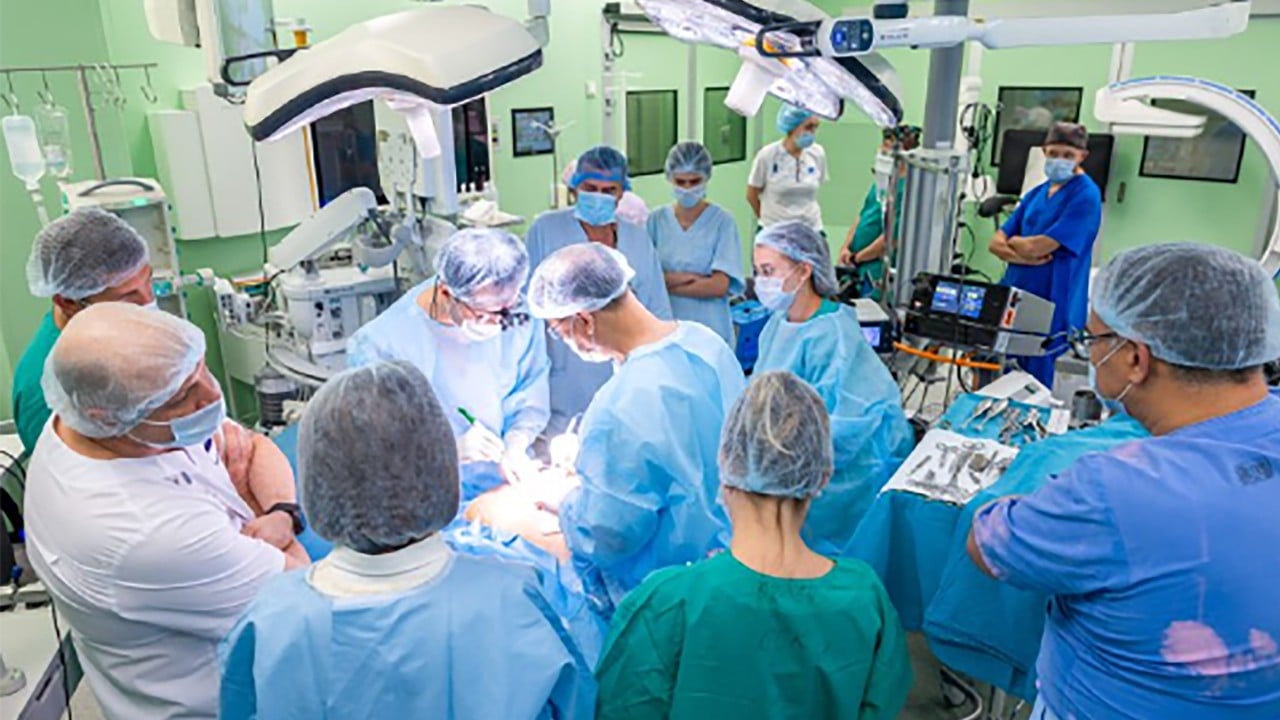
Dr. Ren Xiaoping, best known globally for pushing the boundaries of human head transplant research, has just resurfaced in Moscow. Alongside a joint Chinese and Russian medical team, Ren completed a grueling 12-hour procedure. They removed a segment of a patient's spinal cord that had been severed in a traumatic accident three years prior and replaced it with donor tissue. Also making headlines recently: Why Getting Dressed Causes Meltdowns And What You Can Do About It.
It sounds like science fiction. But it is happening right now, far away from mainstream clinical approval.
Inside the Moscow Operating Room
The procedure, which took place between October 14 and 15, involved microsurgery and a chemical agent called polyethylene glycol. This substance is frequently used in experimental neural research to help fuse cell membranes back together. The team took a section of a spinal cord from a brain-dead donor and grafted it into a paralyzed patient. More details into this topic are explored by Medical News Today.
If this sounds familiar, it is because Ren has spent years courting controversy with similarly audacious neural repair theories. Back when he worked alongside Italian surgeon Sergio Canavero on conceptualizing human head transplants, the mainstream scientific community scoffed. Critics called the work theatrical, unethical, and scientifically premature.
Yet, Ren hasn't stopped pushing forward. While Western medical institutions stick to rigorous, multi-year clinical trials governed by strict ethical review boards, pioneers like Ren often look elsewhere. They find jurisdictions or individual patients willing to take extreme risks for a chance at functional recovery.
The Scrutiny Over Groundbreaking Claims
Whenever a headline screams about a "world-first" medical breakthrough outside of standard peer-reviewed channels, skepticism should be your default setting. Right now, independent observers have little to go on besides press releases and statements from the surgical team itself.
There are no published, peer-reviewed observations detailing the patient's recovery or confirming whether the graft successfully integrated. Medical history is littered with bold claims of nerve fusion that ultimately amounted to wishful thinking.
Skeptics point out several massive hurdles:
- Reconnecting millions of microscopic axons across a donor graft boundary requires biological precision that modern science has barely begun to master.
- Donor tissue introduces the constant threat of immune rejection, requiring powerful immunosuppressants that carry their own severe health risks.
- Without transparent data shared with the wider neurological community, it is impossible to distinguish a genuine scientific leap from an expensive, high-stakes gamble.
Why This Experiment Still Matters
Even if this specific operation fails or yields minimal functional return, the psychological impact on the medical world is undeniable. Paralysis patients live with profound physical and mental toll. When standard medicine offers nothing more than physical therapy and wheelchair adaptation, desperation sets in.
Patients don't want to wait thirty years for committee-approved therapies to trickle down. They want answers now.
Ren's willingness to cross geographical and ethical boundaries forces a harsh conversation. Are traditional regulatory frameworks protecting patients, or are they suffocating innovation? When you look at how long it takes a drug or surgical technique to move from animal models to human clinics, the delay spans decades.
If researchers can eventually figure out how to bridge severed spinal cords reliably, it will change trauma medicine forever. Car crashes, diving accidents, and battlefield injuries that currently result in permanent paralysis could become fixable.
What Comes Next for Neural Grafts
For now, the medical establishment is watching from a distance, arms crossed. We are waiting to see if Ren's team will publish verifiable data, neurological scans, and long-term follow-ups on the patient in Moscow.
Until those details emerge, treat the headline with caution. Breakthroughs in spinal surgery require more than a grueling twelve-hour shift in an operating room. They require proof that the human body can actually heal what we once thought was permanently broken.