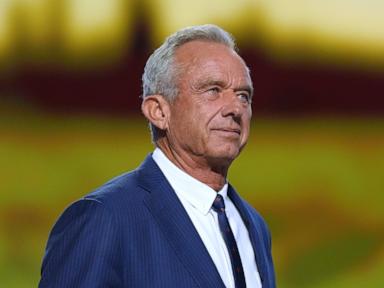
You wouldn't expect the face of the Make America Healthy Again movement to champion the exact tech being built by Big Tech monopolies. Yet here we are. Health and Human Services Secretary Robert F. Kennedy Jr. recently took the stage at a MAHA event alongside Vice President JD Vance and praised artificial intelligence as a tool that will "free us from medical tyranny."
He didn't stop there. Kennedy claimed that artificial intelligence is better informed than any human doctor in the country, and he even echoed notions that a physician failing to consult a chatbot before making a diagnosis might be committing malpractice. For a movement built entirely on skepticism toward institutional oversight, centralized authority, and corporate-backed tech systems, this stance left a lot of people scratching their heads. Don't forget to check out our recent post on this related article.
The Ideological Clash Inside the MAHA Movement
For years, Kennedy built a dedicated following by attacking corporate influence in public health. His base consists of people who distrust regulatory bodies, pharmaceutical companies, and mechanized medicine. They want whole foods, herbal remedies, and traditional patient-physician relationships free from corporate algorithms.
So when the head of HHS turns around and tells those same people to trust machine learning models developed by companies like OpenAI and Anthropic, friction happens. To read more about the history of this, Wired provides an excellent summary.
Many grassroots supporters are asking a blunt question: how can you rail against centralized control while telling Americans to outsource their health diagnoses to code written by Silicon Valley engineers? Critics within the medical community are equally perplexed. Physicians point out that LLMs (Large Language Models) are pattern-matching prediction engines, not sentient diagnosticians. They don't examine tissue, feel a pulse, or understand the complex emotional context of a patient sitting across a desk. When an official cabinet member suggests that these models outpace trained medical professionals, it creates real anxiety about where public health policy is heading.
What Silicon Valley and Washington See That Supporters Don't
To understand why Kennedy is leaning into artificial intelligence, you have to look at the populist appeal of democratization. The core pitch from administration figures at the summit wasn't about worshipping Silicon Valley. It was about individual empowerment.
The idea is simple: give patients direct access to their medical records and let them run those records through advanced chatbots to double-check what their primary care physician tells them. Proponents argue this breaks down the paternalistic gatekeeping of traditional medicine. If you've ever felt rushed during a ten-minute doctor appointment where the physician barely looked up from their screen, the appeal of having an instant second opinion is obvious.
Technology advocates argue that rural hospitals facing severe staff shortages could use these tools to triage patients more efficiently. But there's a massive gap between using a tool to assist a clinician and treating a chatbot as an infallible oracle.
The Reality Check Doctors Are Trying to Share
Medical experts aren't against computers helping doctors. Hospitals have used software for years to scan X-rays, spot tumors, and manage administrative workflows. But doctors hate the hype.
Chatbots hallucinate. They invent medical studies, misinterpret symptoms when given vague inputs, and tend to validate whatever bias the user brings to the chat window. If a patient convinced they have a rare chronic condition feeds biased prompts into a model, the model will often feed that bias right back to them. That isn't medical freedom. It's an echo chamber powered by servers.
Furthermore, relying on proprietary algorithms created by profit-driven tech giants introduces a brand-new corporate middleman into healthcare. Instead of trusting pharmaceutical reps, patients might soon find themselves trusting black-box software whose internal logic nobody outside the tech company can audit.
Where This Leaves Patients
If you're trying to navigate your own health choices right now, you're caught in the middle of a political and technological tug-of-war.
Don't abandon your doctor for an app, and don't ignore technology entirely. Use digital tools to organize your medical history, look up definitions, and generate smart questions to ask during your next appointment. But remember that a chatbot cannot hold your hand when you get bad news, and it cannot perform a physical exam.
Take charge of your health, but keep your skepticism sharp. The tech is changing fast, but human judgment remains irreplaceable.
RFK Jr. Says AI Is 'Better Informed' Than Doctors And Can 'Free Us From Medical Tyranny'
This video provides direct footage and context of the statements made regarding artificial intelligence and medical expertise at recent policy events.
http://googleusercontent.com/youtube_content/1