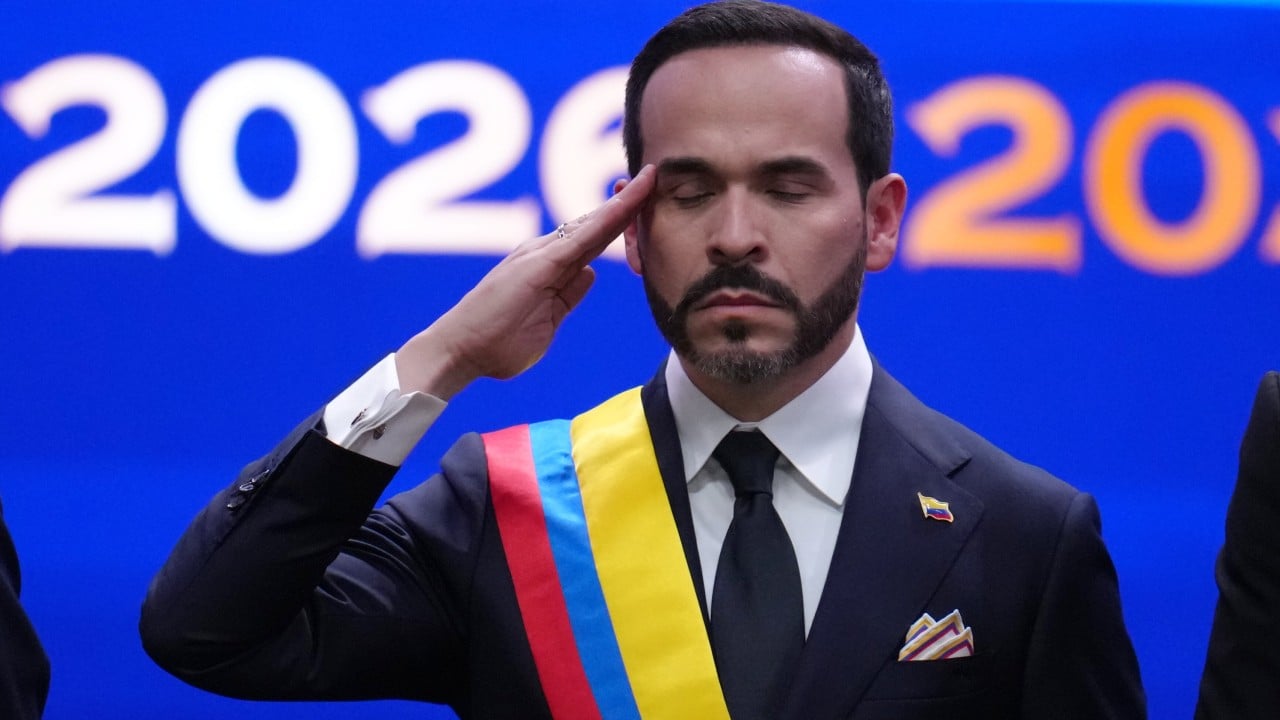
Colombia just took a sharp turn to the right. Abelardo de la Espriella, a celebrity lawyer and political outsider, took the presidential oath on Friday in the southwestern city of Cali. This wasn't just another change of administration. It marks a complete rejection of the progressive trajectory set over the past four years and introduces an unapologetic hardliner to South America's political stage.
If you've been watching Latin American politics from a distance, you might be wondering how a lawyer with zero prior elected office managed to capture the presidency. The answer lies in a volatile mix of public exhaustion, social media savvy, and an explicit promise to dismantle the status quo. De la Espriella didn't run a traditional campaign. He leveraged his massive public profile, ran a high-energy digital offensive on platforms like TikTok, and positioned himself as the ultimate law-and-order savior against a backdrop of rising security concerns.
Breaking Tradition in Cali
For more than a century, Colombian presidents have taken their oaths in the historic Plaza de Bolivar in Bogota. De la Espriella shattered that tradition on day one. Moving the inauguration to the Arena USC inside the Universidad Santiago de Cali wasn't just an logistical choice. It was a calculated middle finger to the political establishment rooted in the capital.
The venue change came after weeks of grueling institutional gridlock with outgoing president Gustavo Petro. De la Espriella initially wanted his swearing-in at a military base in the conflict-heavy Cauca department. Settling on Cali still sent a loud message. He wants his mandate associated with the regions bearing the brunt of security failures, far away from the elite echo chambers of Bogota.
International heavyweights flew in to watch the spectacle. Spain's King Felipe VI, Argentina's libertarian president Javier Milei, Ecuador's Daniel Noboa, and Chile's Jose Antonio Kast filled the seats alongside dozens of foreign diplomats. Trump’s staunch alignment with de la Espriella also hangs heavily over the administration, signaling a major shift in Washington-Bogota dynamics after years of awkward friction under Petro.
What De la Espriella Plans to Do
You don't win on a platform of polite compromise when the country is deeply polarized. De la Espriella won a razor-thin runoff in June by promising radical surgery for the Colombian state.
- Shrinking the State: He has pledged to slash public spending and trim the state apparatus by up to 40 percent.
- Cracking Down on Armed Groups: The four-year experiment of negotiating peace deals with guerrillas and criminal syndicates is officially dead. De la Espriella promises military force, not dialogue.
- Foreign Policy Realignment: Expect an immediate restoration of close ties with Israel and a lock-step alignment with conservative U.S. interests.
- Energy Revival: The oil and gas sector, heavily stifled under the previous administration's green transition policies, is slated for aggressive resuscitation.
Critics aren't staying quiet. Leftist politicians boycotted the inauguration entirely, holding rival rallies in Bogota, Barranquilla, and Cali. Figures like Senator Ivan Cepeda have openly questioned the legitimacy of the transition, pointing to the new president's past legal career defending controversial figures and ongoing political tension. Protests and legal challenges from the bruised leftist coalition show that the battle for Colombia's soul is far from over.
What Comes Next for the Region
De la Espriella steps into office with zero administrative safety net. Governing a deeply divided nation of over 50 million people requires more than viral TikTok videos and fiery speeches. He has four years until August 2030 to prove that his business-first, hardline security model can deliver actual stability without plunging the country into deeper civil strife.
Keep a close eye on the regional governors and Congress. Passing sweeping state cuts and aggressive security bills will test whether his political movement can whip up reliable legislative majorities. If the economy stalls or security fails to improve quickly, the honeymoon phase will evaporate faster than it took to plan the unorthodox inauguration in Cali.


