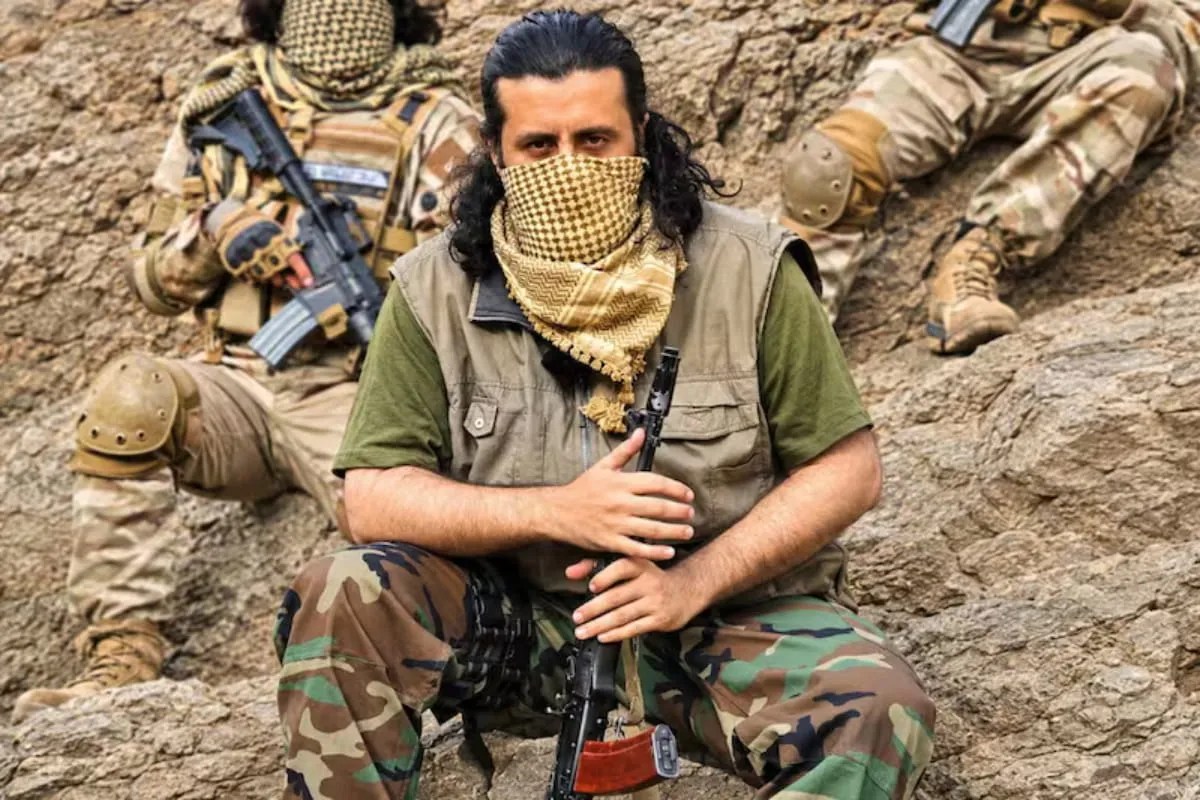
The security establishment in Islamabad has a massive new headache. The Baloch Liberation Army has officially named former Pakistan Army captain Rehman Gul, also known by his nom de guerre Ustad Mureed, as its new commander-in-chief.
If you've been following the decades-long conflict in Balochistan, you know this appointment changes everything. Gul isn't just another insurgent leader hiding out in the rugged mountains. He is a trained former military officer who once fought the Pakistani Taliban in the brutal terrain of Waziristan. Now, he's turning those exact tactical skills and insider knowledge against the state he used to wear a uniform for.
General Asim Munir and the military brass have every reason to panic. Here is what this transition actually means for the escalating ground war in Pakistan's largest and most resource-rich province.
From State Defender to Insurgent Chief
Rehman Gul’s trajectory reads like a geopolitical thriller, but it highlights deep, systemic fractures within Pakistan's military ranks. Sixteen years after walking away from active military service, Gul has climbed to the absolute top of the separatist movement. Before taking over the entire organization, he commanded the BLA's notorious Majeed Brigade—the wing responsible for high-profile complex attacks and suicide missions against security forces.
How does a captain educated and hardened by the Pakistan Army cross lines to lead an armed rebellion? Analysts tracking the region point to mounting local grievances over economic marginalization, resource extraction, and forced disappearances in Balochistan. Gul's own background reflects these tangled loyalties; reports show he comes from a family with complex political and military ties, with close relatives who fought the state decades ago.
When someone who knows the inner workings, operational mindsets, and communication protocols of the Pakistan Army takes charge of a well-armed insurgent group, standard counter-insurgency playbooks break down.
The Majeed Brigade Factor and Operational Shifts
Gul replaces Bashir Zeb, who stepped down from the top post following an internal transition announced by the BLA's Senior Command Council. Under Gul's prior watch, the Majeed Brigade evolved significantly. It transformed from a basic unit into a sophisticated fighting force capable of coordinating multi-pronged assaults across the province.
The timing couldn't be worse for Islamabad. Violence in Balochistan has surged, accounting for nearly 60 percent of all violence-related deaths across Pakistan in recent quarters. The military regularly claims high casualty numbers among insurgent ranks, but leadership transitions like this prove that the backbone of the rebellion remains intact and well-organized.
Gul's elevation signals that the BLA wants a hardened battlefield commander at the helm rather than a traditional political figurehead. His intimate understanding of conventional military strategy gives the separatist group a distinct edge in asymmetric warfare.
What This Means for Asim Munir's Strategy
Army Chief General Asim Munir faces an unenviable balancing act. The state has increasingly relied on heavy-handed security operations and crackdowns to suppress nationalist sentiments in Balochistan. Yet, every aggressive sweep seems to fuel deeper resentment, driving more educated or radicalized individuals straight into the arms of groups like the BLA.
With a former insider leading the charge, military installations, infrastructure projects tied to foreign investments, and security convoys across Balochistan face an elevated threat level. The psychological blow of a former captain directing operations against current servicemen hits the officer corps hard.
Islamabad's containment strategy is being tested to its absolute limits. As Rehman Gul consolidates control over the BLA's military apparatus, the conflict in Balochistan is shifting into a much more dangerous, professionalized phase.


