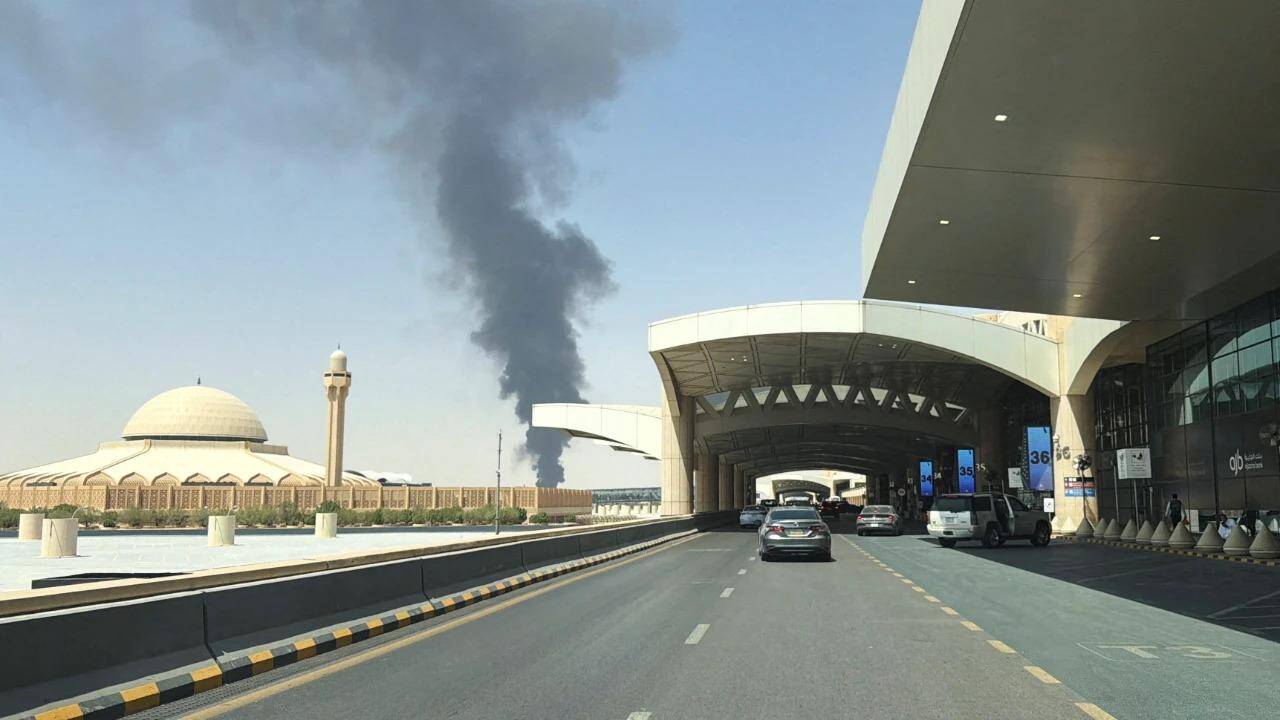
Missiles don't care about flight schedules, investment forums, or diplomatic handshakes. When a projectile slams directly into King Khalid International Airport in Riyadh, it shatters the illusion that regional conflicts can be neatly contained outside major metropolitan hubs.
If you're watching the unfolding crisis in Saudi Arabia, you already know the stakes. Flights are canceled, terminals are evacuated, and diplomats are issuing urgent alerts. But look past the breaking news alerts and headlines. The real story isn't just about a damaged terminal or canceled Air India routes. It's about how rapidly civilian infrastructure has become the primary battleground in an expanding regional war. For an alternative perspective, consider: this related article.
What Happened at King Khalid International Airport
The strike on Riyadh's main aviation hub wasn't an isolated incident. It came hard on the heels of escalating military actions linked to the broader conflict involving Iran-backed Houthi forces in Yemen. When a missile hits a passenger terminal, routine air travel grinds to an immediate halt.
Ambulances rushed to the tarmac as terrified passengers scrambled for shelter. Flight tracking data painted a grim picture within hours of the impact. Hundreds of flights faced cancellation or severe diversion. Major carriers like Kuwait Airways, Air India, and Air India Express pulled the plug on their Riyadh schedules for days, leaving thousands stranded or scrambling for alternative itineraries. Related analysis on this trend has been published by NPR.
Governments aren't taking any chances either. The US and UK embassies rushed out strict advisories telling their citizens to steer clear of the airport and surrounding districts. When Western diplomatic missions tell you to avoid an entire zone, you listen.
The Real Cost Beyond the Tarmac
Airports are economic arteries. When you shut down a capital city's primary aviation gateway, you choke trade, tourism, and business confidence. Yet, Saudi authorities are pushing forward with high-profile events anyway.
Organizers of major energy and investment gatherings insist their conferences will proceed as planned later this month. Delegates are being offered creative workarounds, like flying into Dammam and taking a four-hour road trip across the desert to reach Riyadh.
That kind of operational pivot sounds great on paper. In reality, telling international investors to brave highway travel in a conflict zone highlights just how desperate officials are to maintain business as usual. Confidence is a fragile currency. Once it drops, no amount of optimism brings it back quickly.
Why This Escalation Catches Everyone Off Guard
Most travelers assume major international hubs possess impenetrable air defense umbrellas. Modern Patriot batteries and advanced radar systems usually create a reliable shield over capital cities. But no shield is 100% effective against saturation tactics and low-flying projectiles.
When regional proxies start landing hits on civilian terminals, the psychological impact outweighs the physical damage. It forces airlines to recalculate risk profiles instantly. Insurance premiums skyrocket. Crew members refuse to fly into hot zones. The ripple effects hit hub airports thousands of miles away as aircraft and crews end up stranded out of position.
What Travellers and Observers Need to Know Right Now
If you have upcoming travel routed through Saudi Arabia, stop relying on old itineraries. Check directly with your airline before packing a bag. Expect sudden schedule changes, extended cancellations, and massive backlogs as carriers try to reposition aircraft.
Geopolitical risks in the Middle East have entered a much sharper, less predictable phase. Passenger terminals are no longer off-limits in modern warfare. Keep your eyes on official aviation authorities rather than social media rumors, stay flexible with your plans, and prepare for prolonged disruptions across Middle Eastern airspace.