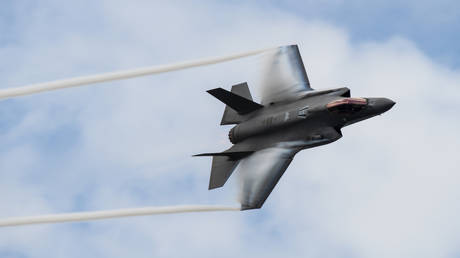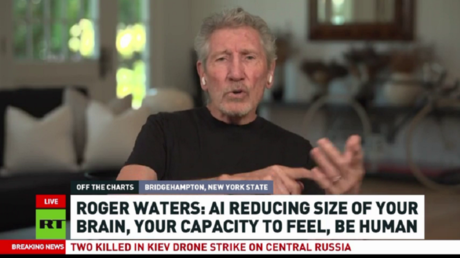
Technology doesn't just change how we live. It changes how we kill. Musicians usually stick to chords and choruses, but Roger Waters has never been one to shy away from uncomfortable truths. When he recently pointed out that artificial intelligence is actively eroding our basic humanity while a small class of defense contractors and political elites line their pockets with the proceeds of endless war, he struck a nerve. It is an indictment of a system that views human lives as mere inputs on a spreadsheet.
Most people look at artificial intelligence through the lens of convenience. You use a chatbot to write an email, generate a marketing image, or summarize a long PDF. You rarely pause to think about what happens when those exact same neural networks are handed the keys to military targeting systems. The reality is grim. We are handing life-and-death decisions over to machines because humans are simply too slow for modern combat. That isn't progress. It is a slow-motion surrender of our moral agency.
The Business Model of Endless Conflict
War is a racket. That is not a radical conspiracy theory; it is a matter of public financial record. Major defense corporations see conflicts not as human tragedies, but as lucrative testing grounds for new hardware and software. When a drone uses advanced algorithms to identify a target, the price tag goes up. Every upgrade, every proprietary line of code, and every automated defense contract generates billions of dollars in shareholder value.
Think about the incentives at play here. If a weapons system requires human oversight, emotional hesitation, and moral friction, it might not perform efficiently. Remove the human, and you remove the hesitation. You also remove the political blowback that comes with body bags. When machines do the dying, or rather, when machines do the killing with total clinical detachment, wars become easier to start and much harder to end. The elite class funding these technologies don't have to send their children to the front lines. They just collect the quarterly dividends.
Algorithmic Dehumanization
Computers reduce complex human realities into binary data points. A refugee fleeing a conflict zone, a farmer in a contested rural area, and a combatant all look identical to a pattern-recognition algorithm trained on satellite imagery and thermal signatures. This is where the true danger lies.
When you strip context away from violence, you make it frictionless. Drone operators already reported feeling a strange detachment from combat, sitting in air-conditioned trailers thousands of miles away from the battlefield. Now, take the operator out of the loop entirely. Let autonomous systems make the final call based on probability scores.
You are left with a system that treats human existence as a statistical anomaly to be corrected. It's chilling. We are watching the complete erosion of empathy. If an algorithm makes a mistake and obliterates a civilian population, who goes to prison? The software engineer? The project manager? The venture capitalist who funded the seed round? Nobody. Accountability evaporates in the cloud of proprietary code and state secrets.
The Illusion of Precision
Silicon Valley loves to sell the myth of zero error. We are constantly told that machine learning brings clinical precision to chaotic environments, minimizing collateral damage and ensuring clean victories. History tells us the exact opposite.
Complex systems fail in complex ways. Algorithms are trained on historical data, which means they inherit every historical bias, blind spot, and error baked into past conflicts. When you deploy these tools in active war zones, they hallucinate, misidentify targets, and amplify errors at machine speed.
Military analysts often talk about the OODA loop (observe, orient, decide, act). Artificial intelligence compresses this loop down to milliseconds. That sounds efficient until you realize that a human being can no longer intervene when the machine gets it wrong. A catastrophic miscalculation can happen in the blink of an eye, escalating a border skirmish into a full-scale regional war before diplomats even pick up the phone.
Reclaiming Our Moral Ground
We cannot outsource our conscience to silicon chips. Stopping this downward spiral requires more than polite petitions or corporate ethics boards that answer to the very people profiting from the chaos. It demands a hard look at how we fund and build technology.
If you care about the future, stop treating tech development as a neutral playground. Ask tough questions about where venture capital flows. Support strict international bans on lethal autonomous weapons systems before they become standard operating procedure across every major military on earth.
We need to make war ugly again. We need to make it personal, painful, and politically impossible to hide behind automated facades. Because once we allow algorithms to decide who lives and who dies, we stop being human altogether.
Take a hard look at the companies funding autonomous systems and divest your portfolio from companies profiting off automated violence. Speak up locally and globally to demand strict treaties banning lethal autonomous weapons before these systems lock us into a permanent cycle of automated slaughter.