Twenty-five years ago, Rudy Giuliani walked through the dust of Lower Manhattan and earned a nickname that seemed permanent. America's Mayor. Back then, giving him the Presidential Medal of Freedom wouldn't have raised a single eyebrow in Washington, New York, or anywhere else.
Times change. People change too.
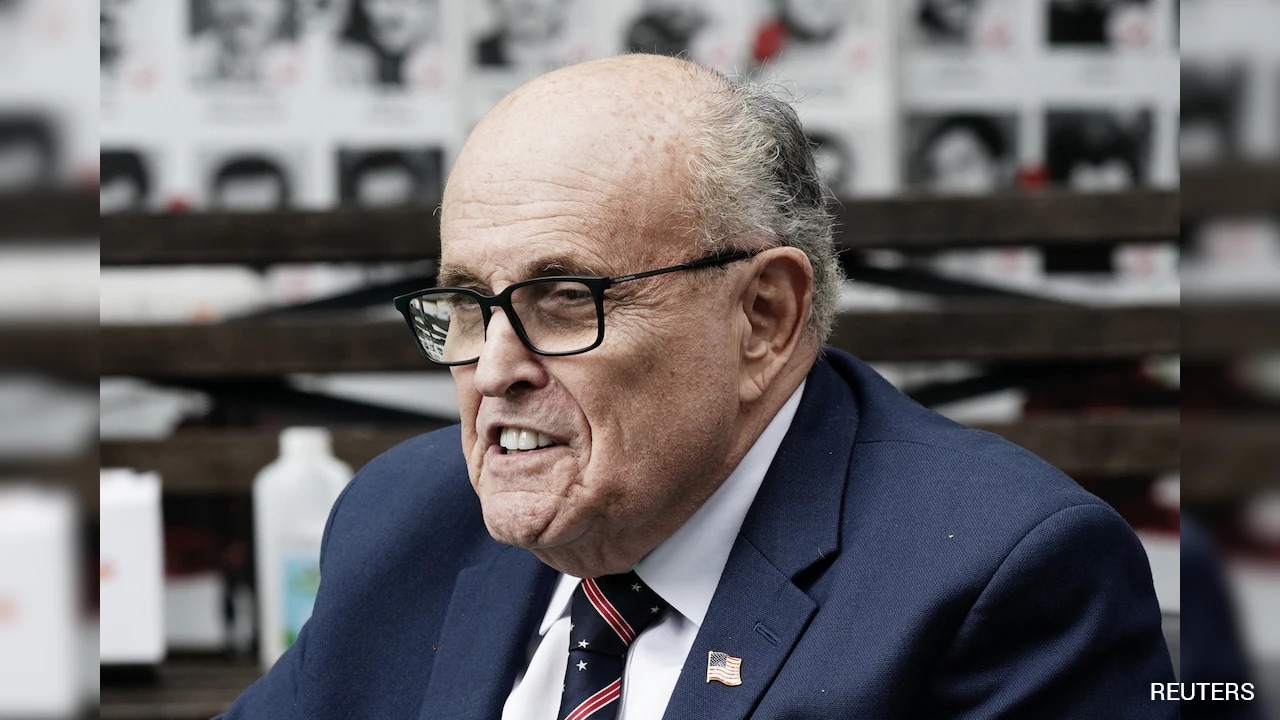
When President Donald Trump awarded the Presidential Medal of Freedom to Rudy Giuliani, the reaction split the country right down the middle, just like everything else in modern American politics. Supporters saw a long-overdue tribute to a prosecutor who took down the New York Mafia and led the city through its darkest day on September 11, 2001. Critics saw something else entirely—a political reward handed out to a disbarred lawyer who spent months trying to overturn a certified presidential election and ended up bankrupting himself in the process.
If you're trying to make sense of how one man went from a near-unanimous national hero to the center of the most controversial Medal of Freedom ceremony in decades, you have to look at the whole timeline. Wire services and quick news hits give you the bare facts of the ceremony. They rarely explain what this award actually means, why presidents use it the way they do, and how Giuliani's career forces us to ask uncomfortable questions about legacy.
What Actually Happened at the Medal of Freedom Ceremony
Let's start with the basic facts, because the headlines move fast and details get lost. Donald Trump presented Rudy Giuliani with the Presidential Medal of Freedom, the nation's highest civilian honor, recognizing his decades in public service—specifically highlighting his tenure as U.S. Attorney for the Southern District of New York, his two terms as Mayor of New York City, and his loyalty as Trump's personal attorney.
It wasn't a surprise if you've been paying attention to how Trump approaches presidential honors. Trump had floated the idea years earlier, back during his first term, and never hid his admiration for Giuliani's willingness to fight his legal and political battles in public. When the medal finally went around Giuliani's neck, the White House framed it around his historic prosecution of organized crime in the 1980s and his steady hand after the terrorist attacks of September 11, 2001.
Notice what didn't make the highlight reel during the presentation. There wasn't much talk about the Four Seasons Total Landscaping press conference in November 2020. Nobody brought up the $148 million defamation judgment won by Georgia election workers Ruby Freeman and Shaye Moss. And the fact that Giuliani had been disbarred in both New York and Washington, D.C. over his false statements regarding the 2020 election? Completely absent from the official praise.
That's the core tension here. You can't separate the 2001 version of Rudy Giuliani from the 2020 version, no matter how hard anyone tries.
How the Presidential Medal of Freedom Actually Works
Most people assume there's some kind of independent committee vetting candidates for the Presidential Medal of Freedom, like the Nobel Prize or the Academy Awards. There isn't. Not really.
President John F. Kennedy established the modern version of the award through Executive Order 11085 in February 1963, expanding on the Medal of Freedom created by Harry S. Truman in 1945 to honor World War II service. Kennedy's order states that the medal may be awarded to any person who has made an especially meritorious contribution to the security or national interests of the United States, world peace, cultural endeavors, or other significant public or private endeavors.
Notice how broad that language is. "Other significant public or private endeavors" gives a sitting president total, unchecked discretion. A president doesn't need congressional approval. They don't need a panel of historians to sign off. If the president decides you deserve the medal, you get the medal.
Because of that wide-open rulebook, every modern president has used the Medal of Freedom in two very different ways:
- Consensus icons: Figures like Rosa Parks, Neil Armstrong, Mother Teresa, and Maya Angelou, whose contributions sit well above partisan politics.
- Political allies and ideological champions: Donors, cabinet members, loyal lawmakers, and partisan media figures who helped the president get elected or pushed their agenda forward.
Trump leaned heavily into the second category during his first term, awarding medals to major GOP donors like Miriam Adelson, conservative commentators like Rush Limbaugh, and loyal political allies like Devin Nunes and Jim Jordan. Joe Biden did his own version of political rewarding too, handing medals to Democratic heavyweights like Nancy Pelosi, John Kerry, and longtime allies like Ted Kaufman, alongside progressive icons and major donors like George Soros.
So when Trump gives the medal to Giuliani, he's not breaking a legal rule. He's using a presidential perk that both parties have stretched for years. Still, even by Washington's cynical standards, Giuliani's case stands apart.
The Two Lives of Rudy Giuliani
To understand why this specific award hits such a raw nerve, you have to look at the sheer distance between Giuliani's peak and his collapse. Few figures in American history have burned through so much public goodwill so quickly.
The Prosecutor and the Mayor
In the 1980s, Giuliani wasn't a punchline on late-night TV. He was one of the most feared federal prosecutors in the country. Running the Southern District of New York, he used the Racketeer Influenced and Corrupt Organizations Act—known as RICO—to dismantle the leadership of New York's Five Families in the famous Mafia Commission Trial. He went after crooked Wall Street financiers like Ivan Boesky and Michael Milken, and he prosecuted corrupt New York politicians.
Then came City Hall. Elected in 1993 as New York's first Republican mayor in a generation, Giuliani presided over a massive drop in violent crime and a noticeable cleanup of public spaces like Times Square. His aggressive policing tactics drew fierce criticism from civil rights groups, particularly around racial profiling and police brutality cases like Abner Louima and Amadou Diallo. Even his detractors, though, couldn't deny that New York felt safer and more functional by the end of the decade.
And then came September 11.
If you lived through that day, you remember the chaos. You remember the towers falling, the communications failing, and the sheer terror of not knowing what was coming next. Giuliani walked the streets covered in ash, held constant press briefings to calm a panicked city, and projected absolute resolve when the country desperately needed someone to look steady. Time Magazine named him Person of the Year for 2001. Queen Elizabeth II gave him an honorary knighthood. Honestly, if Giuliani had retired from public life in January 2002, he'd have airports and bridges named after him today.
The Post-2016 Transformation
Instead, he stayed in the arena. After a failed 2008 presidential run—where Joe Biden famously mocked him by saying every sentence Giuliani spoke contained "a noun, a verb, and 9/11"—Giuliani drifted toward consulting and conservative media commentary.
Everything changed when he joined Donald Trump's orbit. By 2018, Giuliani had become Trump's personal lawyer, shifting from a disciplined former prosecutor into an aggressive television surrogate. He traveled to Ukraine digging for dirt on Joe and Hunter Biden, a shadow diplomacy effort that sat right at the center of Trump's first impeachment in 2019.
Then came November 2020.
Following Trump's loss to Joe Biden, Giuliani took charge of the legal and public relations campaign to challenge the results. What followed wasn't a traditional legal recount. It was a sprawling, chaotic push to overturn certified state results based on conspiracy theories about rigged voting machines, dead voters, and tampered ballots.
Courts threw out dozens of lawsuits filed by Trump's team and allies—often in scathing rulings written by Republican-appointed judges who pointed out that Giuliani and his colleagues offered zero actual evidence in court. In a famous November 2020 hearing in Pennsylvania, a federal judge pressed Giuliani directly on whether he was alleging fraud, forcing Giuliani to admit on the record that "this is not a fraud case," even though he spent every evening on television claiming massive fraud had occurred.
The Legal and Financial Reckoning
The difference between Giuliani and other political Medal of Freedom recipients isn't just that people dislike his politics. It's that his actions led to concrete, devastating legal consequences that stripped away his professional standing.
Let's look at the actual record, because these aren't partisan talking points—they're court rulings:
- Disbarment in New York: In July 2024, a New York appellate court permanently disbarred Giuliani from practicing law. The judges didn't mince words. They wrote that he had "baselessly attacked and undermined the integrity of this country's electoral process" and "communicated demonstrably false and misleading statements to courts, lawmakers and the public at large."
- Disbarment in Washington, D.C.: Two months later, in September 2024, the D.C. Court of Appeals followed suit and disbarred him there too, ending a legal career that had spanned more than five decades.
- The $148 Million Defamation Verdict: In December 2023, a federal jury ordered Giuliani to pay $148 million in damages to Ruby Freeman and Shaye Moss, two Georgia election workers whose lives were ruined after Giuliani falsely accused them of smuggling suitcases full of fake ballots during the 2020 count.
- Bankruptcy and Criminal Indictments: Facing massive legal bills and judgments, Giuliani filed for Chapter 11 bankruptcy—a case a federal judge eventually dismissed after finding Giuliani failed to be transparent about his finances. On top of the civil losses, he was indicted in both Georgia and Arizona over his role in efforts to overturn the 2020 election results.
Think about that contrast for a second. A man stripped of his law license by the courts for lying about an election is simultaneously handed the highest civilian award the United States government can give.
Why Critics Call It a Breaking Point for Presidential Honors
If you talk to historians who study the presidency, most will tell you the Medal of Freedom has always had a political edge. Lyndon Johnson gave it to his own cabinet officials. Richard Nixon gave it to loyalists. Ronald Reagan gave it to conservative allies.
So why does giving it to Giuliani feel different to so many observers?
It comes down to the core purpose of the award. Kennedy's original 1963 executive order tied the medal to the "security or national interests of the United States." Defending democratic institutions and respecting the peaceful transfer of power sit at the very center of American national security. When a president uses the nation's top civilian honor to reward someone specifically for trying to subvert an election—or rewards him in spite of it—it flips the meaning of the medal upside down.
There's also the message it sends to future political operatives. In Washington, loyalty to a powerful leader often comes with risks. Giuliani took massive personal, financial, and legal risks for Donald Trump, and for years it looked like he had been left out in the cold to drown in legal fees. By awarding him the Medal of Freedom, Trump sent an unmistakable signal to everyone in his circle: stick with me through the worst of it, no matter what the courts or the press say, and I will rehabilitate your name using the full power of the presidency.
The Counterargument From Trump and Giuliani's Defenders
You won't understand the full picture if you ignore why millions of Americans actually support this decision. For Trump's base—and even for some older New Yorkers who remember the city in the late 1980s—the story looks completely different.
From their perspective, Rudy Giuliani gave the best years of his life to public service. He risked his life going after ruthless mob bosses who put contracts out on prosecutors. He transformed New York City from a place people were fleeing into a thriving global capital. And when terrorists attacked the country on 9/11, he didn't hide in a bunker—he stood out in the open and kept the city together.
To Giuliani's defenders, everything that happened after 2020 is what they view as "lawfare"—an aggressive effort by political enemies, liberal bar associations, and hostile jurisdictions to destroy a man simply because he stood beside Donald Trump. They argue that questioning election procedures shouldn't erase forty years of undeniable achievement, and that stripping a 9/11 icon of his livelihood and reputation was the real injustice.
In their eyes, Trump giving Giuliani the Medal of Freedom isn't corrupt at all. It's an act of loyalty and gratitude toward an old friend who got chewed up by the political machine.
What This Means for the Future of the Medal of Freedom
Whether you view Giuliani's medal as a well-earned salute to a 9/11 hero or a cynical reward for election denial, one thing is obvious. The Presidential Medal of Freedom doesn't carry the unified moral weight it used to.
When an honor depends entirely on who happens to occupy the Oval Office, and when presidents increasingly use it to settle political scores or reward personal loyalty, the public stops treating the medal as a consensus judgment of greatness. Instead, it becomes just another partisan headline—cheered by one half of the country and dismissed by the other before the news cycle moves on forty-eight hours later.
If you want to look past the partisan noise whenever a major political honor or pardon hits the headlines, keep a simple checklist in mind:
- Check the actual citation versus the political context. Read the White House's official statement on why the award was given, then compare it against the recipient's recent legal and political timeline to see what is being emphasized and what is being scrubbed.
- Separate historical eras cleanly. You don't have to pretend Giuliani wasn't effective in 2001 to acknowledge what he did in 2020, and vice versa. Holding two true facts in your head at the same time keeps you from falling for simple political spin.
- Look at primary court records, not just cable news summaries. When a public figure claims they were unfairly targeted, read the actual bar association rulings or jury verdicts—they're public documents, and they lay out the exact evidence far better than any pundit will.
Rudy Giuliani wanted to be remembered forever for what he did in New York. Instead, his Medal of Freedom guarantees that his legacy will stay locked in a tug-of-war between the hero of September 11 and the lawyer who tried to break the 2020 election.