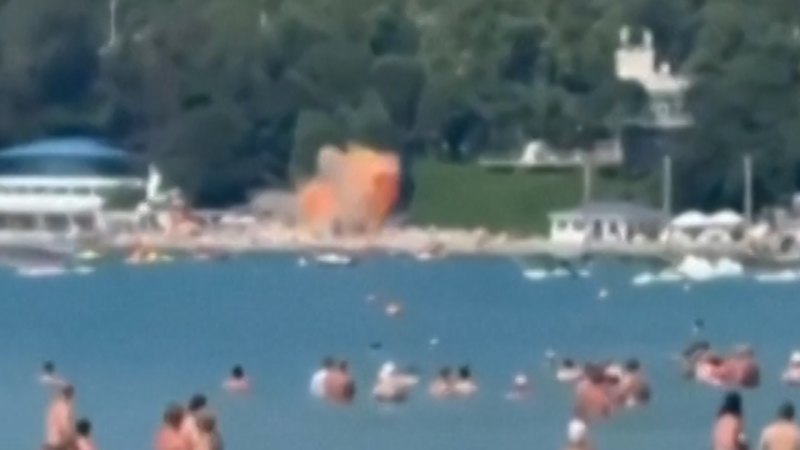
Summer tourism along Russia's Black Sea coastline has collided with the frontline reality of the ongoing war. Moscow recently leveled severe accusations against Kyiv, claiming that Ukrainian drones deliberately targeted holidaymakers on a crowded beach.
It is a high-stakes accusation. It also highlights how deeply the conflict has disrupted civilian spaces far from the immediate trenches. For another perspective, consider: this related article.
What Happened on the Black Sea Coast
According to regional authorities in Russia's Krasnodar Krai, a drone strike hit a packed beach area near the resort town of Gelendzhik. Officials reported multiple casualties, including children, sending shockwaves through Russia's domestic travel sector. Beaches that usually overflow with summer vacationers are now dealing with air-raid alarms, interceptions, and the immediate proximity of military infrastructure.
Local witnesses reported hearing machine-gun fire moments before the explosion. Military analysts point to this detail as a sign that Russian air-defense units tried to shoot the drone down before impact. Electronic interference or missile interception can easily knock an unmanned aerial vehicle off its intended trajectory. That shift changes a precision military path into an uncontrolled civilian hazard. Similar analysis on this matter has been provided by NBC News.
The Strategic Context Behind the Headlines
Why would a beach resort become a battleground? The reality is that Russia's southern coast is not just a holiday destination. It sits right next to vital military logistics hubs, naval assets, and fuel depots.
Ukraine's long-range drone strategy focuses heavily on degrading Russia's war machine. Refineries, air bases, and supply lines across the Krasnodar region have faced recurring strikes. When air defenses engage incoming drones near densely populated coastal towns, debris is bound to fall where people live and relax.
Moscow's foreign ministry was quick to frame the incident as an act of terror, pointing fingers at Western allies for supplying military tech to Kyiv. On the other side, Ukrainian officials have maintained their standard policy: they do not target civilians, and their operations focus strictly on legitimate military targets supporting the invasion.
The Economic Toll on Russian Tourism
Beyond the immediate tragedy, these recurring incidents are destroying Russia's domestic tourism market.
Hotel bookings along the Black Sea have plummeted. Travel data shows sharp year-on-year drops in reservations across Gelendzhik, Anapa, and neighboring resort towns. Airport closures, frequent drone alerts, and environmental issues like oil spills have turned a dream summer getaway into a high-risk gamble.
Vacationers are ignoring official warnings in many cases, but the economic momentum of the region is broken. Local businesses that rely entirely on short summer seasons are watching revenue dry up.
The narrative coming out of Moscow wants the world to see a targeted campaign against innocent holidaymakers. The battlefield mechanics tell a messier story of air defenses firing over crowded towns, stray munitions, and a war that refuses to stay contained to the front lines.
Check your sources carefully when breaking news hits the region. Propaganda flows heavily from all sides, and the truth usually gets buried beneath layers of political posturing.