Seabright Beach in Santa Cruz, California, is beautiful. It’s also incredibly dangerous. When a massive wave caught 10-year-old Nathaniel Rai, he didn't have time to think. He was just a kid playing in the surf. His life changed in a heartbeat. He lost his footing in water that looked harmless. Then, he was gone.
Sixteen-year-old Ryder Williams didn't hesitate. He didn't wait for a committee to vote. He didn't look for a camera. He saw a child disappearing into the churning water and sprinted. That reaction time is the difference between a tragedy and a story like this one. For a deeper dive into similar topics, we suggest: this related article.
The split second that defined a summer
Most people assume lifeguards spend their time lounging on high chairs, watching the horizon with dark glasses. It’s a myth. When the ocean turns, it happens in seconds. Williams saw Nathaniel vanish about 20 yards from his tower. At that distance, the ocean is already winning.
He didn't think about his training manuals. He relied on muscle memory. That’s what happens when you train properly. You stop thinking and start acting. It’s a lesson that applies to everything in life. We spend so much time planning, yet we rarely practice for the moment when everything goes sideways. To get more details on this development, in-depth reporting can also be found on The Washington Post.
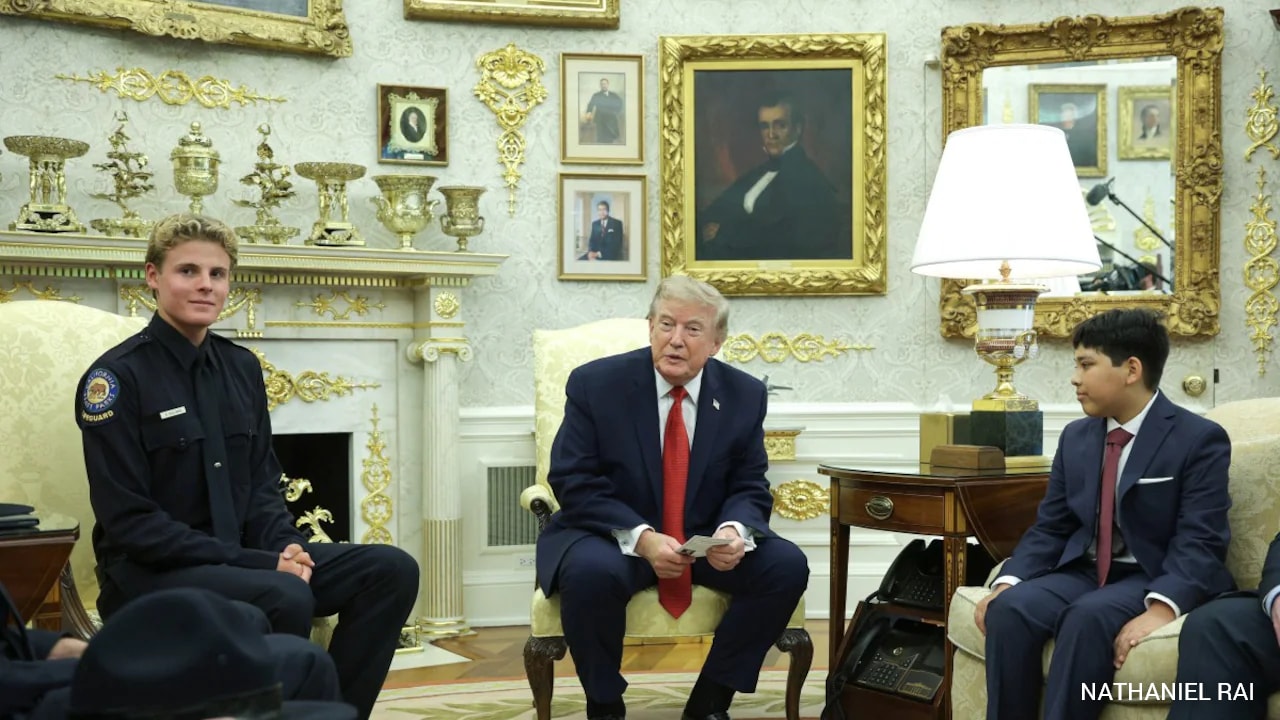
The video of the rescue went viral. It was raw, terrifying, and honest. It caught the attention of President Trump, who recently invited Williams and the Rai family to the Oval Office. It’s a nice photo op, sure. But there’s a bigger takeaway here than just a trip to Washington.
Why training actually matters
When people talk about preparedness, they usually mean having a backup plan. In the rescue world, it means something else. It means being so familiar with your gear and your environment that you don't have to look down at your hands.
Williams mentioned that he was thinking about one thing: getting the boy out of the water fast. Nothing else existed. If he had stopped to wonder if he was strong enough or if the waves were too high, Nathaniel wouldn't be here.
We live in a world obsessed with complexity. We want to know the "secret" to success. The secret isn't a hack. It’s repetition. It’s doing the same, boring, tedious drills over and over until they are boring. That is how you handle a crisis. You don't rise to the occasion; you sink to the level of your training.
Beyond the Oval Office
It’s easy to focus on the political side of this story. President Trump telling the boy he’s lucky he wasn't on duty is a classic moment, but that’s just surface noise. Focus on the individuals. Sumit Rai, Nathaniel’s father, has a perspective that most of us will never fully understand. He watched his son vanish. Then, he watched him return.
There is no replacement for that level of gratitude. It shifts your priorities immediately. When you look at the reality of water safety, the numbers are sobering. Every year, thousands of people struggle in the surf. Many don't have a Ryder Williams nearby.
If you spend time at the beach—or anywhere with a hidden risk—don't just assume someone else will handle it.
- Respect the water. It’s never as calm as it looks.
- Know your limits. If you’re not a strong swimmer, stay in the shallows.
- Watch the kids. It sounds obvious, but it’s the rule most people ignore when they get comfortable.
Practical steps for your next trip
You don't need to be a professional lifeguard to be helpful in an emergency. Being aware is a skill you can build.
- Learn basic CPR. It takes a few hours. If you can save a life, you’re not a bystander anymore.
- Identify the lifeguards. When you hit the beach, look for the towers. If you can't see one, be twice as careful.
- Trust your gut. If the water looks weird or the current seems too strong, get out. It’s not worth the risk to find out you were right.
Williams is a hero not because he was special, but because he was prepared when it counted. He’s a reminder that bravery is just action taken when it’s needed most. You don't need a medal to be useful. You just need to show up, stay ready, and keep your eyes open. That’s how you make sure the next kid gets to go home.