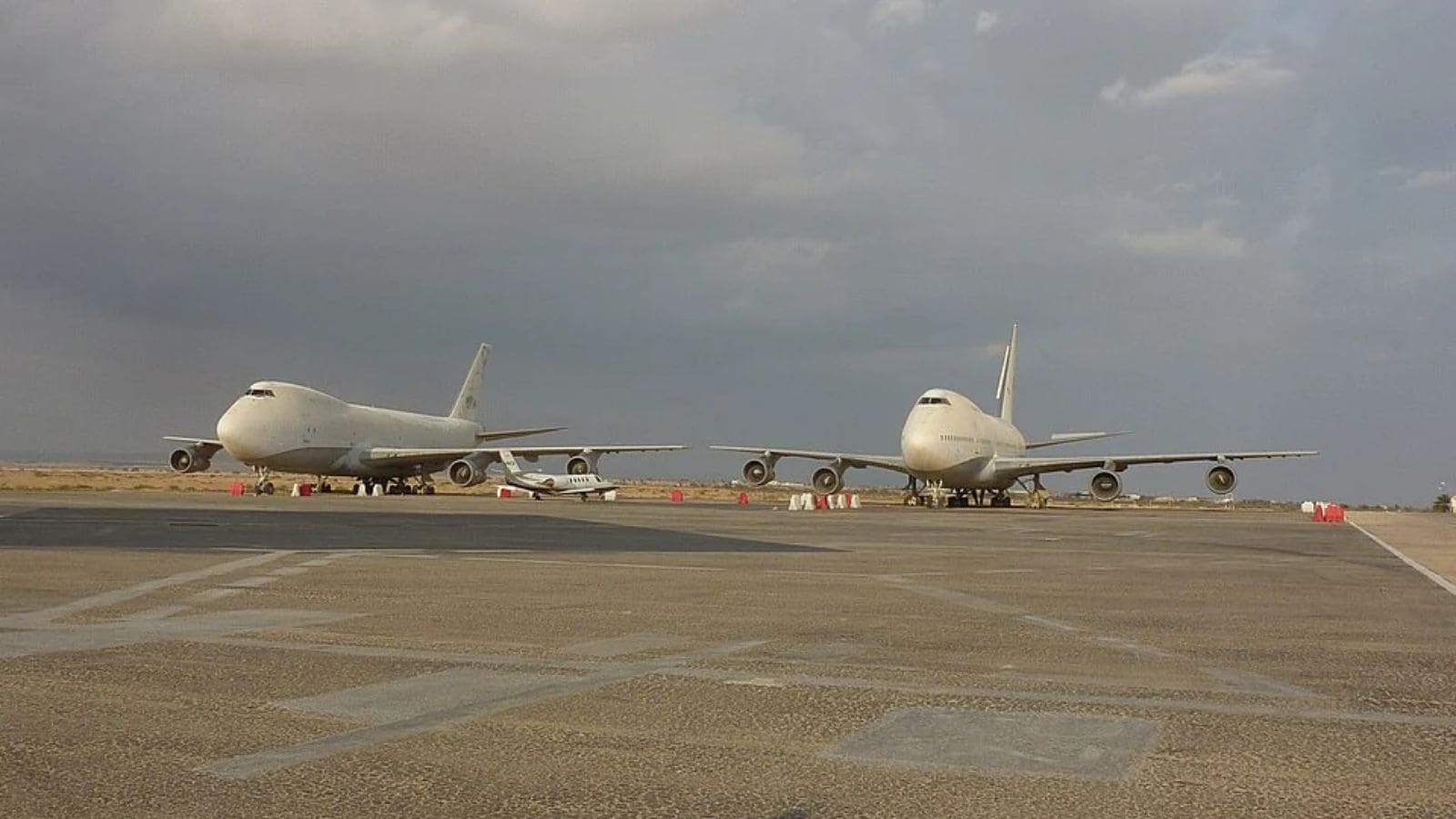
Two jumbo jets have been baking under the North African sun since January 1991, waiting for someone to finally cart them away. One of them—a rare Boeing 747SP linked to Saddam Hussein’s government—is now back on the market. Iraqi Airways wants $900,000 for it, and another $900,000 for its sister Boeing 747-200, putting a $1.8 million price tag on the pair.
Here’s the catch that a quick headline misses. Buying a grounded 1982 jumbo jet for $900,000 isn’t like buying a used sedan. It’s more like inheriting a heavy, sun-bleached monument with zero warranty and a ticking clock on storage bills.
If you’re eyeing Saddam Hussein’s Boeing 747s in Tunisia—or just wondering why Baghdad keeps trying to offload them—you need to look past the "flying palace" mystique. What looks like a bargain on paper can turn into a logistical headache fast.
How Two Jumbo Jets Ended Up Stranded in Tunisia
To understand why these planes are sitting at Tozeur-Nefta International Airport in the first place, rewind to August 1990. Iraq invaded Kuwait. A US-led military coalition began mobilizing, and Baghdad feared coalition airstrikes would wipe out its aircraft fleet.
So Iraq dispersed planes abroad for safekeeping. A bunch of them never came home.
The two Boeing 747s in Tunisia—a Boeing 747-200 registered as YI-AGP and a Boeing 747SP registered as YI-ALM—both rolled off Boeing’s assembly line in 1982. Both run on Pratt & Whitney JT9D engines. By January 1991, they were parked in Tozeur-Nefta, where they’ve remained for roughly three and a half decades.
Over the years, the planes lost their signature green Iraqi Airways stripes and ended up painted plain white. Time, desert air, and legal tangles did the rest.
The Rare VIP Jet Tied to Saddam Hussein
Of the two airframes, the Boeing 747SP (YI-ALM) is the headliner. Boeing built only 45 of the 747SP model overall—a shortened, ultra-long-range variant of the original jumbo jet—and YI-ALM was the 44th one produced.
Reports describe it as a government VIP transport associated with Saddam Hussein’s rule, reportedly named Al-Qadissiya, outfitted with a stateroom, a conference room, and a lounge featuring sleeper seats. That interior layout is why people call it a flying palace.
Still, "VIP aircraft from 1982" doesn’t automatically mean turnkey luxury. After more than 30 years out of regular service in a hot climate, cabin finishes, avionics, and airframe components tell a very different story than vintage travel brochures.
Why Iraq Raised the Price After Past Sales Failed
If you’ve followed aviation oddities, you might remember seeing these planes before. Baghdad has tried several times since 2010 to get rid of them.
In July 2023, Iraqi Airways put them up for sale at an estimated $494,000 each, or $988,000 for both. Nobody closed the deal.
Fast-forward to the current push—authorized by the Iraqi Prime Minister’s Office in February 2025—and the asking price has jumped roughly 82% to $900,000 per jet. Honestly, raising the price after an unsold auction feels counterintuitive at first glance. Why ask more when a lower number didn’t move the metal?
Part of the answer lies in fiscal pressure. Iraq has been dealing with tight public finances, including dinar devaluation pressure that shifted the official rate from roughly 1,300 to 1,500 dinars per dollar. Unloading non-core assets helps clear administrative clutter and stop ongoing friction over grounded property.
There’s also the spare parts angle. Even old widebodies and legacy engines can hold value for parts or scrap when markets shift, though turning a grounded airframe in North Africa into usable components takes serious money.
The Hidden Cost of Letting Planes Sit
One detail that gets overlooked in quick news summaries is how expensive "doing nothing" has already been. Media reports citing aeroTELEGRAPH note that Iraq paid around $5.4 million in parking fees and related claims under a 2020 settlement.
Read that number again. Five point four million dollars—roughly three times what Iraq is asking for both planes combined right now.
When a country leaves aircraft parked abroad for decades, the bill isn’t just runway rent. It’s legal disputes, diplomatic coordination, airport storage fees, and liability questions. Selling them, even at a modest headline price, stops the bleeding.
What the Sale Terms Actually Require From Buyers
If you think bidding is as simple as sending a wire transfer and flying away, read the fine print. Iraqi Airways is selling both aircraft "as is, where is," with zero technical warranties and no guarantee or commitment that either plane is airworthy.
Here’s what serious applicants face under the sale terms:
- Upfront financial guarantee: Bidders must post 20% of an aircraft’s estimated value—that’s $180,000 per plane, or $360,000 for both. If a winning bidder fails to settle up on time, the deal can be canceled and that guarantee forfeited.
- Eligibility and paperwork: Both individuals and companies can bid on one or both jets, provided they submit proper legal documentation and confirm they aren’t blacklisted.
- Extra fees and expenses: Beyond the purchase price, buyers face a 2% service charge on the purchase value plus advertising notice costs.
- Tight payment window: Once a bid is accepted, the winning buyer has just five days to pay the full amount, fees, and expenses.
- Removal and ongoing parking: Ownership transfer, customs clearance, taxes, dismantling or transport, and airport parking charges after handover all fall on the buyer.
According to sale timelines reported in late November 2026, a committee at the Iraqi Embassy in Tunisia is set to receive bids starting December 21 and make its decision by January 5, 2027, with final sign-off resting with Iraq’s transport minister.
Can Either Boeing 747 Ever Fly Again?
That’s the million-dollar question—literally, since the pair is listed at $1.8 million.
In aviation, getting a parked airliner off the ground after a few months takes thorough checks. Getting a 1982 jumbo jet flying after more than 30 years idle in desert conditions? That’s a massive engineering mountain.
Corrosion inspections, structural checks, fuel and hydraulic system overhauls, engine work on the JT9Ds, and regulatory airworthiness approvals can easily dwarf the purchase price. Most grounded aircraft of this age and downtime end up parted out, scrapped, or turned into static displays rather than returning to active flight.
From my perspective as someone who watches aviation deals closely, the real buyers here aren’t looking for a weekend joyride to Paris. They’re either part-out operators who know how to extract value from airframes and components, or buyers with a specific non-flying project—like a museum, attraction, or private display—who have already budgeted for heavy transport and permits.
Common Mistakes Buyers Make With Distressed Aircraft
People love the romance of buying a famous plane on the cheap. Then reality hits at customs.
One big mistake is treating the sticker price as the total cost. A $900,000 valuation looks tempting until you add the 2% fee, notice costs, customs clearance, local Tunisian handling, security, and either ferrying or disassembling a massive widebody jet.
Another trap is underestimating paperwork and approvals. Cross-border ownership transfers involving state-owned assets and decades-old registrations move at their own pace, yet the buyer still has to meet strict payment deadlines once selected.
Finally, assuming an aircraft is "flight-ready" just because it has wings and engines is a recipe for financial shock. Without a technical warranty or airworthiness certification, you’re buying metal, history, and obligation—not a guaranteed flight schedule.
Practical Next Steps If You’re Evaluating This Sale
If you or an organization you advise are seriously considering bidding on either Boeing 747, don’t wing it. Take these concrete steps first:
- Pull the official tender terms directly: Review every eligibility rule, blacklist declaration, financial guarantee instruction, and five-day settlement clause issued through Iraqi Airways and the Iraqi Embassy in Tunisia.
- Arrange an on-site technical inspection: Before committing $180,000 per jet in guarantee funds, bring in qualified aviation engineers to assess airframe condition, corrosion, engines, and cabin state.
- Price out exit logistics before bidding: Get quotes from local Tunisian aviation handlers, customs brokers, and transport or teardown specialists so you know what moving the aircraft out of Tozeur-Nefta actually costs.
- Match the plane to a realistic end use: Decide upfront whether the numbers only work for spare parts, static display, or scrap—and walk away if the math only works in a fantasy scenario where a 44-year-old grounded jet flies cheaply.