When three million people suddenly discover their life savings are locked behind the digital doors of a failed bank, political survival becomes mathematically impossible.
Paraguay lost its sitting president on Thursday when Santiago Peña officially handed in his resignation. The stunning collapse of ueno bank—a digital-first financial giant that ballooned to serve roughly sixty percent of the country's adult population—triggered a shockwave that dismantled a government in a matter of days. If you've been watching Latin American politics, you know that executive power usually bends rather than breaks. But this time, the pressure from the streets and the halls of Congress proved entirely insurmountable.
The Rise and Fall of Ueno Bank
To understand why Peña fell so fast, you have to look at what ueno bank actually was. It didn't start as a traditional, conservative brick-and-mortar financial institution with decades of slow, steady growth. Instead, it scaled rapidly as a digital powerhouse, absorbing public funds, pension accounts, and millions of retail customers until it sat on roughly $850 million in public assets.
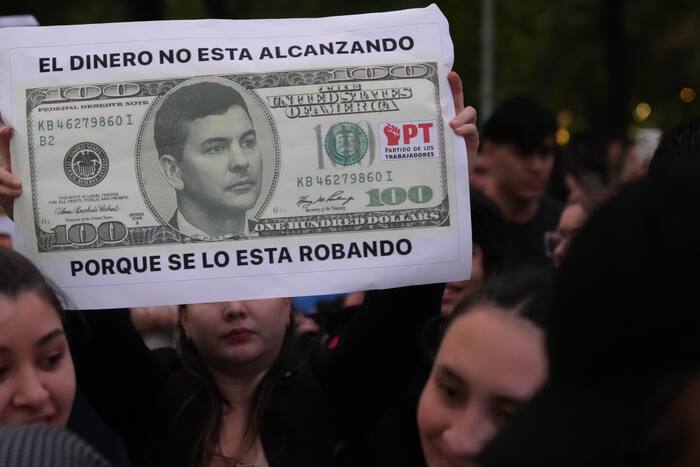
When insolvency hit and operations froze, panic set in instantly. Millions of citizens found themselves completely unable to buy groceries, pay rent, or access money they assumed was safe. Street protests erupted across Asunción, with angry depositors demanding accountability and immediate resignations.
The connection to the executive office made a bad situation radioactive. Lawmakers quickly pointed out that Peña had held a personal stake as a shareholder in the company owning the bank until late last year. Even though Peña repeatedly denied any intentional wrongdoing or conflicts of interest, public trust evaporated overnight.
The Impeachment Train Left the Station
Political alliances in Paraguay's ruling Colorado Party are notoriously transactional. The moment the scale of the financial disaster became clear, members of Peña's own conservative base abandoned him.
Opposition parties didn't waste any time calling emergency legislative sessions to draft formal impeachment charges. Accusations of institutional cover-ups, pension fund misuse, and blatant conflicts of interest gave legislators across the aisle a unified cause. Facing an almost certain vote to strip him of power and a fractured party that refused to shield him from the fallout, Peña chose to walk away rather than drag the nation through a prolonged, destructive constitutional crisis.
In a recorded video address released on Thursday, Peña framed his departure as an act of preservation for the country's democratic stability and social peace. "It was never my intention to betray the trust you placed in me," he stated, though critics noted the apology came far too late to salvage his administration.
What Happens Next for Paraguay
With Vice President Pedro Alliana stepping up to take the reins, the immediate priority for Asunción isn't politics—it's triage. The Central Bank of Paraguay has already stepped in to seize control of the wreckage, and Congress scrambled to approve emergency mechanisms designed to reimburse trapped depositors.
A new central bank leadership team is attempting to restore a shred of confidence in a banking sector that has every citizen looking suspiciously at their smartphone finance apps. Yet the deeper institutional scars won't heal simply because a new face sits in the presidential palace.
Digital banking has transformed economies across South America by bringing millions into the formal financial fold. But ueno's collapse exposes the terrifying downside of rapid fintech expansion without bulletproof regulatory safeguards. When a virtual lender becomes "too big to fail" while operating with the agility—and sometimes the opacity—of a tech startup, the government backing it up takes an existential gamble.
Santiago Peña gambled and lost everything in less than a week. As Vice President Alliana takes over a jittery nation, the clear lesson for leaders across the region is simple: lose the public's money, and you lose your job.