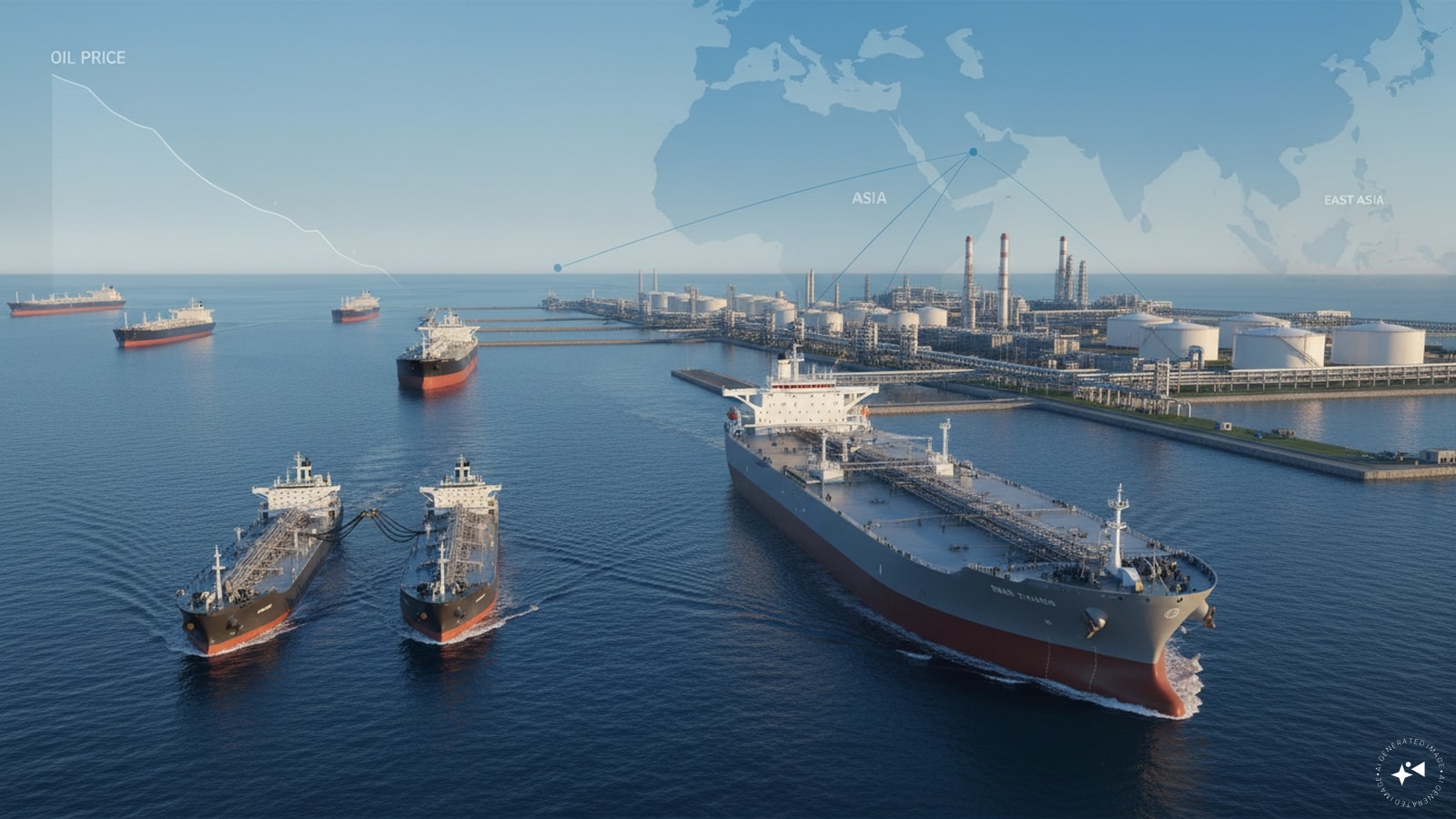
When Saudi Arabia cuts its flagship crude prices to their lowest levels in six years, you pay attention. Riyadh just set its November official selling price for Arab Light crude to Asia at $5 a barrel below the Oman/Dubai average. That is a steep $3 drop from the prior month and the widest discount since June 2020.
Most market watchers expected a price hike of up to $5 a barrel, matching recent gains in Middle East benchmarks. Instead, Saudi Aramco went the exact opposite direction. State oil officials also sliced $5 a barrel off heavier grades like Arab Medium and Arab Heavy for Asian refiners.
So why did the kingdom pull off such an unexpected move? It is not pure altruism. It comes down to freight realities, regional supply recoveries, and aggressive market-share defense.
The Real Drivers Behind the Discount
Tanker routes and freight expenses tell half the story. Asian buyers have been grappling with skyrocketing transport costs and logistics hurdles. Shipping disruptions stemming from regional conflicts have forced tankers into longer voyages, particularly around alternative corridors and loading bottlenecks like Egypt's Sidi Kerir port.
By slashing official selling prices, Saudi Aramco is basically footing part of the shipping bill for its key Asian customers. Refiners in China, India, Japan, and South Korea absorb millions of barrels daily. If freight eats too much of their margins, they look elsewhere. Riyadh cannot afford to lose that volume.
At the same time, physical crude flows are finding their footing again. Exports from the region have clawed back toward pre-conflict levels. Saudi Aramco even resumed crude loadings at the Red Sea port of Yanbu after a brief scare from a drone strike on the East-West pipeline.
A Tale of Two Regions
While Asian buyers get a deep discount, Western markets are getting squeezed. In stark contrast to the Asia cuts, Aramco raised its November official selling prices for northwest European and Mediterranean customers by $3 a barrel. Prices for the United States were left completely unchanged.
This divergence highlights a calculated regional strategy. Europe has largely adjusted to sourcing barrels away from traditional Middle Eastern channels, prompting Riyadh to price higher there while fighting tooth and nail to defend its anchor market in Asia.
Meanwhile, OPEC+ left its November production targets steady. Yet the combination of recovering regional exports and broader macroeconomic signals has put downward pressure on global crude futures.
What This Means for Refiners and Markets
If you run an oil refinery in Asia, your feedstock costs just dropped significantly for November. Margins should get a welcome cushion.
If you are tracking macro energy trends, look past the headline number. The six-year low in Saudi pricing points to structural competition rather than a collapsing global economy. Producers are adapting to expensive freight, rerouted tankers, and shifting buyer loyalties in real time. Keep an eye on whether Asian refiners respond by increasing cargo nominations or if they pocket the discount while keeping overall crude intake flat.