You have probably seen postcard photos of the Scottish Highlands. Sweeping purple heather hills, dramatic mountain ridges, and moody skies look untouched by time. They aren't. Behind that rugged postcard aesthetic lies an ecosystem stripped of almost everything that once made it wild.
More than ninety percent of Scotland's native forests are gone. Eighty percent of its ancient peatlands are damaged or drying out. Nearly half of its natural biodiversity has vanished. Centuries of clearing trees, draining wetlands, altering riverbeds, and wiping out apex predators turned a thriving temperate rainforest into a glorified sheep pasture and hunting reserve.
Now, a massive 100-year conservation experiment is attempting to reverse centuries of ecological damage. Led by the Durrell Wildlife Conservation Trust across a sprawling 7,500-hectare estate in Cairngorms National Park, this project isn't about micro-managing nature. It's about getting out of the way and letting the land heal itself.
The Reality of a Broken Landscape
Most visitors miss the ecological wounds of the Highlands because green grass and bracken hide the absence of life. Centuries ago, wolves roamed these valleys, towering Caledonian pines blanketed the glens, and thick wet bogs locked away carbon while feeding massive insect and bird populations.
Human intervention changed all of that. We drained the swamps, logged the ancient timber, dammed the wild rivers, and hunted native predators to extinction. Without wolves, deer populations exploded. Every single time a tiny native tree seedling tried to sprout, hungry herds grazed it down to the dirt. The forest lost its ability to regenerate.
Estate manager Douglas Carchrie, who grew up walking these exact hills, notes that current caretakers aren't trying to force an artificial garden. They are letting nature lead the decision-making process. That shift in mindset separates modern conservation from decades of failed, heavy-handed forestry management.
Unzipping the Bogs to Fight Climate Change
You can't talk about Highland restoration without talking about peat. Peatlands form when dead organic matter decomposes at a glacial pace in waterlogged, oxygen-starved soil. It takes thousands of years to build up just a few meters of dense, dark carbon-rich earth.
Decades ago, workers dug deep drainage channels across Scottish wetlands to dry out the soil for grazing. That engineering feat was a disaster for the climate. Drained peat releases massive amounts of trapped carbon dioxide back into the atmosphere.
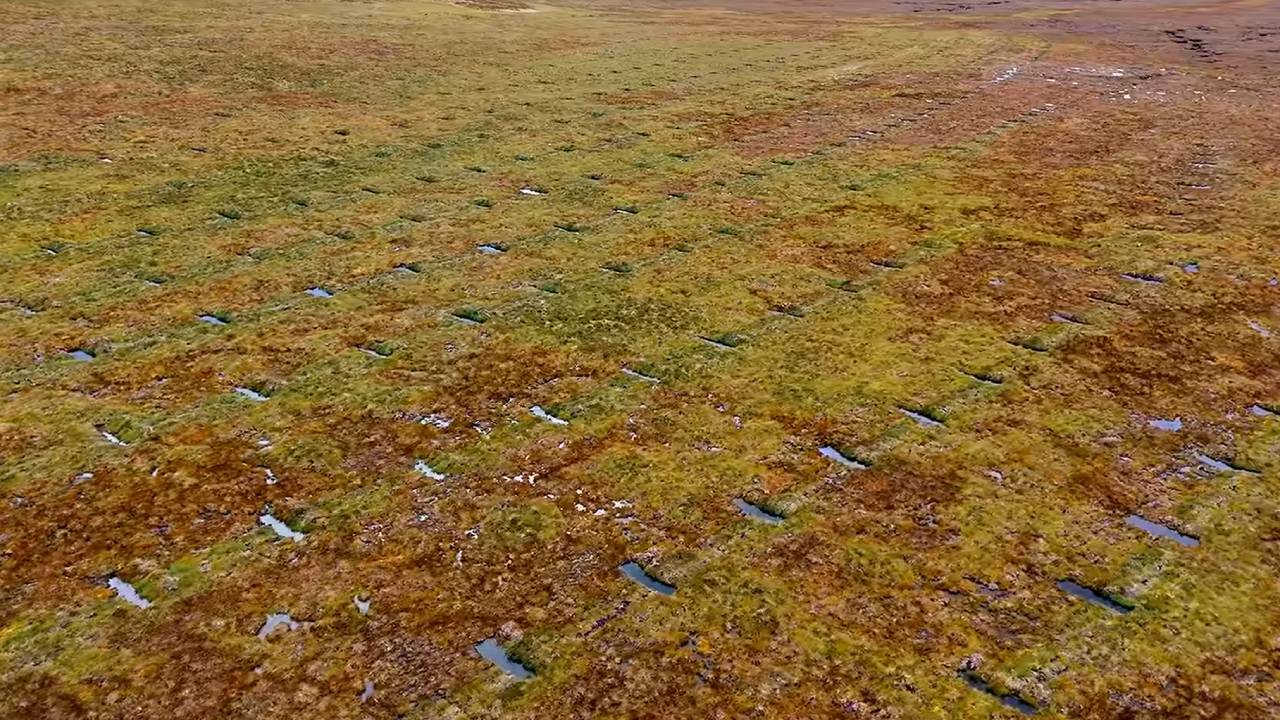
To fix this, conservationists are basically using excavators to zip the drainage channels back up. By plugging the old ditches with surrounding peat and creating small chain-pool systems, workers force water to stay where it belongs.
The results happen much faster than anyone expects. Within days, the local water table rises. Within months, dragonflies return, aquatic plants recolonize the pools, and wading birds show up to nest. It turns out that when you give water back its space, it remembers what to do immediately.
Growing Forests Without Planting Millions of Trees
Planting millions of saplings by
Why the Scottish Highlands Hundred Year Restoration Project Changes Everything About Rewilding
news
g
Centuries of clear-cutting, overgrazing, and drainage left the Scottish Highlands bruised. More than ninety percent of native forests vanished. Eighty percent of peatlands degraded into carbon-leaking scars. Nearly half of the region's native biodiversity simply disappeared.
It is easy to look at those numbers and shrug. We are used to environmental decline stories that end in quiet corporate apologies or token tree-planting photo ops. But a massive 7,500-hectare restoration effort just kicked off with a hard deadline one hundred years out, and it refuses to play by the usual corporate greenwashing rules.
If you care about how modern ecological repair actually functions on a massive geographic scale, you need to understand what is happening right now across the Scottish Highlands. This is not a weekend volunteer shrub-planting exercise. It is a century-long industrial-scale healing process.
The Real Cost of a Broken Landscape
Drive through parts of the Highlands today and you see gorgeous green hills. Tourists love them. Ecologists look at them and weep.
Those sweeping, heather-draped vistas are often what experts call an emerald desert. Generations of intensive sheep farming and heavy red deer populations stripped the earth bare of its ancient Caledonian pine forests. Without tree cover to anchor the soil, heavy rains wash nutrients away. Without peatlands holding moisture, water rushes off the hillsides, turning local rivers into flash-flood channels and drying out the land during summer droughts.
You cannot fix centuries of structural ecological damage with a quick fix. Nature takes time, but it also needs active intervention to kickstart the recovery. That is why this project covers 7,500 hectares of varied terrain, targeting the exact root causes of collapse rather than just planting a few saplings for PR points.
How a Century-Long Timeline Changes the Strategy
Most government or corporate environmental initiatives operate on election cycles or short corporate reporting windows. Three years is typical. Five years is ambitious. Ten years is an eternity.
Planning for a hundred years breaks that broken cycle entirely.
When you design a project that outlives everyone currently working on it, your priorities shift. You stop worrying about quarterly metrics and start obsessing over soil microbiology, hydrological pathways, and genetic diversity in reintroduced species.
The strategy relies on a three-pronged approach across the designated acreage:
- Rebuilding the sponge by blocking artificial drainage ditches on damaged peatlands, allowing mosses to return and lock away carbon instead of releasing it into the atmosphere.
- Fencing off strategic zones or managing grazing pressure so native birch, pine, and rowan can regenerate naturally from dormant seed banks rather than relying solely on nursery stock.
- Reintroducing keystone species that manage the physical environment organically, doing the heavy lifting that human intervention simply cannot match.
Confronting the Controversies
Let us be completely honest. Rewilding projects spark fierce local pushback, and pretending otherwise is dishonest.
Farmers and landowners worry about grazing rights and land value. Rural communities fear that turning working estates into wild reserves will kill local jobs. These are valid fears. You cannot parachute conservation mandates into rural communities without addressing how people pay their rent and feed their families.
The success of this hundred-year endeavor depends entirely on whether it integrates local economic survival with ecological recovery. If local people are locked out of the landscape, the project will fail socially long before the trees mature physically. Modern conservation has to support rural livelihoods through ecotourism, sustainable woodland management, and green jobs that actually pay a living wage.
What This Means for Global Conservation
Scotland is serving as a living laboratory for the rest of the world. Countries everywhere face the same grim statistics regarding lost native cover and degraded carbon sinks.
If this Scottish initiative proves that a landscape can be systematically healed over a generational timeline without destroying rural economies, it creates a blueprint. If it bogs down in bureaucracy and local conflict, it serves as a warning about the limits of long-term planning in a shifting political climate.
Keep your eyes on the Highlands over the next decade. The real work is just beginning.