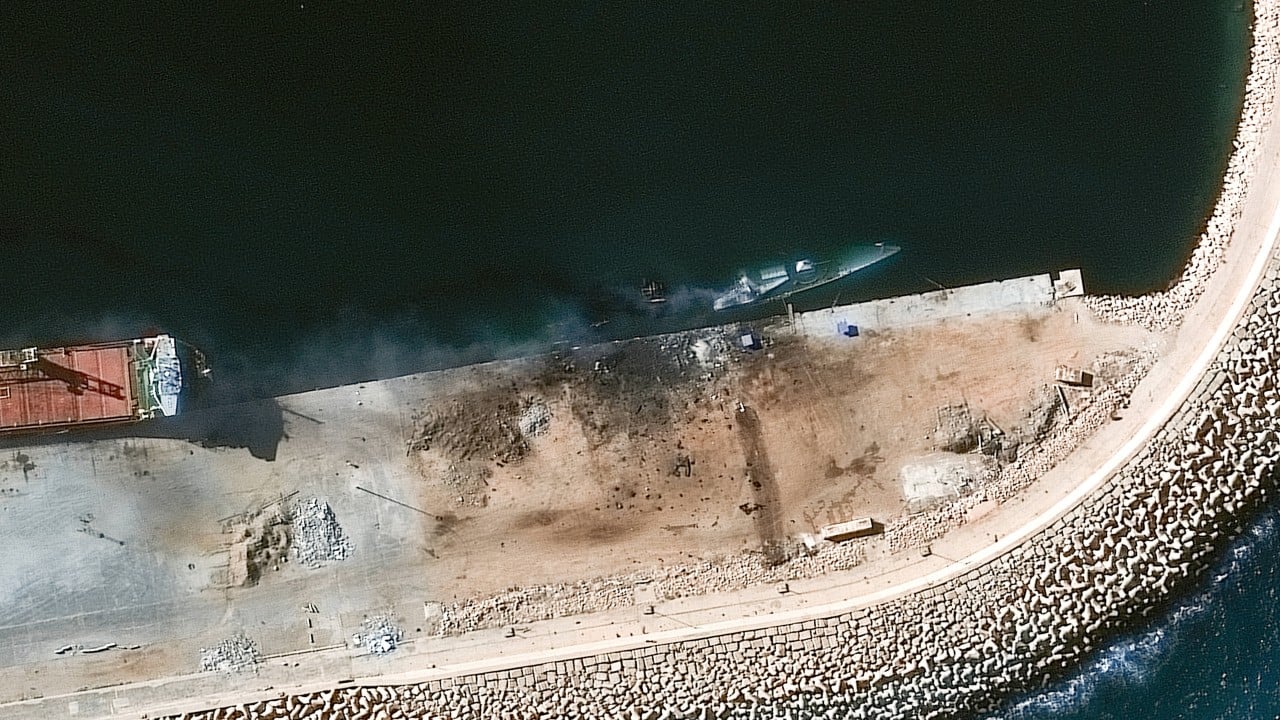
A Russian warship just went down in Libya.
Not in the Black Sea. Not near Crimea. Right in the port of Benghazi, more than 1,000 miles from southern Ukraine, on November 22, 2026. If you liked this article, you might want to check out: this related article.
According to Libyan officials and satellite imagery from Vantor, suspected Ukrainian sea drones struck the Russian Navy corvette Merkury at dawn, leaving most of the vessel capsized and sunk with only its bow sticking out above the water and debris scattered along the pier. Later that same day, another sea drone struck a Russia-linked cargo ship, the Ascalon (also described by sources as a commercial vessel flying the Maltese flag), off the coast of Benghazi, while Libyan forces intercepted more than a dozen additional unmanned surface vessels.
If you still think of the war between Russia and Ukraine as a regional conflict boxed inside Eastern Europe and the Black Sea, it's time to wake up. This strike shows a war that has spilled deep into the Mediterranean and North Africa's fractured politics. For another angle on this story, refer to the recent update from NPR.
How Sea Drones Reached a Russian Warship in Libya
For years, Ukrainian unmanned surface vessels—explosive-packed speedboats guided remotely or autonomously—made life miserable for Russia's Black Sea Fleet, forcing Moscow to pull major assets back toward Novorossiysk. Reaching Benghazi is a different beast altogether. Distance, fuel endurance, satellite or relay links, and local coastal defenses all get much trickier over a thousand miles away.
How did these drones get there? Reports from outlets including the Associated Press, Reuters, Al Jazeera, and The Guardian point to two big pieces of the puzzle. First, sources told the Associated Press that Ukrainian sea drones were launched from a base operated by Ukrainian forces in western Libya, where personnel—largely drone specialists—have reportedly operated out of facilities in areas such as Misrata, Tripoli, and Zawiya under arrangements with western authorities. Second, long-range maritime operations have already been stretching outward, from strikes in the Baltic earlier in 2026 to an earlier reported drone incident involving a Russian tanker near Malta in March 2026.
Honestly, the geography here is wild. Libya has been split between a UN-recognized administration in the west (based in Tripoli) and a rival eastern administration centered around Benghazi, backed by Khalifa Haftar's Libyan National Army, which has maintained close ties with Russia. Putting Ukrainian drone operators in the west while Russian warships and supply ships use eastern ports turns Libya into a proxy chessboard right on Europe's southern doorstep.
What Happened to the Merkury and the Ascalon
Let's look closely at what actually happened on Sunday, November 22, 2026, because early reports always have fog around the edges.
The Merkury is a Project 20380 corvette—around 104.5 meters long, commissioned in 2023, armed with anti-ship missiles, torpedoes, and a 100 mm gun, and carrying roughly 90 crew members. Even though it belongs to the Black Sea Fleet, it had been operating out of Northern Fleet bases and supporting Russian naval logistics and escort tasks, including past movements tied to Libya and Syria. Eastern Libyan officials said the vessel had docked at Benghazi to refuel and take on supplies under cooperation agreements with Russia.
Officials speaking to the Associated Press said at least four sea drones were intercepted while two struck the warship, triggering a massive explosion. Civil defense responders also dealt with an ammunition depot fire at the naval facility, and medical sources reported around 10 people—both Russians and Libyans—suffered minor injuries. Then, hours later, the Ascalon was hit off Benghazi, with crew members rescued by Libyan naval forces.
Neither Moscow nor Kyiv gave an immediate formal claim of responsibility at the time of the initial reports, though Denys Sienik, Ukraine's top diplomat in Washington, posted on social media that these vessels would no longer serve the Russian war machine. Still, keep your guard up on exact counts and claims. When rival Libyan factions, local broadcasters like Almasar, and international wire services report during active strikes, numbers like how many drones were downed or whether a vessel was military or commercial can shift fast.
Why This Matters Beyond a Single Ship
Losing a modern corvette hurts Russia's wallet and prestige. You don't casually replace a 2023-commissioned warship, and losing it inside a friendly port shows gaps in harbor defense against low-profile, fast-moving surface drones.
Bigger picture, though, this hits Russia's Mediterranean logistics. For years, Moscow used maritime routes linking Russian ports, Syria, and eastern Libya to move troops, equipment, and influence across Africa and the Middle East. When sea drones can reach Benghazi—and hit supply or cargo vessels nearby—every Russian ship making that run has to assume it's being watched and hunted.
The Trap Waiting for Libya and Europe
Here's the mistake a lot of commentators make. They treat North Africa like a sideshow where big powers just play out their rivalries with zero blowback on local people.
That's backwards. Libya is already fragile, divided, and flooded with weapons. Western Libyan authorities warned against turning Libyan ports and civilian infrastructure into an arena for external powers to settle scores, and watching explosions rock Benghazi's port and nearby ammunition stores proves how real that risk is. Local residents, port workers, and injured bystanders—both Libyan and Russian—are the ones caught right next to the blast radius.
For European policymakers, the message is equally sharp. Instability in Libya doesn't stay in Libya. It feeds migration pressures, energy and shipping jitter in the central Mediterranean, and diplomatic headaches with both Tripoli and Benghazi.
What to Watch Next
If you're tracking this story—or trying to figure out what comes next in maritime security and geopolitics—don't get swept up in hot takes from the first few hours.
- Check independent imagery and official confirmations. Look for follow-up satellite assessments from firms like Vantor and see whether Russia or Ukraine shifts from quietness or hints to formal statements.
- Watch how eastern and western Libya react. Pay attention to whether the Benghazi administration tightens port security or escalates rhetoric, and how Tripoli responds to avoid getting dragged deeper into the fighting.
- Track shipping and insurance signals in the central Mediterranean. Commercial operators and maritime insurers react fast when sea drones hit vessels near major ports, even if a ship is linked to military cargo.
A single strike in Benghazi won't end the war in Ukraine overnight. It does prove that sea drones have turned even distant Mediterranean harbors into contested waters.
To dig further into the broader conflict and maritime developments, review coverage from Al Jazeera, The Guardian, and Radio Free Europe/Radio Liberty.