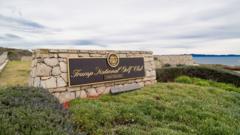
Security failures around high-profile political figures keep repeating with terrifying frequency. When plainclothes federal agents spotted 38-year-old Jeanine John Taele wandering the grounds of Donald Trump's Rancho Palos Verdes golf club, they weren't looking at a casual tourist. They intercepted a man actively recording security-planning activities two days before a high-stakes Republican National Committee fundraiser.
You have to ask how close things came to disaster.
Inside the Rancho Palos Verdes Arrest
Taele didn't just stumble onto the property. Operating in broad daylight, he captured photos and videos of the layout. When authorities stopped him on Sunday afternoon, a search of his pockets revealed a 16-round magazine stuffed with hollow-point ammunition. A loaded pistol waited in his vehicle.
That discovery prompted law enforcement and the FBI's counterterrorism division to execute a search warrant at his home in Downey, California. Inside, they uncovered an assault-style rifle, another pistol, a bulletproof vest, high-capacity magazines, multiple radios, and notebooks filled with concerning statements.
The Broader Pattern of Threats
This incident fits into a grim timeline of security scares targeting Trump at his own properties. Protecting golf courses and expansive outdoor venues presents a nightmare scenario for the Secret Service and local sheriff's departments. Open perimeters, sprawling green spaces, and public access roads make total lockdown nearly impossible.
When threats emerge repeatedly, vulnerability becomes systemic.
Consider what security teams face:
- Vast acreage that is difficult to patrol entirely on foot.
- Nearby public hiking trails and roads offering direct lines of sight.
- The constant challenge of balancing public accessibility with rigid executive protection.
Why Local Vigilance Matters
Federal agencies cannot be everywhere at once. Local law enforcement and sharp-eyed observers form the first line of defense. In Taele's case, plainclothes operatives identified suspicious behavior before the presidential entourage arrived.
Yet, relying on last-minute catches isn't a strategy. It's a gamble. Every security breach exposes flaws in asset monitoring and perimeter control that threat actors actively test.
Next Steps for High-Profile Protection
If political violence and targeted harassment are going to decrease, protection protocols must shift from reactive scrambling to proactive deterrence.
- Upgrade perimeter intelligence using automated drone surveillance and motion-sensing thermal optics.
- Enforce absolute dead zones around venues days in advance, treating local airspace and perimeters as sterilized sectors.
- Increase coordination between municipal police, county sheriffs, and federal details to eliminate communication gaps.
The margin for error is zero. Until security infrastructure matches the escalating threat level, these close calls will keep happening.
Watch the coverage of a related security incident
This video provides context on how law enforcement handles armed individuals near political rally sites and high-security zones.
http://googleusercontent.com/youtube_content/1