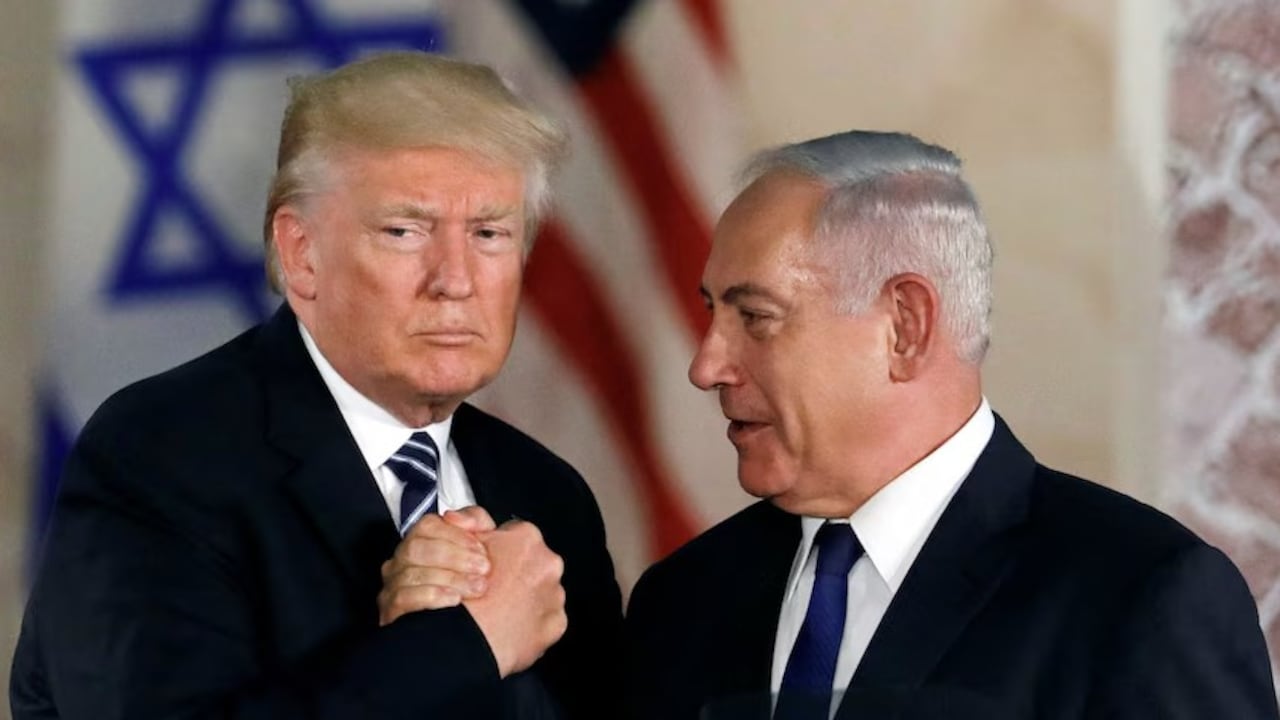
The entire diplomatic architecture of Donald Trump's Gaza initiative is currently hitting a brick wall over a single, stubborn question. Who lays down their cards first?
When the White House and its newly formed Board of Peace rolled out a 15-point roadmap, they hoped to bridge the gap left after the October 2025 ceasefire. That initial agreement brought a halt to heavy fighting and secured the release of surviving hostages. But it conveniently kicked the hardest issue down the road: what happens to the weapons? Now, the timeline has caught up with reality, and the old chicken-and-egg paradox of Middle East peacemaking is back with a vengeance.
The Sequence Trap
Trump's framework envisioned a staged process. Under this blueprint, Hamas would slowly give up its arms while Israeli forces simultaneously pulled back from parts of the enclave. It sounds neat on paper. In practice, it breaks down instantly.
Hamas insists it will only hand over its weapons if Israeli troops pull back first and halt all targeted operations. From their perspective, giving up arms without a guaranteed withdrawal leaves them completely exposed to renewed military pressure.
Israeli Prime Minister Benjamin Netanyahu takes the exact opposite stance. Speaking to his cabinet, Netanyahu flatly rejected any pullback until Hamas undergoes what he terms "genuine disarmament" rather than a cosmetic surrender of old rifles. Israel currently maintains control over a massive portion of the strip, roughly 70 percent by local estimates. Prime Minister Netanyahu faces intense pressure from his right-wing political base ahead of upcoming elections. Walking away from those strategic positions before total demilitarization is political suicide for his coalition.
The Mechanics That Are Failing
The implementation structure is also wobbling. The plan relies heavily on an International Stabilization Force and a newly formed Palestinian technocratic administration under the Board of Peace.
Recruiting troops for that stabilization force has proven difficult. While countries like Morocco, Kosovo, and Uganda have signaled willingness to send small contingents, larger commitments from nations like Indonesia were put on hold as airstrikes and skirmishes continued. Training a brand new local police force to handle internal security and disarm militant factions takes time that the current fragile environment simply doesn't afford.
Meanwhile, regional players watch closely. Iran reportedly advises Hamas to reject unilateral disarmament terms, keeping proxy pressure alive beneath the surface. The Board of Peace tries to project unity, issuing clarifications that it shares ultimate security goals with Israel, but papering over a fundamental sequencing disagreement doesn't make it go away.
Where This Leaves the Region
You cannot bypass basic distrust with a press release. If Israel refuses to move an inch past the Yellow Line until every tunnel is mapped and every rocket is handed over, and Hamas refuses to disarm until troops vacate, the roadmap stalls out permanently.
The momentum generated by the initial hostage release and humanitarian openings risks evaporating. Unless international mediators find a simultaneous verification mechanism that satisfies both sides' security red lines, this ambitious diplomatic push will collapse under the weight of its own sequencing failure.