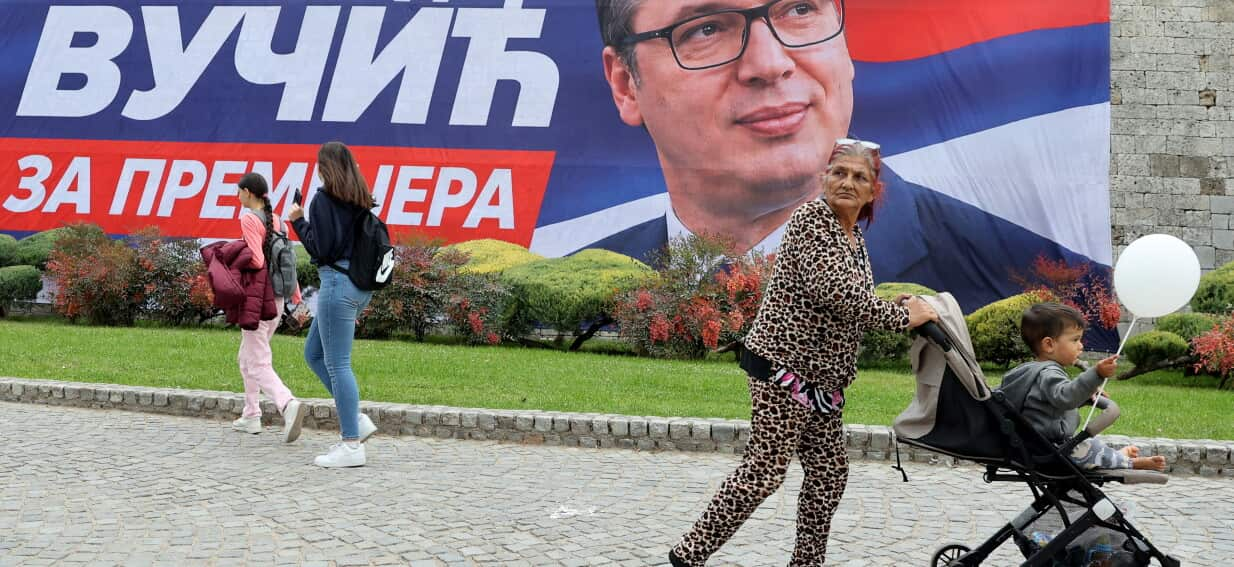
Serbia stands at a sharp crossroads. You are looking at a political system pushed to its absolute breaking point, where two starkly opposing forces are battling for the nation’s future. On one side sits a entrenched populist machine that has dominated the country for over a decade. On the other side is a decentralized, grassroots wave of citizens and students who refuse to back down.
If you want to understand why thousands have flooded the streets of Belgrade, you have to look past standard political labels. This isn't just another routine parliamentary election. It's a high-stakes referendum on corruption, democratic backsliding, and accountability.
The Catalyst That Ignited a Generation
Political movements rarely start in smoke-filled backrooms. They begin with profound tragedy. For Serbia, the breaking point arrived on November 1, 2024, when a concrete canopy at the Novi Sad railway station collapsed. Sixteen people died.
Evidence pointed squarely to botched modifications and unchecked corruption during rushed refurbishment projects. Yet, years later, accountability remains missing in action. No senior officials have faced real consequences.
That disaster transformed quiet frustration into open rebellion. University students didn't just hold temporary rallies; they organized campus plenums, marched across regions, and bicycle-toured the country to wake up rural electorates. They formed the Students' List, a radically unconventional electoral ticket featuring local experts, artists, and farmers—while deliberately barring current students to prove they weren't building personal political careers.
The Populist Playbook and Right-Wing Realities
Facing this unprecedented challenge is Aleksandar Vučić and his Serbian Progressive Party. Having stepped down from the presidency to seek a return as prime minister, Vučić commands a disciplined, clientelist political machine.
His strategy relies on absolute message control and aggressive polarization. State-aligned media routinely paint the student movement as foreign-funded saboteurs trying to instigate chaos. At the same time, the ruling party has leaned heavily into nationalist posturing, forging alliances with hardline right-wing factions and boasting of support from Moscow.
Vučić's supporters argue that his administration delivers economic growth, new infrastructure, and stability. Critics counter that this growth hides systemic rot. According to Transparency International indices, Serbia lags far behind its regional peers in anti-corruption metrics, trailing deep behind European standards.
What Happens When the Ballots Are Counted
Turnout remains the ultimate wild card. Opinion polls show an exceptionally tight race, with the ruling party and the student-backed coalition locked in a tense battle.
For the student movement, the challenge goes beyond winning seats. Maintaining unity without a traditional party leader or a strict internal hierarchy creates unique hurdles. If they break the mold and secure a massive upset, it could trigger a seismic shift across the Balkans, echoing recent populist defeats in neighboring countries like Hungary.
No matter the outcome on election night, the old political rules no longer apply. A generation that found its voice in the wake of tragedy has permanently altered the landscape. Serbia's choice isn't just about who sits in parliament next week; it's about whether accountability can finally overcome entrenched political power.