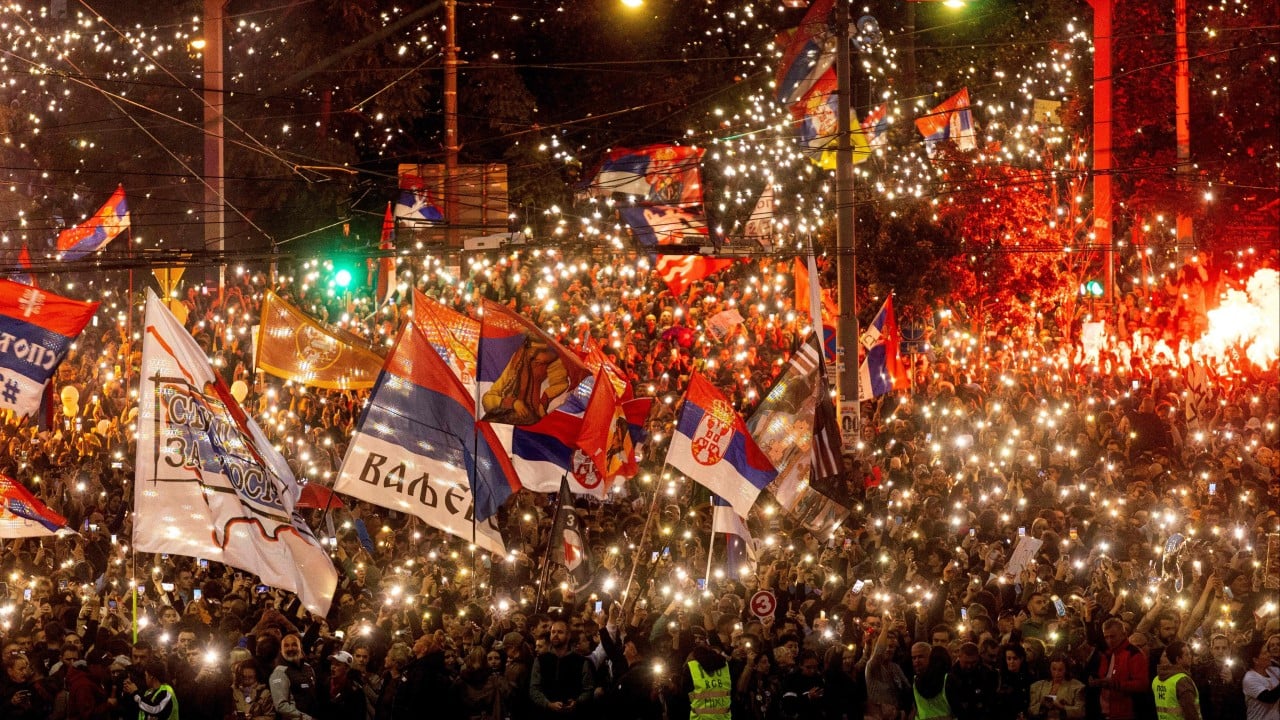
You can feel the tension in Belgrade today. Longtime political heavyweights in Serbia are sweating out a high-stakes parliamentary election that has upended the usual playbook. For over a decade, President Aleksandar Vučić and his ruling Serbian Progressive Party managed to outmaneuver fragmented opposition factions. They built an entrenched political machine that seemed untouchable.
Not anymore. A wave of youth-driven fury changed the calculus entirely.
Voters are heading to the polls to decide between the established political elite and a grassroots alternative known simply as the Student List. If you want to understand why this election matters far beyond the borders of the Balkans, you have to look at what broke the public's patience.
The Catalyst That Sparked a Movement
Politics rarely shifts without a human cost. In Serbia, that breaking point arrived on November 1, 2024. A concrete canopy collapsed at the railway station in Novi Sad, killing 16 people instantly.
Public anger exploded immediately. Investigations pointed to shoddy renovation work, compromised oversight, and systemic corruption within state-awarded infrastructure contracts. Years of simmering frustration over cronyism and unchecked executive power crystallized around a single tragedy. Citizens realized that neglected public infrastructure wasn't just an annoyance; it was dangerous.
Instead of blowing over, the demonstrations grew. Students occupied university spaces, organized blockades, and took their message directly to towns and villages that rarely saw anti-government campaigning. They biked and walked across rural regions, knocking on doors and talking face-to-face with voters who had spent years watching state-aligned television networks.
How the Student List Built an Alternative
Building a political movement from scratch usually requires millions in backing and seasoned party bosses. The student coalition took a radically different path. They refused to install a single supreme leader. Instead, they fielded a diverse 250-candidate roster featuring university professors, actors, farmers, and working professionals, led by cardiologist Ilija Srdanović.
Their campaign slogan cuts right to the bone: "Serbia or Mafia?"
Transparency International ranks Serbia among the most corrupt nations in Europe outside of strict authoritarian states. The student platform focuses heavily on cleaning up state institutions, restoring judicial independence, and fixing broken public services. They managed to collect nearly 70,000 signatures—almost seven times the legal requirement—proving that voter fatigue with the status quo is real and widespread.
Vučić responded by stepping down early from his presidential term to run directly for prime minister, trying to rally his base and maintain his grip on state levers. State-run media has dismissed the student organizers as foreign-backed agitators, but that narrative has struggled to stick against a backdrop of crumbling public transport, inflation, and stark wealth inequality.
What This Means for the Region
Elections in Serbia are closely watched across Europe. As an official European Union candidate country, Belgrade's democratic health directly impacts regional stability. For years, Western diplomats walked a fine line, tolerating authoritarian tendencies in exchange for short-term geopolitical stability.
That balancing act is breaking down. When citizens take to the streets in numbers exceeding 150,000 in central Belgrade, international capitals have to pay attention. The vote today isn't just about party platforms. It is a referendum on whether a modern European state can be captured by a single political network, or if a decentralized citizen movement can claw democratic institutions back.
Turnout will dictate the outcome. If enough disillusioned voters make it to the ballot boxes despite intimidation tactics, the political map of the Balkans will shift overnight. Expect a nail-biting count and high post-election friction regardless of the final numbers, because neither side is willing to back down quietly.