You dig up a three-thousand-year-old bronze mask from an ancient Chinese pit. You expect mud, corrosion, and maybe a few scratches. You probably don't expect to find preserved silk textiles clinging to the bronze surface. Yet, that is exactly what researchers uncovered when examining 101 artifacts from the famous Sanxingdui archaeological site in Sichuan Province.
Published in the journal Antiquity, the study details how scientists found microscopic silk fibres and mineral pigments on bronze masks, gold, jade, and ivory objects dating back to the Late Shang period between 1300 and 1046 BC. This isn't just a neat historical footnote. It completely changes how we understand the complex rituals of the ancient Shu civilization. You might also find this connected story useful: Why Calling Someone A Birdbrain Is Dead Wrong.
If you've ever wondered how ancient societies handled their most sacred offerings before burying them in sacrificial pits, the physical evidence left behind on these bronzes provides a very clear picture. Let's break down what these fragile fibres actually reveal.
The Microscopic Evidence Behind the Sanxingdui Silk
Finding silk on artifacts buried for three millennia sounds impossible. Silk protein degrades quickly in ordinary soil conditions. However, the unique chemistry of Sanxingdui changed everything. As reported in recent reports by Scientific American, the effects are notable.
As the bronze artifacts corroded underground, copper ions interacted with the organic material resting against them. This process, known as mineralisation, essentially preserved the shape and structure of the protein fibres before they could rot away completely.
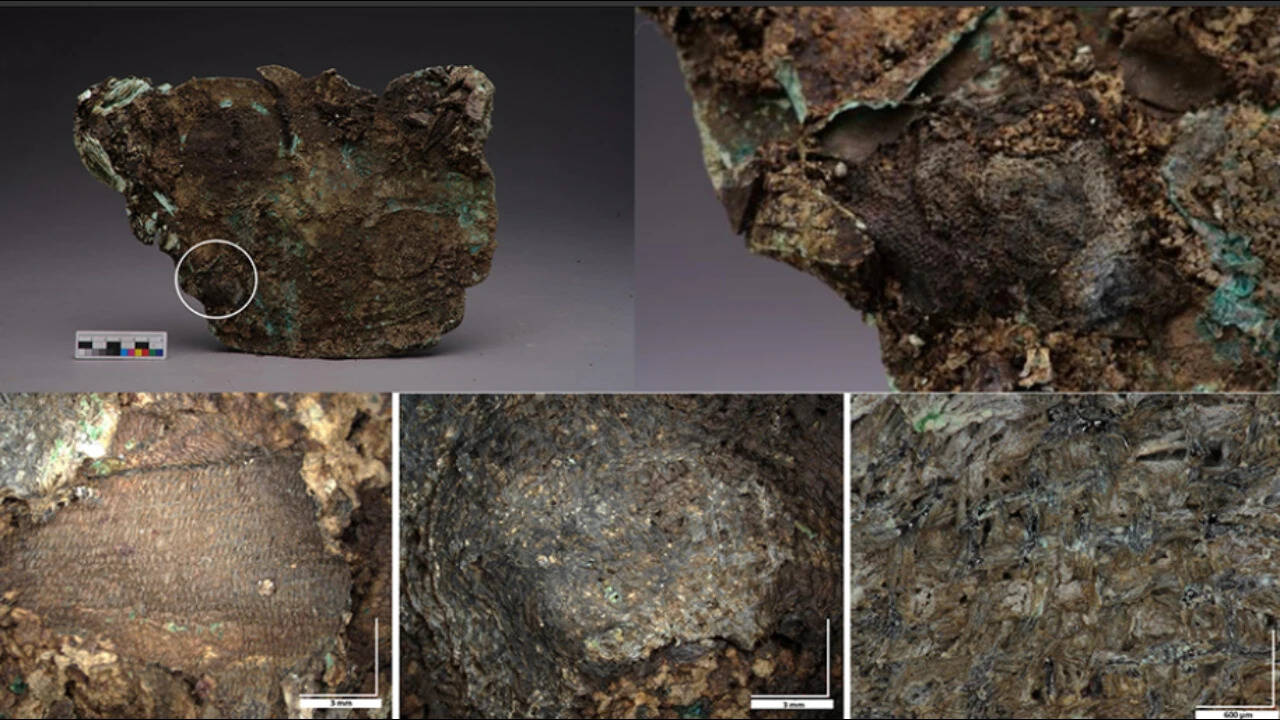
Researchers didn't just eyeball the finds. They used scanning electron microscopy (SEM) to examine surface structures, finding smooth threads averaging around 10 micrometres in diameter that matched natural mulberry silk. They also deployed Fourier-transform infrared spectroscopy (FTIR) to confirm the presence of proteins, ruling out animal hair or plant alternatives.
The weaving techniques varied wildly across the 101 objects. Some samples showed simple plain-weave patterns with loose threads, while others displayed tight, advanced weaving densities that rivaled textiles found at any contemporary site in ancient China.
Why Ancient People Wrapped Their Bronze Offerings
Location matters in archaeology. The researchers didn't just find stray threads blowing around in the dirt. The silk was physically stuck to specific parts of the artifacts, such as small patches near the right eye and eyebrow of a massive bronze mask.
In the sacrificial pits excavated between 2019 and 2022, fabric frequently turned up underneath the metal objects. A circular bronze ornament even featured five distinct layers of silk stacked beneath it.
People didn't just drop these treasures into pits. They deliberately wrapped them, layered them, and covered them as part of a formal ritual process. Think of it as a ceremonial burial package. The fabric served as a protective shroud, a decorative casing, or a direct offering in its own right. Many of these bronze objects were intentionally broken or burned before deposition, meaning the wrapping was likely part of an elaborate decommissioning ritual for sacred items.
The Mystery of the Red Pigment and Organic Dyes
The discovery didn't stop at raw protein threads. Some of the silk samples carried distinct color particles, giving scientists a glimpse into ancient textile dyeing techniques.
On one sample, researchers spotted bright-red particles. Chemical analysis confirmed the presence of iron, identifying the substance as ochre, a mineral pigment commonly used in ancient art. Another sample showed calcite mixed into the fibers, which might have acted as a coating or changed its appearance due to centuries of soil contact.
Even more fascinating, another sample showed a deep-red substance that had actually penetrated inside the fibres rather than just sitting on the surface. This points straight to an organic dye. The ancient Shu people weren't just wrapping their sacred bronze masks in raw, unbleached cloth. They were coloring them with deliberate pigments, adding visual and symbolic weight to the rituals performed in Sichuan three thousand years ago.
What This Tells Us About the Ancient Shu Civilization
For decades, the lack of written records at Sanxingdui left historians guessing about the inner workings of the ancient Shu culture. The massive bronze heads, towering trees, and golden staves showed they possessed elite metalworking skills, but everyday practices remained foggy.
This textile evidence fills in a massive gap. It proves that silk production and processing were central to their economy and religious life. While scientists haven't definitively proven whether the silk was produced locally or traded from elsewhere, the sheer quantity of textiles found across 101 different objects demonstrates that fabric was treated as a high-value commodity worthy of the gods.
When you look at a Sanxingdui bronze mask today, don't just see cold metal. Picture the bright red-dyed silk layers that once wrapped it, the careful hands that bound it before it was cast into a sacrificial pit, and the forgotten rituals of a civilization that understood the deep power of presentation.