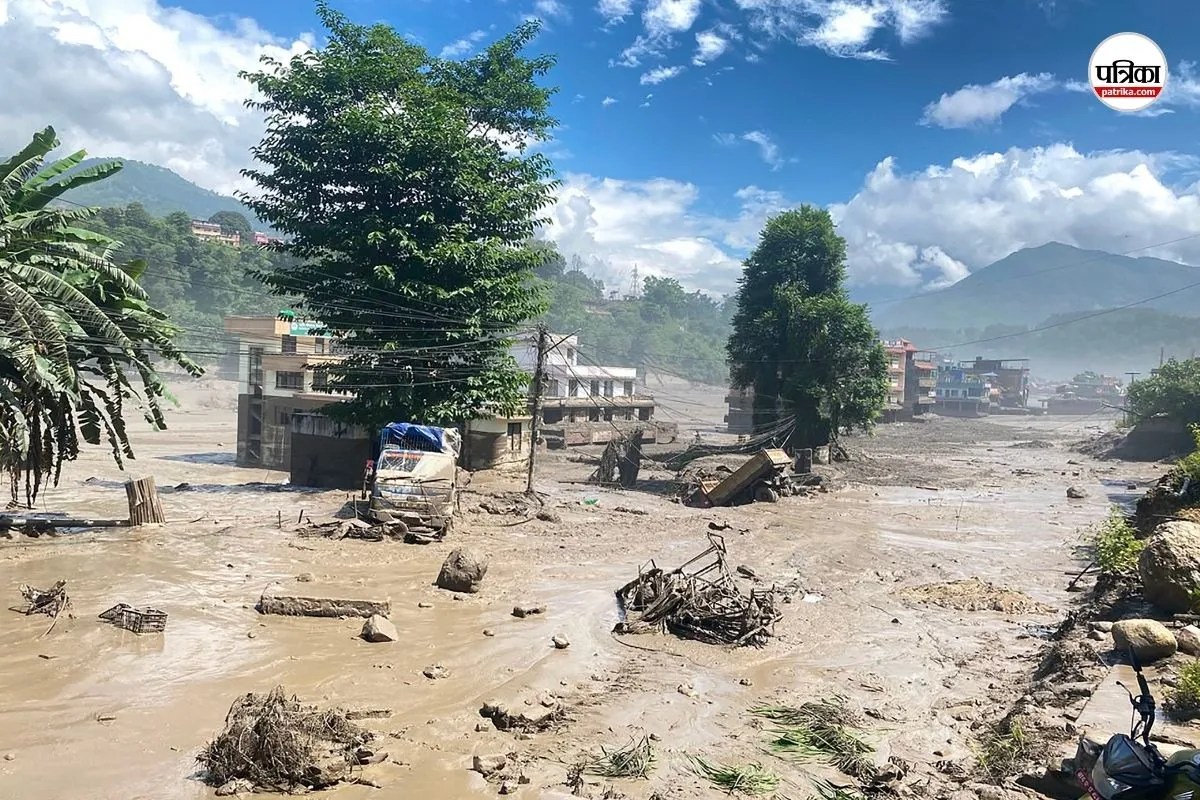
When roaring wall-of-water flash floods wipe out bridges, highways, and entire neighborhoods in a matter of minutes, geography turns into a prison. That's exactly what happened across parts of Nepal when unprecedented surges—fueled by massive water volumes rushing down from across the border—tore through river valleys like the Trishuli. Roads vanished. Communication lines went dead. Whole families found themselves stranded on opposite banks of raging brown torrents, wondering if help would ever reach them.
Yet human ingenuity adapts fast when survival is on the line.
The Improvised Lifeline Over the Trishuli River
With concrete bridges destroyed and steel spans twisted like wire, local residents and security forces didn't wait weeks for heavy machinery to roll in. They built a makeshift zip line across the raging gorge. Operating under the guidance of Nepal Police personnel, this high-wire makeshift pulley system became the single most critical transit corridor for trapped survivors.
Take Muhammad Amir Haq, a local merchant who got stuck on the wrong side of the water when the initial deluge hit on August 26. With his wife stranded away from him due to ongoing health complications, getting across meant facing a terrifying drop over churning debris-filled rapids. He took the leap on the zip line because staying put meant running out of food and options. While his wife was eventually evacuated via helicopter from a designated improvised helipad, hundreds of others relied entirely on the courage of hauling themselves across a single steel cable.
It looks dangerous because it is dangerous. But when infrastructure fails completely, a cable and a harness beat waiting to starve.
Prayers at the Monastery For the Missing
While the physical rescue operations grab headlines, the emotional toll unfolding inside local monasteries tells an even heavier story. In Rasuwa and surrounding valley pockets, community gumbas and monasteries have transformed from places of quiet worship into centers of profound grief and collective mourning.
According to figures from the National Disaster Risk Reduction and Management Authority (NDRRMA), the human cost has climbed staggeringly high, with over 1,114 bodies recovered and thousands of individuals still unaccounted for. Days bleed into weeks, and because entire homes were swept completely off their foundations by the sudden wall of water, many missing people left behind no trace. Families haven't just lost houses; they've lost whole lineages.
Local resident Tishung Ghale shared a heartbreaking reality with reporters, noting that multiple branches of his extended family—including his sisters, nieces, and aunts—vanished when their mountain settlements were washed away. With zero communication possible and no bodies recovered after more than a week, community members gather at the monastery to perform traditional Buddhist death rituals and prayers for the peaceful release of their loved ones' souls. It's an agonizing ritual born of closure when physical confirmation is impossible.
Another local elder, Bom Bahadur Tamang, pointed out that sudden cross-border water surges of this magnitude caught mountain settlements entirely off guard. When natural disasters erase your ancestral land overnight, the spiritual community provides the only framework strong enough to hold the collective trauma.
What Recovery Actually Looks Like on the Ground
Disaster reporting often focuses solely on initial casualty statistics and dramatic aerial footage, but the reality on the ground months later is messy, grueling, and deeply psychological.
- Infrastructure Gaps: Temporary fixes like zip lines keep immediate trade and medical transit breathing, but rebuilding permanent bridges across unstable Himalayan riverbeds takes years, not weeks.
- Displaced Economies: Local traders who lost storefronts and inventory overnight face financial ruin long after the floodwaters recede.
- Mental Health Toll: Traditional rituals like collective monastery prayers offer spiritual footing, but formal psychological trauma support in remote mountain districts remains critically scarce.
The resilience displayed by survivors pulling themselves across a wire rope is inspiring, but it highlights a harsh truth. Mountain communities are left to shoulder the immediate burden of climate-driven hydrological disasters long before official state recovery programs can physically carve paths back to them.
Take the lessons of the Trishuli disaster seriously. When extreme weather alters regional geography overnight, local solidarity and fast improvisation are the only safety nets that matter.


