Back in 1980, Billy Starr led 36 cyclists across Massachusetts. They got lost, ran into trouble with provisions, and missed their ferry. Starr expected his friends to be furious. Instead, they tossed him straight into Provincetown Harbor and promised to return next year to do it better.
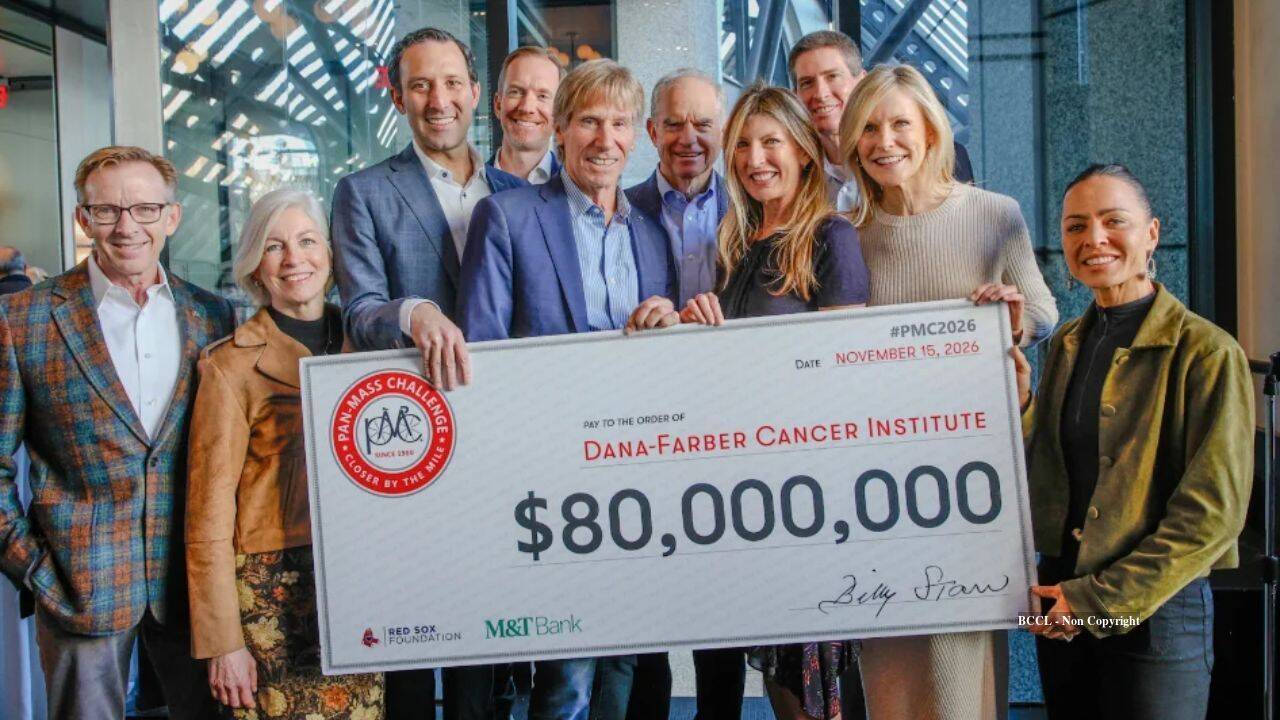
That messy first outing turned into the Pan-Mass Challenge. Decades later, the event redefined charity fundraising entirely. On November 15, 2026, the Pan-Mass Challenge handed over a record-shattering $80 million gift to the Dana-Farber Cancer Institute, pushing its lifetime contribution past the $1.2 billion mark.
If you want to understand how a grassroots bike-a-thon became the single largest athletic fundraiser in the world, you have to look past the impressive totals. You have to look at how a strict structural model changed modern oncology funding.
The Power of the 100 Percent Model
Most charities lose a massive chunk of donations to administrative overhead, marketing costs, and operational bloat. Donors hate it, but they assume it is just the cost of doing business.
The Pan-Mass Challenge bypassed that excuse completely. For twenty consecutive years, 100 percent of every dollar raised by riders goes straight to cancer research and treatment at Dana-Farber. Corporate sponsors, separate registration fees, and dedicated underwriters cover the operational bills.
That single design choice changed everything. When you tell a donor that every penny of their hundred-dollar contribution goes directly to a laboratory bench or a clinical trial, participation rates explode. People want impact, not bureaucracy.
Today, the numbers speak for themselves. The organization generates 67 percent of the Jimmy Fund's annual revenue, making it Dana-Farber’s single largest contributor. Without that cash flow, some of the most critical oncology trials in the United States would simply stall out.
Going Beyond a Single Weekend
Many casual observers think the Pan-Mass Challenge is just a grueling August weekend where thousands of cyclists pedal across Massachusetts. That misses half the picture.
The movement expanded into a year-round engine. Initiatives like the PMC Winter Cycle bring indoor spin sessions right into Fenway Park. PMC Unpaved carved out a massive gravel-cycling community, and PMC Kids Rides introduce children as young as two to philanthropic riding.
Diversifying the calendar matters. It keeps momentum alive during the off-season. It also broadens accessibility. Not everyone can tackle a blistering two-day, two-hundred-mile road route in August, but thousands can participate in an indoor spin or a local gravel ride.
Even leadership gets into the saddle. When Billy Starr fractured his pelvis in a bicycle accident just days before the summer ride—ending his personal streak of 46 consecutive events—he did not quit. He pivoted to become a reimagined rider, raising over $110,000 anyway. Dana-Farber's own president and CEO, Dr. Benjamin Ebert, rides in the event. When the people running the research institution are also wearing the cycling jerseys, trust deepens.
Where Every Dollar Actually Goes
Raising $80 million in a single year is a headline-grabbing feat, but the real story is what happens inside the labs at Dana-Farber. Philanthropic dollars operate differently than traditional federal grants.
Federal funding through agencies like the National Institutes of Health usually requires established data before a scientist can even apply. It is risk-averse. Breakthrough cancer research, however, relies on early-stage, high-risk concepts that might fail nine times out of ten.
Pan-Mass Challenge funding acts as venture capital for science. It gives researchers the freedom to test unconventional hypotheses, buy cutting-edge lab equipment, and expand clinical trials that save lives. Over the last five years, Dana-Farber investigators played a substantial role in developing more than half of all cancer drugs approved by the FDA. That output does not happen by accident. It happens because predictable, massive private funding feeds the pipeline.
The Human Side of the Pedals
Behind the multi-million-dollar checks are thousands of deeply personal stories. Nearly 6,500 riders and over 3,500 volunteers show up every year. Many wear names pinned to their jerseys. Others ride alongside Pedal Partners, who are young patients treated at the Jimmy Fund clinic.
In Lakeville, the stretch of road right before a major water stop turns into a gallery of hope. Families line the route with photos and handmade signs, waiting to cheer on the riders who pedal in their honor. It creates an emotional feedback loop. Cyclists push through exhaustion not just for a statistic, but for specific faces in the crowd.
When you look at the macro picture, the progress is staggering. In 1980, when Billy Starr first mapped out a route across the state, fewer than five million Americans were cancer survivors. Today, that number sits above 19 million. Better drugs, early detection, and sustained funding turned a fatal diagnosis into a manageable or curable condition for millions.
Cancer is relentless, but the community built around this Massachusetts ride proved it can be out-funded and out-pedaled. Set your own goals, support local initiatives that keep overhead at zero, and remember that massive movements always start with a few stubborn people refusing to quit.