On September 22, 1978, the music died in Seligman, Arizona.
Literally. Before that day, Seligman was a booming, neon-lit pitstop along U.S. Route 66, welcoming roughly 9,000 cars every single day. The streets hummed with the steady rumble of station wagons, motorcycles, and semi-trucks. Kids played in the glow of roadside motels.
Then, Interstate 40 opened just two miles south.
In a single afternoon, the traffic vanished. The humming highway fell completely, chillingly silent. Angel Delgadillo, the town barber, remembers standing in his shop, looking out at an empty street. The world, it seemed, had forgotten them in the name of high-speed progress.
Most people would have packed up and left. Many did. But Angel Delgadillo stayed.
Now 98 years old, this small-town barber is the reason why millions of travelers still seek out the nostalgia of the Mother Road every year. He did not just save his own business; he sparked a global movement that rescued an entire American cultural phenomenon from being paved over and forgotten.
The Day the Road Went Cold
To understand why Angel fought so hard, you have to understand what Route 66 meant to the people who lived along it. It was not just asphalt. It was an economic lifeline.
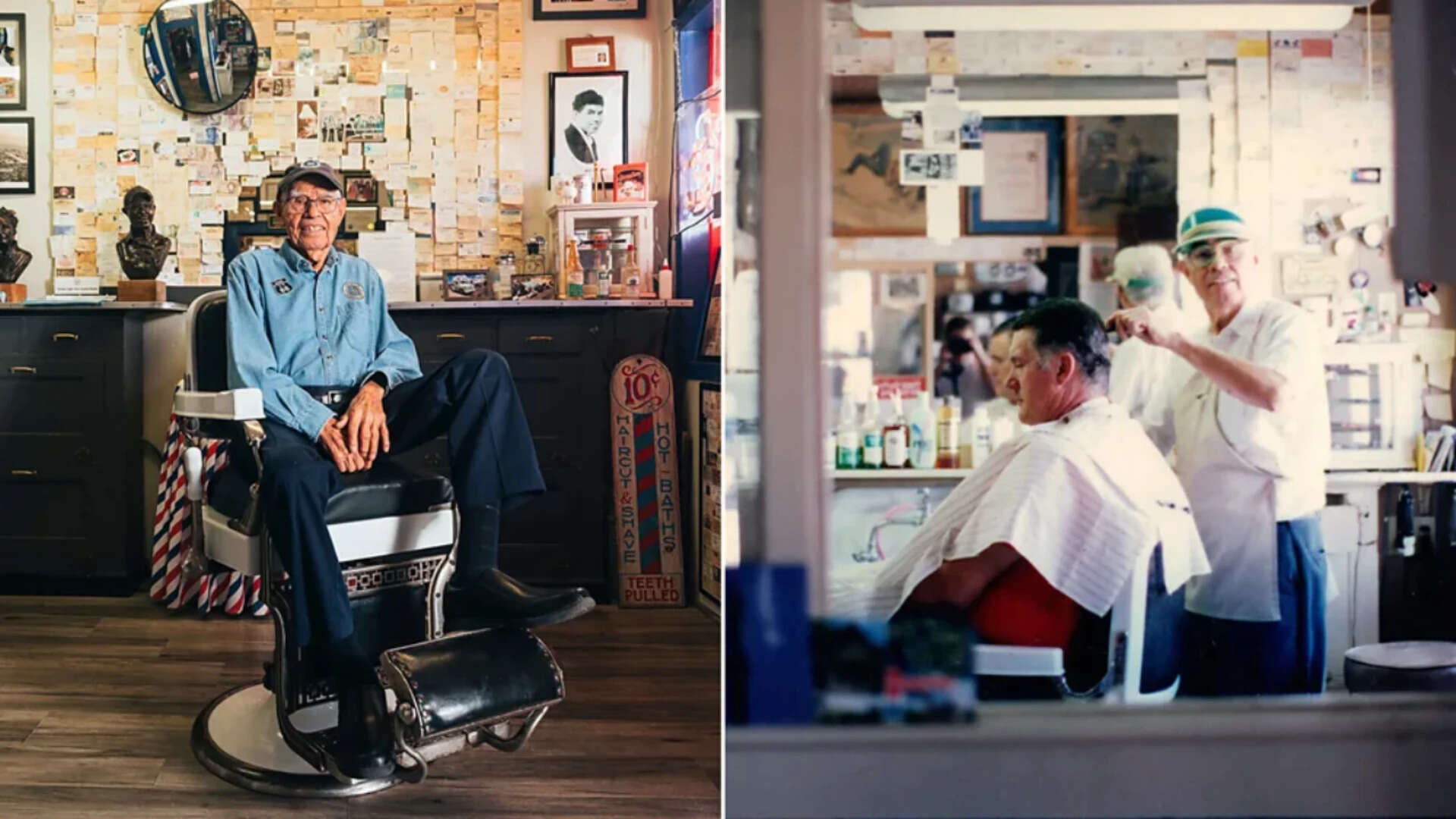
Born in Seligman in 1927, Angel grew up watching the evolution of the road. He saw the desperate families fleeing the Dust Bowl in the 1930s. He watched military convoys pass through during World War II. In 1950, after attending barber college, he opened his shop right on the main drag, using his father's 1926 barber chair.
For decades, the road provided. It paid for groceries. It built homes.
But the federal government's Interstate Highway System prioritized speed over community. Interstates were designed to bypass towns, not connect them. When I-40 bypassed Seligman, the economic impact was devastating.
Angel and his wife Vilma had four kids to feed. The family struggled to put beans on the table. The highway department did not even bother putting Seligman on the major mileage signs along the new freeway. Drivers had no idea the town was even there.
Angel was furious. He went to state officials with hand-drawn diagrams showing the lack of signage. He managed to get Seligman added to a few highway signs, but it was not enough. The town was dying, and everyone knew it.
Fighting Back Against the Interstate
For nine long years, Seligman withered. Shops boarded up their windows. Gas stations rusted in the desert sun.
Angel realized that waiting for the government to help was a losing battle. If Seligman was going to survive, the townspeople had to give travelers a reason to exit the highway. They needed to market the very thing that the interstate lacked: soul.
In February 1987, Angel organized a meeting. He invited business owners and representatives from other bypassed towns along the Arizona stretch of Route 66.
They met in Westside Lilo’s Cafe. The goal was simple but incredibly ambitious: lobby the state of Arizona to declare Route 66 a historic highway.
That meeting birthed the Historic Route 66 Association of Arizona. Angel was elected president. He spent his own money, wrote letters, made phone calls, and traveled across the state to pitch his vision.
People laughed at him. They told him he was trying to save a ghost.
But Angel persisted. In November 1987, the campaign succeeded. The state of Arizona officially designated a 159-mile stretch of Route 66—stretching from Seligman to Kingman and down to the California border—as Historic Route 66.
It was the first historic designation of its kind in the country. It changed everything.
How the Spark Caught Fire
Once Arizona proved that travelers wanted to experience the old road, other states took notice.
Route 66 associations popped up in Illinois, Missouri, Kansas, Oklahoma, Texas, New Mexico, and California. The movement became a nationwide effort to preserve vintage neon, quirky roadside attractions, and classic mid-century diners.
Back in Seligman, Angel and Vilma started selling small Route 66 souvenirs out of his barbershop to help fund the association’s work. That side hustle eventually grew into the world’s very first Route 66 gift shop.
Travelers from Germany, Japan, France, and Australia began showing up. They did not want to rush from point A to point B on a sterile interstate. They wanted to slow down. They wanted to talk to a local barber who had lived the history.
Angel’s barbershop became the unofficial headquarters of the Route 66 renaissance. He spent hours talking to tourists, cutting hair, and sharing stories. He became known as the "Guardian Angel of Route 66".
The Pixar Connection
If you have ever watched the movie Cars, you already know Angel's story, even if you did not realize it.
In the early 2000s, Pixar director John Lasseter and his creative team took a road trip along Route 66 to research a new animated film. They stopped in Seligman and sat down in Angel's barber chair.
Angel talked to them about the day the interstate opened. He described the sudden silence. He explained how the town literally disappeared from the maps overnight.
That conversation heavily inspired the fictional town of Radiator Springs. The character of Sally Carrera tells the exact story of the town being bypassed in a poignant flashback sequence in the film.
When Cars hit theaters in 2006, it introduced a whole new generation to the romance of the Mother Road. Seligman's tourism exploded.
Visiting Seligman Today
Angel retired from active barbering in July 2022 at the age of 95, after an incredible 75 years in the trade. But at 98, he still frequents the shop, greeting travelers and signing autographs.
If you are planning a trip to experience this piece of living history, you have to do it right. Do not just pass through. Slow down and experience the preservation efforts firsthand.
Here is how to make the most of a visit to Seligman:
- Stop at the Original Gift Shop: Visit Angel and Vilma's Original Route 66 Gift Shop at 22265 Historic Route 66. Grab a souvenir and see if Angel is there to chat.
- Eat at the Snow Cap: Just down the street, grab a burger and a shake at Delgadillo’s Snow Cap Drive-In. It was opened by Angel's late brother, Juan Delgadillo, in 1953, and is famous for its quirky, humorous service and vintage car decor.
- Walk the Historic Loop: Take the time to walk the main drag. The vintage neon, old-school motels, and classic cars parked along the street are not just props—they are the survival story of a town that refused to die.
Angel Delgadillo proved that one person’s refusal to give up can alter the course of history. Next time you find yourself speeding down Interstate 40, take the exit. Take the long way. Support the small towns that keep the soul of American travel alive.