The political theater in Washington says one thing, but the hard reality of the American power grid says another. If you listen to White House briefings, you're told that fossil fuels are making a monumental comeback. The administration has thrown everything it can at the wall to prop up coal, including using Cold War-era emergency powers to dish out $700 million in funding, killing $7 billion in affordable clean energy programs, and freezing permits for new offshore wind farms.
Yet, the laws of economics don't care about executive orders.
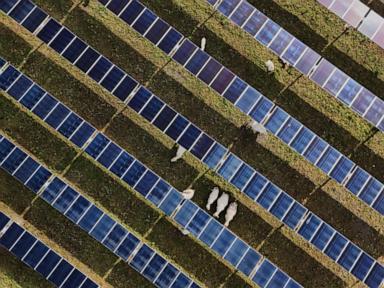
In May 2026, a massive structural shift quietly occurred on the American power grid. For the first time in United States history, solar power generated more electricity than coal over a full month. According to data from the global energy think tank Ember, solar panels supplied 12.8% of the country’s electricity, while coal slipped to 12.2%.
Think about how fast that happened. Just five years ago, coal was generating nearly 20% of America's power, while solar was a tiny 5.4% blip on the radar. Now, solar isn't just a niche alternative; it has officially become the third-largest individual source of power in the nation, trailing only natural gas and nuclear.
The Unstoppable Math of the Energy Markets
The federal government can cancel projects and terminate funding, but it can't force utility companies or private investors to lose money.
The main reason clean energy is winning is simple. It's cheap. Building a new utility-scale solar array is now dramatically less expensive than keeping an old, crumbling coal plant running. Wall Street and regional energy developers aren't building solar farms out of the goodness of their hearts. They're doing it because it offers the best return on investment.
Look at what’s actually being built across the country right now. Data from the Solar Energy Industries Association (SEIA) and Wood Mackenzie shows that during the first quarter of 2026, solar and battery storage accounted for a staggering 91% of all new generating capacity built in the United States.
The U.S. Energy Information Administration expects developers to bring a record-breaking 86 gigawatts of new capacity online by the end of this year. Over half of that entire pie—51%—is solar. Another 28% is battery storage.
Where is coal on that list of new construction? Nowhere. It doesn't even register.
Even though the White House points out that its intervention saved 17 gigawatts of coal power from planned retirement, these emergency measures are merely keeping aging plants on life support. They aren't sparking new construction. Nobody is building new coal infrastructure because no sane bank will finance it.
The Red State Solar Boom
There's a massive disconnect between national political rhetoric and what's happening on the ground in conservative states. You might assume that clean energy is a phenomenon confined to progressive bastions like California or New York. You'd be entirely wrong.
The deepest irony of the current energy transition is that the modern solar boom is overwhelmingly happening in parts of the country that voted for Donald Trump in 2024.
According to the SEIA, states won by Trump accounted for 74% of all solar capacity installed in the first quarter of 2026.
Texas is leading the pack by a mile, followed closely by Florida, Ohio, Indiana, Arizona, and Mississippi.
Why are these conservative regions embracing panels so aggressively? Because local leaders and landowners care about practical benefits:
- Property Taxes: Massive solar installations inject millions of dollars into rural county budgets, funding local schools and roads without raising taxes on residents.
- Landowner Income: Farmers and ranchers are leasing portions of their land for solar development, securing a guaranteed, drought-proof stream of revenue that keeps family farms afloat.
- Grid Reliability: In states like Texas, summer heatwaves push the grid to its absolute limit. Solar produces the most power during the exact hours when air conditioning demand threatens to cause blackouts.
Clean energy in the South is booming because it makes financial sense. It has nothing to do with ideology.
Navigating the Artificial Intelligence Power Crunch
We're also dealing with a brand new variable that didn't exist during previous political cycles: the insatiable energy appetite of artificial intelligence data centers.
After nearly two decades of completely flat electricity demand in the United States, consumption is skyrocketing. Tech giants are racing to build massive data hubs to train and run AI models. These facilities require immense amounts of power, and they need it immediately.
Tech companies have strict corporate climate mandates, meaning they actively prefer clean energy. But even putting emission goals aside, solar and battery pairings are simply faster to deploy than massive fossil-fuel baseload plants. A tech company can't wait a decade for a complex regulatory process to clear a new gas or coal facility. They need gigawatts online within a few years, and solar developers are the only ones capable of moving at that speed.
The administration argues that scaling back renewable energy regulations lowers consumer costs and protects the grid from blackouts. White House statements blame renewables for high energy bills. But if you talk to grid analysts, they'll tell you the real culprits behind rising electricity costs are soaring overall demand, extreme weather, and an aging transmission grid that desperately needs upgrading.
Trying to stop clean energy growth while demand spikes is a dangerous strategy that could actually drive consumer bills even higher by limiting the cheapest power source available.
What to Expect Moving Forward
The political headwinds will continue to cause friction. We'll likely see more legal battles, like the recent federal court ruling that struck down IRS guidance attempting to restrict wind and solar tax credits. There will be more funding cuts, more rhetoric, and more administrative delays on federal lands.
But the milestone achieved in May 2026 proves that the tipping point has already passed. The U.S. now has more than 6 million individual solar installations across the country, spanning from residential rooftops to massive desert arrays.
If you're a business owner, a local policymaker, or an investor trying to navigate this landscape, don't base your long-term strategies on political speeches. Focus on the underlying economics.
Here are the practical realities you need to plan around:
- Look to regional grids, not federal policy: Energy decisions are ultimately made by regional transmission organizations (RTOs) and state-level public utility commissions. Watch what your local grid operator is doing.
- Pair solar with storage: The conversation is no longer just about generating power; it's about storing it. The explosive growth of battery storage (28% of all new 2026 capacity) means the grid is rapidly fixing the "intermittency" problem of renewable energy.
- Expect solar to dominate summer grid reliability: As we head into the hottest months of the year, expect solar to repeatedly break its own generation records and keep the lights on during peak demand periods.
The federal government can tap the brakes, but it can't turn the ship around. The grid transition isn't waiting for Washington's permission.