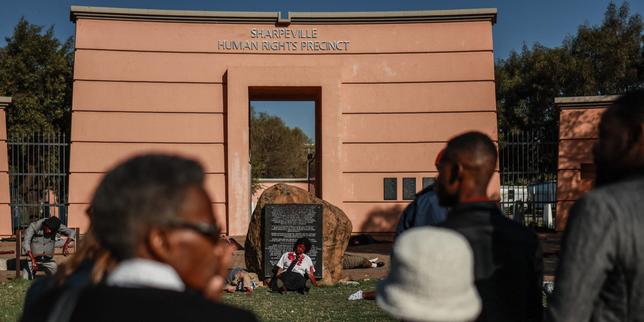
Thirty years have passed since the official collapse of the apartheid regime, yet thousands of families in South Africa are still staring at empty chairs and blank pages. The famous Truth and Reconciliation Commission (TRC) was built on a promise of national healing through amnesty and confession. But for many relatives of activists and victims, that promise curdled into a quiet betrayal. Files were shelved, prosecutions stalled, and accountability vanished behind political compromises. Today, victims' families are taking matters into their own hands, dragging the state back to court to force the reopening of cold cases that the establishment would rather forget.
You might wonder why these files are moving now, three decades later. The answer is simple: patience has run out. People are tired of being told to move on for the sake of national unity while the architects and perpetrators of state-sponsored terror walk free, live comfortably, and take their secrets to the grave. When you lose a parent, a sibling, or a child to security police brutality, time doesn't heal the wound if the official story is a blatant lie. Families want accountability, and they want the historical record corrected once and for all.
The Broken Promise of the Truth and Reconciliation Commission
The TRC was hailed globally as a diplomatic triumph. Led by Archbishop Desmond Tutu, it offered perpetrators amnesty if they made a full disclosure of their politically motivated crimes. It sounded noble on paper. In reality, it created a massive loophole. Hundreds of individuals applied for amnesty, told half-truths or outright lies, and walked away free. Meanwhile, the National Prosecuting Authority (NPA) failed to follow up on the cases where amnesty was denied or never applied for.
Political interference played a massive role. Successive governments chose political stability and reconciliation over painful prosecutions. They feared destabilizing fragile democratic institutions or rattling powerful networks within the police and military. Consequently, evidence gathered during the TRC hearings sat gathering dust in state archives. Witnesses aged, documents degraded, and political will evaporated.
Taking the State to Court
Families and civil rights organizations aren't waiting for government permission anymore. They are filing lawsuits and compelling prosecutors to reopen investigations into assassinations, forced disappearances, and torture conducted under the old regime. These legal battles are uphill fights. Police archives are notoriously disorganized, and critical evidence has mysteriously vanished over the decades.
Yet, strategic litigation is yielding results. Legal teams are proving that the state’s failure to investigate wasn't just administrative incompetence; it was a systemic dereliction of duty. When relatives step into a courtroom, they aren't just seeking personal closure. They are shattering the culture of impunity that persisted long after the first democratic elections in 1994.
The Human Cost of Unresolved History
Statistics don't capture the daily agony of living with an unsolved crime. Behind every cold case is a person whose life was cut short because they demanded basic human rights. Relatives talk about the psychological weight of silence. They grew up with whispered rumors, threats from security forces, and official reports claiming their loved ones died of natural causes or committed suicide in detention—blatant falsehoods that insults were added to injury.
Consider the case of activists whose bodies were never recovered. Families cannot hold proper burials or perform traditional mourning rites. This denial of closure creates a lingering trauma that ripples across generations. Children and grandchildren inherit the grief, the anger, and the unanswered questions.
What Comes Next for South African Justice
Reopening apartheid-era dossiers won't be easy, and it won't fix every wrong. Many perpetrators are elderly or have already passed away, meaning criminal trials might never happen for the worst offenders. But legal accountability is only part of the equation. The broader fight is about historical truth. It's about ensuring school textbooks, public archives, and national memory reflect the raw, unfiltered violence of the apartheid machine.
If you think transitional justice is a neat, clean process that wraps up neatly when a new constitution is signed, South Africa's ongoing struggle proves otherwise. True reconciliation cannot happen on top of buried secrets. Justice delayed is still justice, and for these families, the fight continues until every truth is dragged into the light.