The stakes couldn't be higher, and everyone is sweating. Just days before South Korea's grueling national college entrance exam, known locally as the Suneung, an alarming cheating confession has thrown the country into a full-blown crisis. A top scorer on a rigorous professional licensing test admitted he used artificial intelligence and hidden micro-cameras to ace the exam. Now, half a million students, panicked parents, and government officials are asking a terrifying question: Can traditional exam security survive the age of smart glasses and generative AI?
If you think this is just another minor school cheating scandal, think again. In South Korea, standardized tests don't just measure academic performance—they largely dictate social mobility, corporate careers, and entire life trajectories. When a high-profile candidate confesses to missing only one question on a brutal tax accountant exam by secretly feeding questions to an AI tool, it shatters public trust overnight.
How the AI cheating breach actually worked
The mechanics of modern exam fraud have evolved far beyond writing formulas on a palm or hiding a smartphone in a bathroom stall. Modern AI cheating exploits discrete wearable technology.
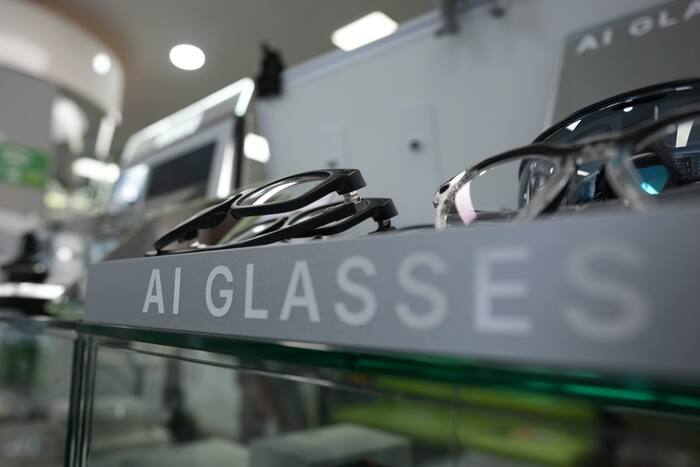
In the recent tax accountant exam scandal, the candidate used a microcamera to photograph exam questions, transmitted them out, ran them through an AI solver, and received answers in real-time. Across schools, authorities have caught students wearing AI-powered glasses equipped with tiny lenses and audio transmission systems. These devices look like ordinary horn-rimmed spectacles. They feature no glowing screens for proctors to spot, making them virtually invisible to a human invigilator walking up and down the aisles.
When an AI model can ingest a complex exam question and spit out an accurate, expert-level response in under three seconds, the traditional human supervisor becomes drastically outmatched.
The government scramble before the Suneung
The timing couldn't be worse. With the annual Suneung looming, the South Korean government has shifted into emergency mode. Prime Minister Han Seong-sook has ordered authorities to mobilize national capabilities to lock down exam centers, convening emergency meetings to deal with the public backlash.
Education authorities are deploying specially trained supervisors to every single test site specifically tasked with identifying smart glasses. Officials are rolling out strict device bans, prohibiting smartwatches and any electronic items, while considering blocking public Wi-Fi around test locations. Penalties are getting harsher too. Anyone caught possessing a prohibited electronic device faces immediate score invalidation and a multi-year ban from sitting for the test. Lawmakers are even discussing pushing bans up to ten years for repeat or organized offenders.
Yet, critics argue that relying on visual checks and basic bans is like bringing a knife to a laser fight. Teachers' unions and opposition politicians point out that proctors shouldn't shoulder the burden of catching invisible tech. Some public voices even called for extraordinary delays to overhaul security protocols, though the exam train refuses to stop.
Why traditional testing models are broken
This crisis exposes a deeper, structural flaw in high-stakes testing worldwide. For decades, exam boards designed security measures around stopping analog cheating: paper notes, hidden books, and peer-to-peer whispering. They never built systems to counter generative intelligence that fits on the bridge of a nose.
When evaluation systems rely on rote memorization and standardized multiple-choice questions, they naturally invite AI disruption. If an algorithm can pass a professional licensing exam with a near-perfect score, standardized testing is no longer measuring human intellect—it is measuring who can access and deploy covert technology most effectively.
What happens next
South Korea's scramble offers a warning flare for educational institutions globally. As wearable AI shrinks and gets smarter, physical proctoring alone will fail. Test administrators will eventually have to adopt advanced radio-frequency signal detectors, biometric authentication, and Faraday-cage testing environments.
Until then, thousands of exhausted students sit down for the Suneung under the heavy cloud of a digital arms race, knowing that the pencil in their hand is fighting an invisible algorithm.


