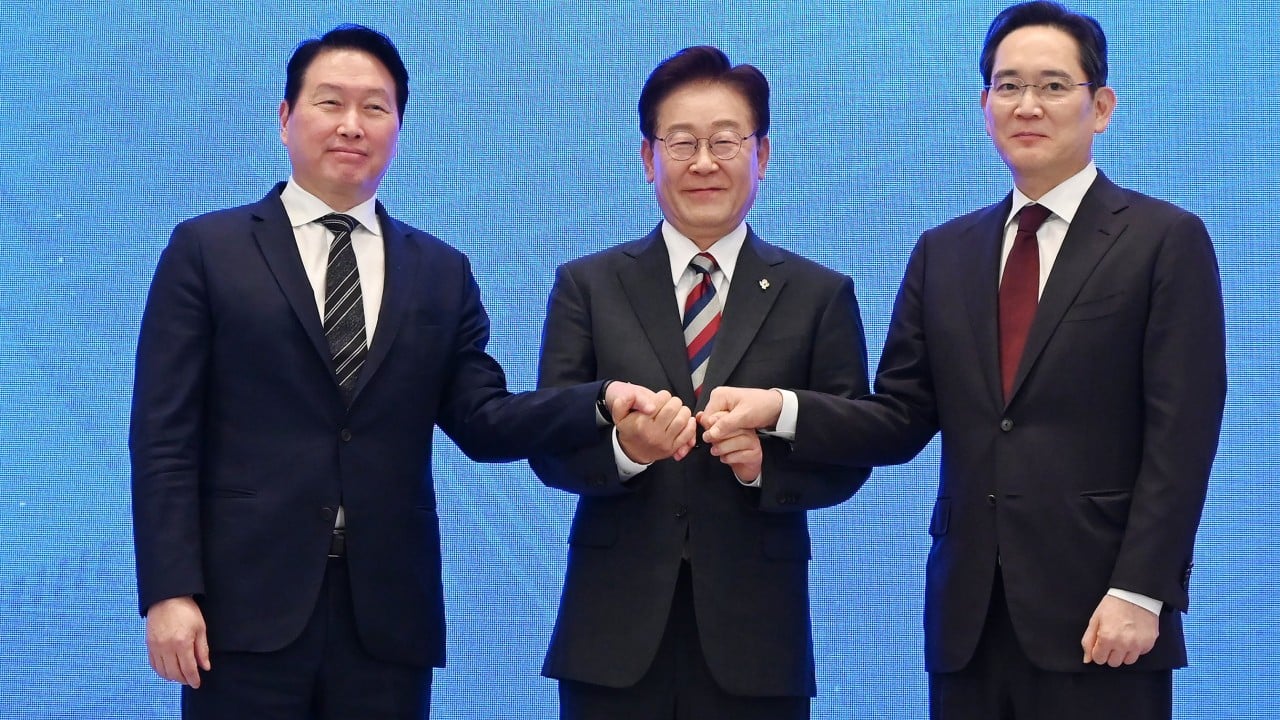
South Korea just dropped a financial bomb on the global tech ecosystem. President Lee Jae Myung, flanked by the billionaire chairs of Samsung and SK Group, committed over 1.2 trillion US dollars to a trio of massive artificial intelligence initiatives. They call them megaprojects.
The strategy isn't just about building faster computers or selling more memory chips. It's an aggressive, politically risky survival play designed to lock in a massive tech gap over regional competitors like China, Japan, and Taiwan. If you think the global chip wars were already intense, Seoul just cranked the pressure to an entirely new level.
The massive cash injection targets three massive pillars: a brand-new semiconductor manufacturing belt in the southwest, an unprecedented buildout of artificial intelligence data centers across the country, and an intense drive into physical robotics. This plan is staggering in scale. We're talking about an investment that equals more than two-thirds of South Korea's entire annual gross domestic product.
For tech professionals, global investors, and geopolitical analysts, this move changes everything about how the next decade of tech infrastructure will look. Understanding where this money is going and why the government is bypassing its traditional manufacturing hubs reveals the real stakes of the modern tech race.
Moving Beyond the Seoul Bubble
For decades, the story of South Korean economic success was the story of the capital region. If you built a high-tech facility, you built it near Seoul. Gyeonggi Province, specifically towns like Yongin and Pyeongtaek, became the default choice for semiconductor manufacturing. That concentration has officially hit a breaking point.
President Lee put it bluntly during the public announcement at Cheong Wa Dae. The metropolitan area is on the verge of explosion. Meanwhile, the outlying provinces are facing economic extinction.
The megaproject blueprint actively rejects the old geographic playbook. The government is directing a massive chunk of this capital to the Honam region in southwestern Korea. This area is historically rural and economically left behind compared to the industrial southeast.
Planned Semiconductor Investments (2026-2040)
- Honam Region (Southwest Cluster): 800 Trillion Won ($518.3 Billion)
- Advanced Packaging Hub (Chungcheong): 81 Trillion Won ($52.5 Billion)
- Total Nationwide Tech Commitments: Over 1.5 Quadrillion Won
Building in the southwest isn't just about charity or political points, though critics argue the upcoming mergers of Gwangju and South Jeolla Province play a heavy role in local voting blocks. The shift is intensely practical. Silicon manufacturing requires an absurd amount of electricity and clean water. The existing mega-clusters near Seoul are running out of both. The southwest coast happens to have an abundance of water and, crucially, a massive concentration of renewable energy infrastructure.
Samsung Electronics plans to deploy 400 trillion won to build four brand-new memory chip fabrication plants in Gwangju. SK Hynix is matching that energy, pledging its own 400 trillion won for a new production base in the same region. This completely resets the industrial map of the country.
Why Advanced Packaging Is the Next Battlefield
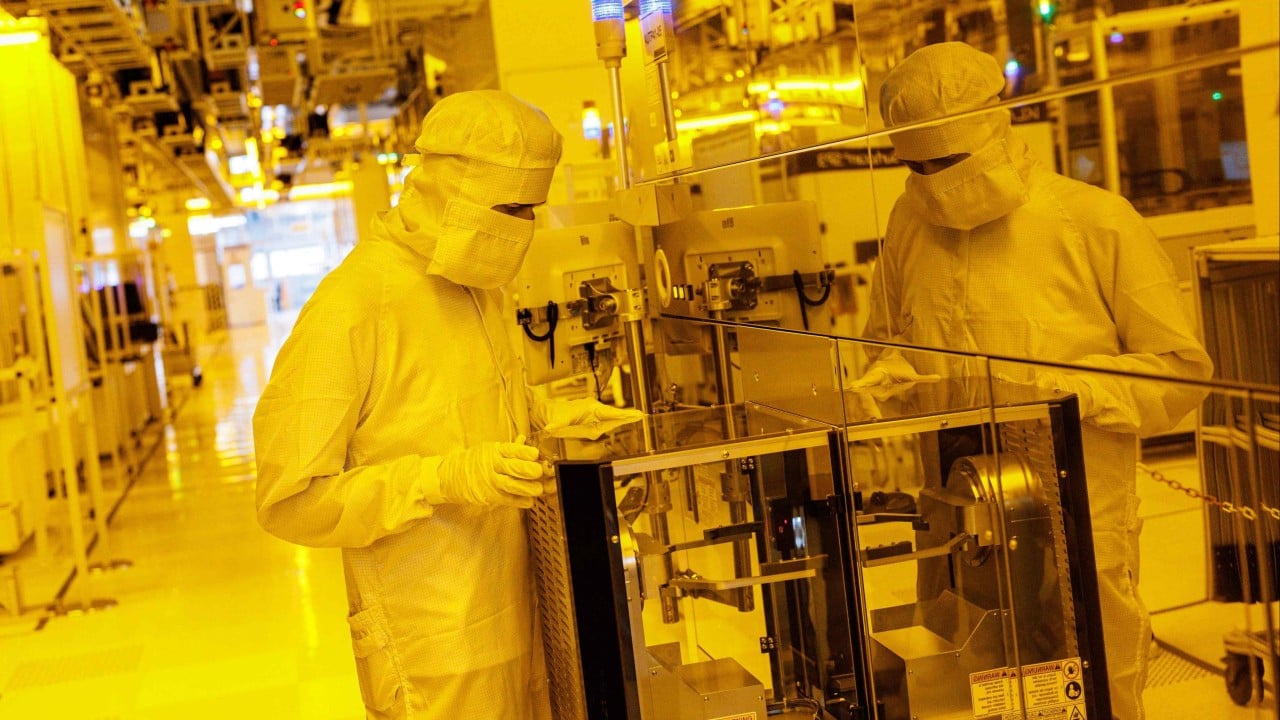
Most discussions about silicon chips focus entirely on fabrication. People want to know about nanometer sizes and extreme ultraviolet lithography machines. They completely ignore packaging. That is a massive mistake.
The modern artificial intelligence boom runs almost entirely on High Bandwidth Memory, or HBM. Nvidia can't build its elite AI processors without stacking memory chips directly on top of or right next to the logic processors. South Korea already owns the global HBM market, with SK Hynix leading the charge and Samsung pouring billions into catching up.
The Core Components of the New Industrial Belt
1. Honam Base: Front-end memory chip fabrication (Four new mega-fabs).
2. Chungcheong Hub: Advanced semiconductor packaging and HBM assembly.
3. Existing Gyeonggi Sites: Continued operation of Yongin and Pyeongtaek facilities.
The government's megaproject allocates 81 trillion won to the Chungcheong region to turn it into an advanced semiconductor packaging hub. Samsung is setting aside 56 trillion won specifically for advanced HBM fabs in Cheonan and Onyang.
If you can't package the chips efficiently, it doesn't matter how fast you forge the silicon wafers. China is investing hundreds of billions into its own domestic semiconductor pipeline, but it struggles immensely with advanced packaging. By locking down a specialized packaging hub in Chungcheong, South Korea aims to keep a multi-year technological lead that China cannot easily copy.
The Audacious Gigawatt Data Center Blueprint
Silicon chips are useless without the massive server farms needed to run actual AI training models. This is where the second major pillar of the megaproject comes into view. The scale of the data center expansion planned by Seoul is completely unprecedented for a nation of its size.
The science ministry outlined a tiered timeline that looks like this:
By 2029, a consortium featuring SK Group, GS Group, and the local search giant Naver will invest 550 trillion won to build an initial 8.4 gigawatts of AI data center capacity.
By 2035, the government wants to expand that national footprint to 18.4 gigawatts. The total cost for this data center push alone will cross the one quadrillion won mark.
To put those numbers in perspective, an average nuclear power reactor produces around 1 gigawatt of electricity. South Korea is planning to build out enough server capacity to draw the power equivalent of nearly twenty nuclear reactors purely for AI operations.
SK Telecom has already indicated it won't be funding this monstrous buildout entirely on its own balance sheet. The company is actively courting global tech giants and international venture capital firms to establish strategic partnerships. It's an open invitation for global capital to anchor itself inside the South Korean hardware ecosystem.
Betting Big on Physical AI and Humanoid Robots
The final piece of the puzzle is what the government calls physical AI. In plain English, this means embodied artificial intelligence: robotics, automated factory systems, and autonomous machines.
The stated national goal is to turn South Korea into one of the top three global robotics powers by 2030. They aren't talking about basic robotic arms that weld car doors. The blueprint sets an explicit target for the commercialization of highly advanced humanoid robots tailored for ten major industries by the year 2028.
Physical AI Development Milestones
- 2028: Commercialization of industry-specific humanoid robots.
- 2030: Target to become a top three global robotics power.
- Five-Year Window: Training 10,000 highly specialized AI robotics engineers.
This part of the plan is an explicit defense mechanism against China's massive manufacturing advantages. China has used its massive labor pool and state-subsidized factories to dominate global supply chains. South Korea cannot compete on pure human labor volume. Its population is aging faster than almost any other nation on earth.
By heavily subsidizing domestic physical AI foundation models and training 10,000 elite robotics specialists over the next five years, South Korea wants to fully automate its own heavy industries. The plan is to create highly advanced "data factories" that run completely without human intervention. It's a calculated move to keep production costs incredibly low while keeping output quality insanely high.
Why Investors Are Skeptical and Stock Prices Dropped
You might assume that an announcement of this size would send tech stocks soaring. It didn't. Immediately after the public briefing, Samsung Electronics shares tumbled over four percent, and SK Hynix fell close to three percent before recovering slightly.
Why did Wall Street and Seoul traders react with a collective shrug? Because the tech market is currently suffering from serious AI fatigue.
Investors are starting to ask hard questions about the timeline for returns. Building a massive semiconductor fab takes years. Setting up an 18-gigawatt network of data centers takes over a decade. Meanwhile, tech companies are burning through incredible amounts of cash right now.
There's a growing fear that the global tech sector is overbuilding infrastructure for an AI software market that hasn't yet proven it can generate trillions of dollars in recurring revenue. If the demand for AI services cools down over the next three years, Samsung and SK Hynix could find themselves holding trillions of won in expensive, half-finished infrastructure.
Furthermore, the domestic political friction is real. The main opposition party has pointed out that the target investment zone in the southwest happens to be a massive political stronghold for President Lee. Critics argue that using national strategic policy to direct trillions of corporate won to friendly voter bases looks suspicious, regardless of the region's abundant water and green energy supplies.
What Tech Leaders Need to Do Next
If you run a business or invest in the global technology supply chain, you can't afford to ignore this massive policy shift. Seoul's trillion-dollar gamble will distort global tech economics for the next two decades.
Here is how you should position your operations to prepare for this incoming wave of state-backed capacity:
- Audit Your Hardware Pipeline: If your software platforms rely on advanced memory or HBM, start building deep direct relationships with Samsung and SK Hynix outside of their traditional Seoul corporate offices. The power center is shifting south.
- Track the Packaging Hubs: Watch the development of the Chungcheong packaging hub closely. The real bottleneck in AI computing isn't chip design; it's advanced assembly. Vendors tied to this hub will likely get massive state subsidies, making them cheaper partners.
- Evaluate Regional Infrastructure Limits: If you're building data infrastructure in Asia, take a hard look at your power access. South Korea's massive gigawatt data center buildout means they will be consuming an enormous share of regional energy equipment and green power assets. Secure your utility contracts early.
The era of easy tech growth in standard tech capitals is over. South Korea is betting its entire economic future on an industrial migration to the provinces, hoping that speed and sheer scale can keep its regional rivals at bay. It's a brutal, high-stakes race where finishing second means economic irrelevance.