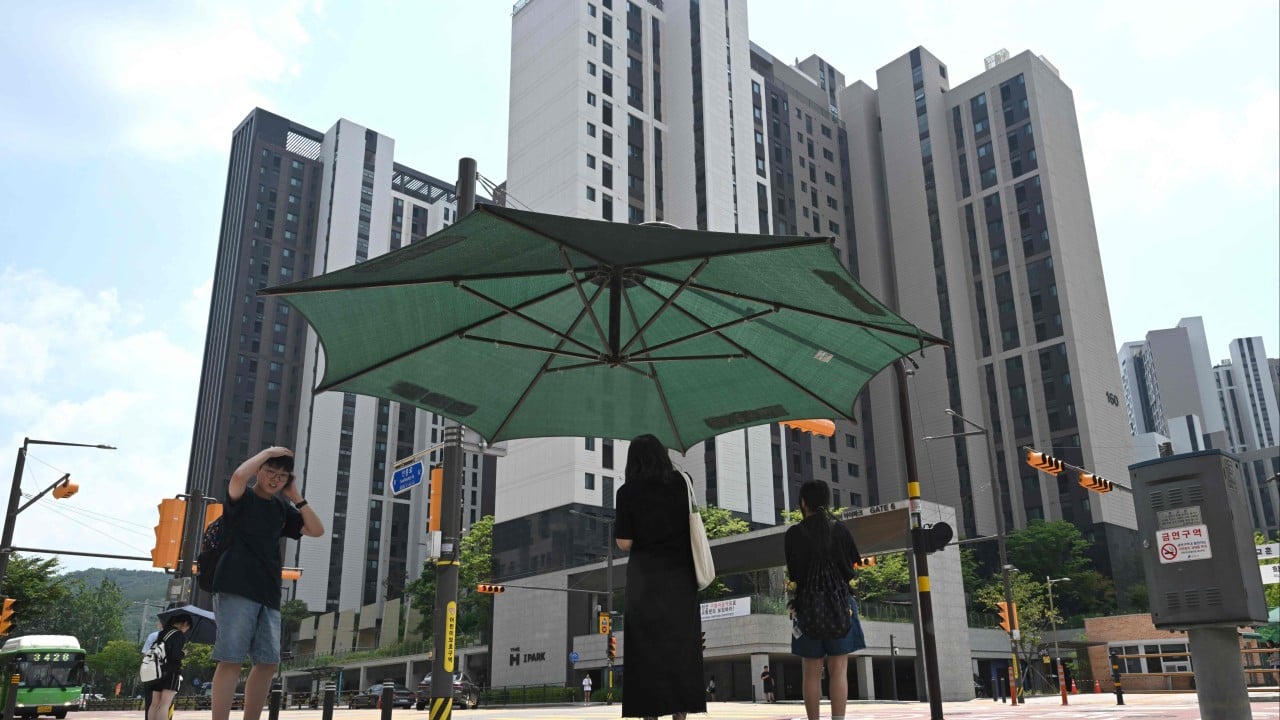
Thermometers don't usually hit 42.5 degrees Celsius in South Korea, but they just did. When the southeastern city of Yangsan smashed a 122-year weather record, it wasn't just an uncomfortable afternoon. It was a breaking point for a country built for distinct seasons, now caught off guard by an unrelenting climate trap.
President Lee Jae Myung didn't mince words at a cabinet meeting, labeling the crushing heatwave a national disaster. With the death toll climbing to 19 and over 2,000 people suffering from heat-related illnesses since mid-May, the government is scrambling to overhaul an emergency response system that wasn't designed for this level of thermal punishment. If you think this is just standard summer weather, you're missing the entire reality on the ground.
The Breaking Point In Seoul And Beyond
The Korea Meteorological Administration did something it has never done before. Officials issued the highest-level heatwave warning for parts of Seoul and Gyeonggi province, quickly blanketing the entire capital as conditions worsened. When the nation's economic and cultural hub gets shut down by weather advisories, you know things are bad.
Baseball games in Seoul and Gwangju got canceled because standing on an asphalt field became a health hazard. Firefighters spent their days spraying water onto crowded neighborhoods just to drop the surface temperature of boiling streets.
President Lee pointed out the uncomfortable truth: extreme weather is the new normal. The old playbooks of telling people to stay indoors and drink water aren't working anymore.
Who Is Actually Suffering The Most?
Statistics tend to wash away human reality, but the numbers tell a grim story. Roughly a third of the heat-illness patients are older adults, many living in vulnerable areas like the jjokbang single-room districts in western Seoul.
Walking through these neighborhoods reveals an acute disparity. While office workers retreat into heavily air-conditioned skyscrapers, residents in tight, poorly ventilated alleys struggle to find relief. Local authorities have relocated some residents to temporary air-conditioned public shelters, but homeless populations and isolated seniors remain exposed.
Power grids are operating under extreme strain. President Lee ordered immediate grid inspections because a widespread blackout during a 40-degree spike wouldn't just be an inconvenience—it would be catastrophic for hospitals and home-bound elderly residents.
What Comes Next For Crisis Management
You can't fix a systemic climate failure with temporary band-aids. South Korea's administration is facing intense pressure to completely redesign how it handles environmental emergencies.
The structural changes required go far beyond handing out portable fans or emergency text alerts. Cities like Yangsan and Seoul need long-term urban cooling strategies. Think massive expansions of urban green spaces, mandated reflective roofing materials, and upgraded cooling infrastructure in every low-income housing district.
Take a look at your own local preparedness plans. When extreme weather hits your region, waiting for a government memo is a losing strategy. Monitor your local power grid stability, check on elderly neighbors who live alone, and treat high-temperature warnings with the same urgency you would give a freezing winter blizzard.
The heat isn't going away next week. Adapting to it means changing how cities are built before the next record breaks.
“The Situation Is Very Serious” | South Korea's Lee Responds as Deadly Heatwave Kills 16
This video provides an overview of South Korea's response to the extreme heatwave conditions and President Lee's emergency measures.
http://googleusercontent.com/youtube_content/1