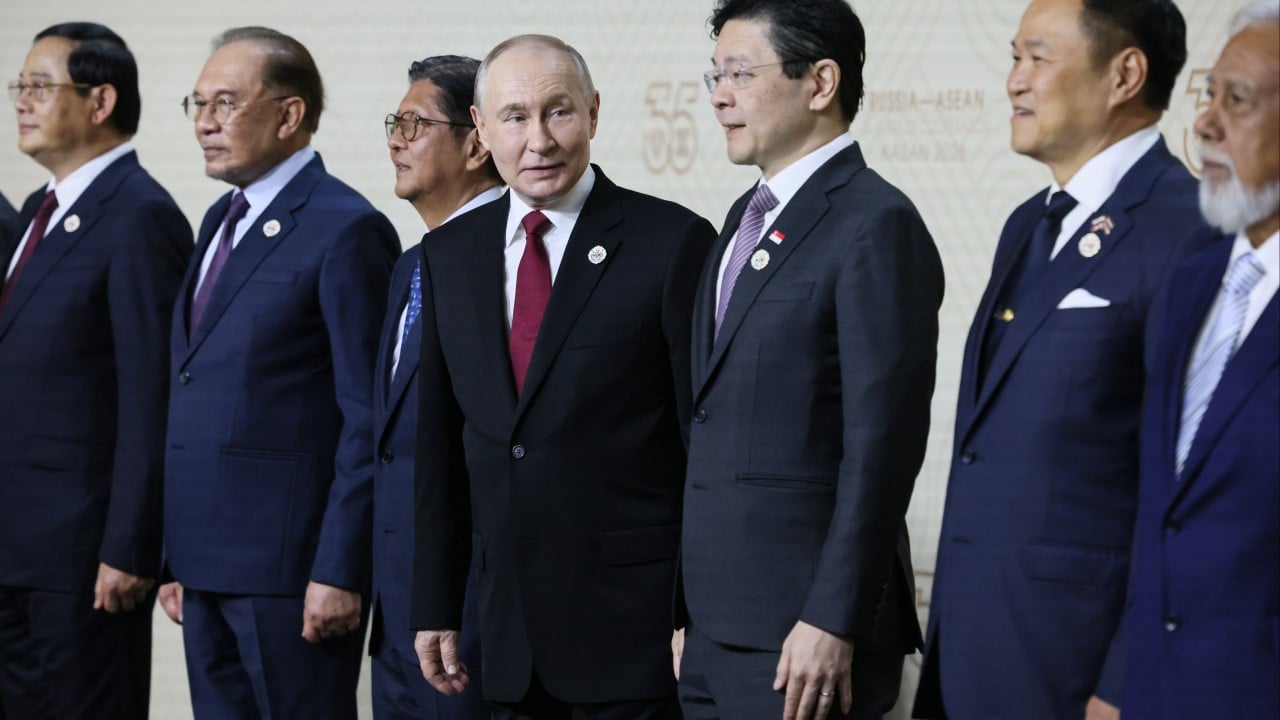
The Middle East is on fire, the Strait of Hormuz is effectively closed, and Southeast Asian leaders are flocking to Russia.
It isn't a political stunt. It's pure survival.
The recent outbreak of war in the Middle East has completely shattered Southeast Asia's energy security. With roughly 60% of the region’s crude oil imports traditionally sourced from the Gulf, the abrupt supply disruptions have sent local petrol and electricity prices through the roof. Countries like the Philippines, which imports over 90% of its crude, face immediate fiscal panic.
So, where do they turn when Western sanctions make Russian fuel controversial, but empty grids make it mandatory?
Just days ago, the Association of Southeast Asian Nations (ASEAN) wrapped up a massive, historic summit in Kazan. For the first time in eight years, bloc leaders met in person on Russian soil. They didn't just talk about diplomacy. They walked away with a sweeping, comprehensive energy pact stretching to 2030, covering everything from crude and liquefied natural gas (LNG) to floating nuclear reactors.
Washington and Beijing have spent years treating Southeast Asia as a binary tug-of-war. Moscow just walked through the back door with a cheaper, more reliable third option.
The Real Numbers Driving the Moscow Shift
Let’s be direct. ASEAN nations aren't backing Vladimir Putin's foreign policy. They’re protecting their own factories, data centers, and households. According to the International Energy Agency (IEA) 2026 Southeast Asia Energy Outlook, the region's energy import bill is on track to skyrocket from $80 billion in 2024 to a crippling $245 billion by 2035 if they don't find alternative, steady pipelines.
Subsidizing fossil fuels to shield angry citizens already cost regional governments $40 billion before this latest global crisis. They can't afford to keep bleeding cash.
Russian energy represents an immediate, highly lucrative escape valve. During the Kazan summit, Indonesian Foreign Minister Sugiono stated flatly that the region wants partnerships that shield it from external shocks. While Western nations tighten the screws on Russian revenues, Jakarta, Manila, and Hanoi see an opportunity to practice advanced hedging. They get heavily discounted crude and LNG right when their booming tech sectors need it most.
The timing is critical. Southeast Asia is currently experiencing an unprecedented explosion in data center construction and semiconductor manufacturing. These facilities require massive amounts of continuous, unblinking base-load power. Solar panels and wind turbines can't keep up with a triple-digit surge in industrial electricity demand. Coal is dirty, and Middle Eastern oil is stuck behind naval blockades. Russia's state-owned giants are stepping in with exactly what the region needs.
The Nuclear Trap Everyone Is Ignoring
While oil and gas dominate today's headlines, the real long-term play is nuclear infrastructure. Russia’s state nuclear corporation, Rosatom, has quietly built an absolute monopoly on the global nuclear export market, and it’s capitalizing heavily on Southeast Asia’s current desperation.
Rosatom is the only entity on Earth that handles the entire nuclear fuel cycle. They mine the uranium, enrich it, build the plant, train the local engineers, and promise to take the radioactive waste back to Russia. For a developing country looking to go nuclear, that all-in-one package is impossible to resist.
Look at what's actually happening on the ground right now in 2026:
- Indonesia: In mid-May, Rosatom's chief Alexey Likhachev landed in Jakarta to meet President Prabowo Subianto. Indonesia wants two operational nuclear plants by 2032. Prabowo has already made multiple trips to Russia over the last year, openly leaning toward Russian large-scale and small modular reactors (SMRs).
- Vietnam: Hanoi just signed a massive intergovernmental agreement in March. Rosatom is set to deploy reactors capable of generating 2.4 million kilowatts, reviving a dormant nuclear program in Ninh Thuan province championed by General Secretary To Lam.
- Myanmar and the Philippines: Both are actively reviewing Russian floating nuclear power plants to provide electricity to isolated, off-grid islands.
The catch? Building a nuclear plant isn't like buying a shipment of coal. It binds a nation to the supplier for at least half a century.
A standard reactor takes nearly a decade to build and operates for 60 years. Throughout that entire lifecycle, the host country relies completely on Russian technical expertise, spare parts, and specialized fuel rods. By signing these deals, ASEAN nations aren't just buying power. They’re granting Moscow permanent geopolitical leverage in the backyard of the Western alliance.
Washington and Beijing are Caught Napping
For a long time, the dominant narrative was that China would easily dominate Southeast Asia through its Belt and Road Initiative, while the US would counter with naval presence and security alliances. Russia was largely dismissed as a fading, broke ex-superpower with nothing to offer but cheap weapons.
That assessment was wrong.
The US simply doesn't offer competitive energy alternatives. American nuclear companies are private, heavily regulated, and cannot offer the aggressive state-backed financing that Rosatom uses to seal deals. Russia routinely finances up to 85% of a project’s multi-billion-dollar construction costs through state loans. Washington offers lectures on governance; Moscow offers to pay for your power grid.
China, meanwhile, has its own nuclear ambitions, but many ASEAN nations are deeply uncomfortable relying too heavily on Beijing due to active territorial disputes in the South China Sea. Buying energy from Moscow feels safer for countries like Vietnam and the Philippines. It allows them to maintain a powerful partner that can act as a buffer against Chinese dominance without fully aligning with the West.
The Immediate Next Steps for Regional Observers
If you're tracking geopolitical risk, energy markets, or supply chain stability in Asia, stop looking exclusively at the South China Sea naval maneuvers. The real action is happening in the ministries of energy.
First, watch the implementation of the ASEAN Plan of Action for Energy Cooperation (APAEC) running through 2030. The newly minted Kazan agreements mean we will see an influx of Russian technicians and maritime oil transfers throughout the Malacca Strait.
Second, monitor how the US treasury responds to these blatant workarounds. Up until now, Washington has largely given Southeast Asian nations a pass on buying Russian fuel because pushing them too hard would alienate key allies against China. With ASEAN explicitly integrating Russia into its long-term power grid plans, that blind eye will be much harder to maintain.
The idea of Russia acting as a true "third power" in Southeast Asia is no longer a theoretical talking point for think tanks. It's a structural reality solidified by cold, hard energy dependency.