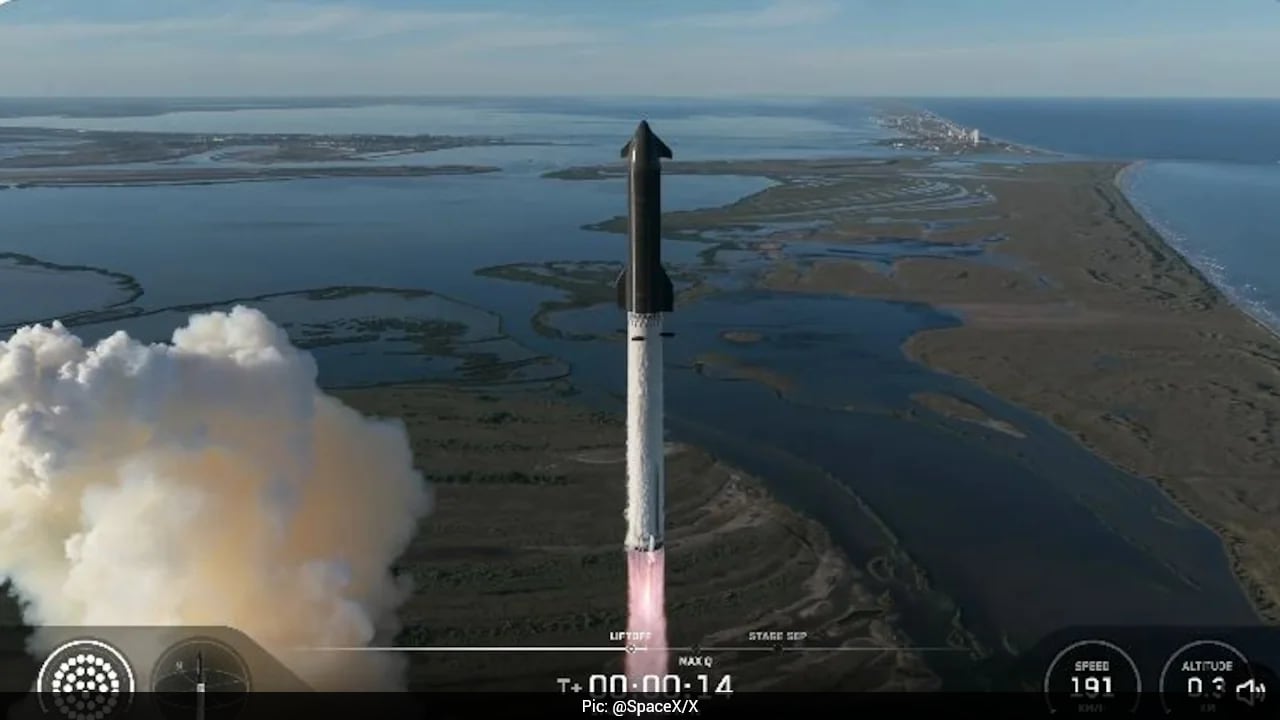
Rocket science doesn't care about your timeline. During the recent Starship Flight 15 launch from Starbase in Texas, SpaceX hit an unexpected wall when an automated safety system forced the team to call off the signature tower catch for the massive Super Heavy booster. Instead of sliding gently into the mechanical "chopsticks" of the launch mount, the multi-story first-stage rocket was diverted toward an offshore touchdown in the Gulf of Mexico.
If you've followed Elon Musk's iterative development cycle for very long, you know that setbacks like this aren't fatal. They're just expensive tuition paid to the physics gods. But the botched booster recovery highlights the razor-thin margins of operating a 400-foot fully reusable rocket system.
What Actually Triggered the Abort
SpaceX hasn't released a full post-mortem yet, but telemetry and flight profiles point directly to an automated health check. The upgraded Super Heavy V3 booster executed its hot-staging separation and flipped around for its supersonic retro-burn as planned. Somewhere during the final descent phase, a sensor reading or structural telemetry threshold triggered an abort sequence.
When you're trying to guide a steel cylinder weighing thousands of metric tons back between two massive mechanical arms, hesitation equals disaster. The onboard flight computer made the correct, conservative choice. It waved off the tower return and commanded an offshore splashdown. The booster completed its landing burn and met its end in the water instead of the concrete pad.
The Reality of Iterative Engineering
Traditional aerospace companies spend a decade and billions of dollars on computer simulations before rolling out hardware. SpaceX builds ten of them in a tent, blows half up, and figures out the rest on the fly. It's messy, loud, and polarizing.
Yet this philosophy is why the company has already pulled off jaw-dropping catch stunts in previous tests. Missing a catch on Flight 15 doesn't mean the architecture is broken. It means the new hardware iterations—like upgraded Raptor engines, revised grid fin actuators, and thermal protection tweaks—are being pushed to their absolute limits in real-world flight conditions.
The upper-stage Starship still pushed onward into orbit to deploy a batch of Starlink satellites, proving that the core mission architecture remains resilient even when a primary booster recovery milestone gets stripped away.
What This Means for the Future of Flight
Full and rapid reusability is the only way Starship makes economic sense. Burning up or sinking multi-million-dollar boosters defeats the entire purpose of a Mars-class transportation system. Every flight test provides gigabytes of sensor data that engineers use to tighten the control loops for the next hull coming down the assembly line.
Expect SpaceX to figure out the root cause quickly, patch the flight software, and line up another booster for a return-to-launch-site attempt. They aren't going to slow down. They'll just build another rocket and try to catch it next time.