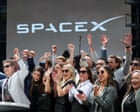
Elon Musk just flipped the entire tech world on its head again. Only days after taking SpaceX public in a historic Nasdaq debut, the rocket company shocked the market by announcing a staggering $60 billion all-stock acquisition of Anysphere, the startup behind the massively popular AI coding application Cursor.
Wall Street reacted with absolute frenzy. On Tuesday morning, SpaceX shares surged by roughly 13%, pushing the company's market capitalization past $2.8 trillion. In a single trading session, SpaceX leapfrogged Amazon's $2.66 trillion valuation to become the world's fifth most valuable company. It even spent parts of the morning trading neck-and-neck with Microsoft for the number four spot.
If you think SpaceX is still just a rocket company, you aren't paying attention. This acquisition cements its transition into a vertically integrated infrastructure and artificial intelligence powerhouse. By absorbing Anysphere, SpaceX isn't just buying a cool developer tool; it's buying an immediate, dominant market position in the enterprise software sector to save a faltering internal AI strategy.
What SpaceX Actually Bought for Sixty Billion Dollars
Let's look closely at the numbers because they reveal a lot about how desperate this play really was.
Anysphere was in the middle of closing a $2 billion venture capital funding round from major players like Andreessen Horowitz, Thrive, and Nvidia. That round valued the startup at $50 billion. SpaceX literally stepped in at the last second, preempted the venture capitalists, and offered $60 billion in its freshly minted public stock.
What makes Cursor worth that much cash? It's easily the fastest-growing developer tool on earth right now. Last November, the company announced it had crossed $1 billion in annualized revenue. According to its internal metrics, 64% of Fortune 500 companies are actively using Cursor to automate software development. The tool allows software engineers to write, edit, and debug massive codebases using simple, natural-language commands. It doesn't just suggest the next line of code; it builds entire features autonomously.
By pulling off an all-stock transaction, Musk didn't touch a single dollar of the $75 billion raised during last week's IPO. Instead, he used the soaring value of SpaceX equity as a currency to buy up a critical layer of the global AI software ecosystem.
The Real Reason Behind the Anysphere Bailout
The mainstream financial press is painting this as a triumphant expansion. Honestly, it looks a lot more like a structural emergency repair.
Earlier this year, SpaceX merged with Musk's dedicated artificial intelligence firm, xAI. The long-term vision was grand: combine xAI's models with the Starlink satellite network, put data centers directly into orbit to use free solar energy and cold space conditions for cooling, and build a planetary computing grid.
But behind closed doors, xAI's internal engineering efforts were completely falling apart.
By March of this year, all 11 original co-founders of xAI had quietly left the company. Musk himself publicly admitted that the unit "was not built right." The flagship LLM, Grok, was seriously lagging behind OpenAI's Codex and Anthropic's Claude Code, particularly when it came to writing complex software.
Building a top-tier coding model from scratch takes years of trial and error. SpaceX didn't have that kind of time. The company spent $12.7 billion on AI research in 2025, and another $7.7 billion in just the first quarter of this year, yet it still couldn't close the technical gap with its rivals.
Buying Anysphere completely solves this engineering bottleneck. Instead of trying to train a broken team to build a better tool, SpaceX bought the clear market leader. It's a classic tech playbook move: when your organic software development fails, you use your massive valuation to buy market position.
Why Investors Valued SpaceX Above Amazon
Overtaking Amazon is a massive symbolic victory, but the underlying business models show why Wall Street is treating SpaceX like a totally different animal.
Amazon is a mature giant. It generates hundreds of billions in revenue through e-commerce logistics and AWS cloud computing, but its growth has settled into a predictable, steady rhythm.
SpaceX is a volatile cocktail of high-margin monopolies and speculative tech frontiers. Investors are looking at three massive factors that Amazon simply cannot replicate:
- The Starlink Monopoly: With more than 10 million active customers, the satellite broadband network is generating predictable, recurring cash flow that funds the capital-heavy rocket operations.
- The AI Land Grab: In recent regulatory filings, SpaceX stated that it expects the enterprise AI market to reach $22.7 trillion in the near future. Wall Street is completely buying into this projection.
- The Cult of Musk: Retail investors are pouring unprecedented money into the stock. Data from Vanda Research showed that SpaceX accounted for nearly three-quarters of all single-stock retail purchases on Monday alone.
This retail momentum pushed SpaceX's stock way past its $135 IPO price up to over $211 per share in just a few days. The surge made Musk the world's first trillionaire, putting his personal net worth at an estimated $1.27 trillion.
The Massive Risks Left Unanswered
This deal is scheduled to close in the third quarter of this year, but it's far from a sure thing. Moving from a clean venture capital structure to a volatile public stock deal introduces a ton of risk for everyone involved.
For starters, look at the timeline. The deal value is pinned to a volume-weighted average price of SpaceX stock over a seven-day period right before closing. If the post-IPO hype dies down over the summer and SpaceX shares drop significantly below their current highs, the Anysphere founders will end up with far less than the promised $60 billion value. If that happens, they have a massive incentive to walk away or trigger the $10 billion break-up fee built into the contract.
There's also a major talent retention issue. Given that xAI just lost its entire founding team a few months ago, integrating a fiercely independent startup like Anysphere into Musk's corporate web is going to be incredibly difficult. Silicon Valley engineers don't always thrive under intense, hard-core management styles. If Cursor's core creators decide to take their stock and run, SpaceX will be left holding an expensive piece of software without the minds that built it.
Your Immediate Next Steps
If you're a developer, a tech leader, or a retail investor, this acquisition changes the environment rapidly. Here is how you should react:
- Secure Your Development Stack: If your engineering team heavily relies on Cursor, understand that it will soon be deeply integrated into the SpaceX and xAI product ecosystem. If you want a platform-independent alternative, now is the time to start testing tools like Codeium, Tabnine, or Replit. Competitors will likely use this transition window to offer aggressive discounts to steal enterprise customers worried about vendor lock-in.
- Watch the Public AI Market: The $60 billion valuation sets an entirely new baseline for developer-focused AI tools. Keep a close eye on Microsoft and Alphabet. They'll likely look to acquire remaining independent AI coding startups to prevent Musk from locking up the entire market.
- Audit Your Tech Investments: If you hold heavy positions in traditional cloud providers like Amazon, recognize that the market is shifting value toward companies that control both the physical infrastructure—like Starlink satellites—and the software layer.