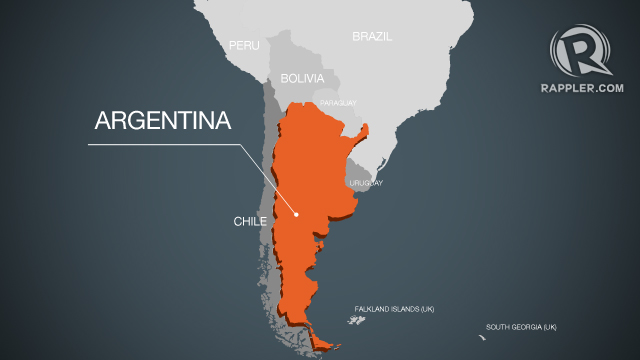
Times Square didn't sleep on Sunday night. Red and yellow flags spilled over Seventh Avenue while thousands of Spanish supporters sang into the humid Manhattan air. Just hours earlier across the Hudson River at New York New Jersey Stadium, Spain defeat Argentina 1-0 in extra time to win the 2026 FIFA World Cup.
It wasn't just another trophy presentation. You could feel a seismic shift in global football.
On one side sat Lionel Messi, 39 years old, staring silently at the grass after his final World Cup match. On the other stood 19-year-old Lamine Yamal, grinning alongside 19-year-old Pau Cubarsí and 23-year-old Pedri as they hoisted the iconic gold trophy. The symbolic imagery couldn't have been scripted better if Hollywood tried.
If you watched the final, you saw a masterclass in modern positional play outlasting raw grit and tournament savvy. Spain didn't just win this match. They officially took ownership of international football's next decade.
How Spain Broke Argentina Defense in Extra Time
Most finals are cautious. This one felt like a high-stakes chess match played at breakneck speed.
For 105 minutes, Lionel Scaloni's Argentina did what they do best: they made life uncomfortable. They crowded the center, fouled tactically, and relied on Emi Martínez to produce world-class saves. Martínez made 11 saves on the night, single-handedly keeping La Albiceleste alive as Spain generated 20 total shots.
The tipping point came right at the end of normal time. Enzo Fernández misjudged a sliding challenge on Pau Cubarsí in the 92nd minute, earning his second yellow card from referee Slavko Vinčić. Argentina were down to 10 men.
Even with a man disadvantage, Argentina held out through the first period of extra time. But 37 seconds into the second extra period, Spain's patience paid off.
- Pedro Porro whipped a deep, out-swinging cross from the left flank toward the far post.
- Nico Williams outjumped his defender to head the ball back into the danger area.
- Substitute Ferran Torres met it on the half-volley, drilling a powerful strike past Martínez into the bottom corner in the 106th minute.
Torres didn't hesitate. "I just saw the ball coming to me and shot with the power of all the Spanish people," he admitted afterward.
That single moment ended Argentina's dream of back-to-back world titles and sealed Spain's second World Cup trophy, sixteen years and eight days after Andrés Iniesta's legendary extra-time winner in Johannesburg in 2010.
What Most Analysis Gets Wrong About Spain Triumph
The headline story focuses on attack and flair. People love talking about Lamine Yamal's dribbling and Pedri's vision.
That misses the real structural reason Luis de la Fuente's team won this tournament.
Spain conceded exactly one goal across seven matches in the entire 2026 World Cup. Think about that for a second. No champion in World Cup history has ever allowed fewer goals.
Here is how Spain compared against recent World Cup winners in total tournament goals conceded:
| World Cup Winner | Year | Goals Conceded | Matches Played | Clean Sheets |
|---|---|---|---|---|
| Spain | 2026 | 1 | 7 | 6 |
| Argentina | 2022 | 8 | 7 | 3 |
| France | 2018 | 6 | 7 | 4 |
| Germany | 2014 | 4 | 7 | 4 |
| Spain | 2010 | 2 | 7 | 5 |
De la Fuente built a squad with an average age of just 26, but their defensive discipline looked like a veteran Italian side from the 1990s. Unai Simón barely had to make difficult saves during knockout play because Rodri, Aymeric Laporte, and Pau Cubarsí choked off passing lanes before opponents reached the penalty area.
Against Argentina, Spain held over 62% possession and completely suppressed Messi's influence. Messi finished a brilliant individual tournament with 8 goals and 4 assists, but in the final, he managed zero shots on target. Spain kept him isolated.
The Symbolism Behind Messi and Lamine Yamal
You've probably seen that famous 2007 photo floating around social media. A 20-year-old Messi holding a baby Lamine Yamal during a charity photoshoot at Camp Nou.
In 2026, that viral image transformed from a cute piece of trivia into football prophecy.
Messi gave everything to Argentina over two decades. He won the 2021 Copa América, the 2022 World Cup, and the 2024 Copa América. He answered every question critics ever asked. But Father Time is undefeated. At 39, Messi could no longer carry an entire nation on his shoulders when his team fell down to 10 men against the crispest passing side on the planet.
Meanwhile, Lamine Yamal played with zero fear. He didn't score in the final, but his movement pulled Lisandro Martínez and Nicolás Tagliafico out of position all evening, opening up space for Williams and Torres.
In the stands outside Rockefeller Center, Spanish fans weren't just celebrating a trophy. They were celebrating the arrival of a generation that already holds the European Championship and the World Cup back-to-back.
"It's a complete generational change," said Brian Lacey, a Spain fan who flew to New York for the match. "Messi is done now, and it's Lamine Yamal's time. We are on top of the world."
What Happens Next for Both Nations
Winning a World Cup isn't the finish line for Spain. It's the launchpad.
At 65, Luis de la Fuente became the oldest manager to win a World Cup. Yet his squad is among the youngest in elite international football. Core pillars like Yamal (19), Cubarsí (19), Pedri (23), Gavi (21), and Nico Williams (24) are nowhere near their physical peaks. They could theoretically play together through two more World Cup cycles.
For Argentina, serious rebuilding starts now.
Lionel Scaloni admitted in his post-match conference that La Albiceleste face a crossroads. Key figures like Ángel Di María have already retired, and Messi's international farewell is now official. Scaloni must integrate young talents like Nico Paz, Valentín Barco, and Thiago Almada into starting roles before the next Copa América cycle begins.
Here is what you should watch for as the new international cycle kicks off:
- Track Spain's squad rotation in UEFA Nations League play: Watch how De la Fuente balances minutes for young stars to prevent burnout ahead of Euro defender duties.
- Monitor Argentina's tactical shift under Scaloni: Expect Argentina to pivot away from a Messi-centric setup toward a high-pressing 4-3-3 built around Julián Álvarez and Alexis Mac Allister.
- Keep an eye on Lamine Yamal's club workload: His rapid rise requires careful management at Barcelona to avoid the injury pitfalls that hit earlier teenage prodigies.
Spain are back on top of the football world. The trophy is in Madrid, and the future belongs to their teenagers.