For decades, Brazil stood as an insulated musical fortress. While the rest of South America danced to reggaeton and Spanish-language pop, the giant Portuguese-speaking nation kept its ears firmly turned inward. Local artists dominated the charts, and Spanish tracks were basically treated like foreign novelties. But something shifted dramatically.
Mega-stars like Rosalía, Bad Bunny, and Shakira aren't just visiting anymore—they're rewriting how millions of Brazilians consume music. If you look at recent numbers, the old language barrier is cracking. Let's break down what's actually happening behind the headlines, why the Brazilian market is opening up now, and whether this trend has any staying power.
The Numbers Don't Lie, But They Need Context
Streaming spikes look incredible on paper, but they often mask reality. When Bad Bunny sold out two consecutive nights at the Allianz Parque in São Paulo back in February, local media covered it like a cultural invasion. Shortly after, data from Deezer showed Brazilian streams for Bad Bunny surging by 215 percent following high-profile television appearances.
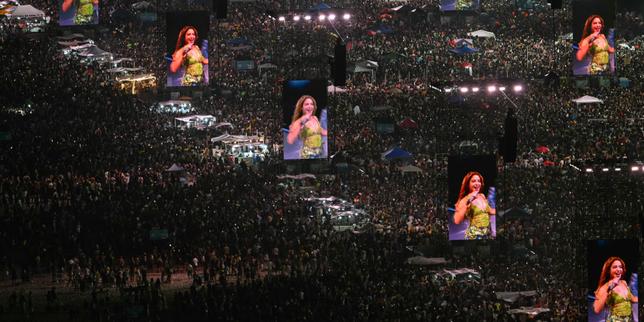
Shakira pulled an even bigger crowd with her massive free concert on Copacabana beach, drawing a staggering two million attendees according to municipal tourism figures from Riotur. Her streaming numbers jumped by 302 percent on that single day.
Yet, as any music industry insider will tell you, a massive spike following a live event equals hype, not an automatic permanent shift. In late 2023, a look at the Spotify Brazil Top 150 showed zero Spanish-language tracks charting. Going from zero to massive stadium tours doesn't mean mid-tier Spanish artists can suddenly fill clubs across Belo Horizonte or Porto Alegre. The heavy lifting is currently being done by global titans whose fame transcends any single language.
Why Brazil Mattered Less to the Spanish-Speaking World
Language proximity usually breeds crossover hits. Portuguese and Spanish share enough roots that you'd expect a natural cultural exchange. But Brazil's domestic music industry is an absolute powerhouse. Funk carioca, sertanejo, MPB, and Brazilian pop create a massive, self-sustaining ecosystem. Brazilians simply didn't need to look across their borders for fresh sounds.
Record labels and promoters also viewed Brazil as a high-risk market for Spanish tours due to logistical costs and uncertain ticket sales. Bringing a stadium-scale production to São Paulo or Rio required an artist with bulletproof global recognition. That's why names like Shakira—who has decades of multi-language notoriety—face lower financial risks than upcoming Spanish acts.
The Economic Reality of the Eighth Global Market
The timing of this crossover isn't accidental. The Brazilian recorded music market generated 3.958 billion reais, marking a solid 14.1 percent annual growth rate according to Pro-Música Brasil. This economic expansion pushed Brazil into the eighth spot globally.
When a market grows that fast, international promoters take notice. Major global tours want a piece of that revenue, forcing a push to normalize Spanish-language performances in major Brazilian venues. Artists like Rosalía—who weaves multiple languages into projects like her album Lux—fit smoothly into a globalized listening habit that younger generations embrace through TikTok and algorithmic discovery.
What Happens Next for Latin Crossovers
Don't expect every Spanish-speaking pop act to suddenly dominate Brazilian radio. The real test for this trend won't be another record-breaking beach concert or a viral streaming peak. Success looks like mid-level international artists consistently selling out mid-sized theaters outside of Rio and São Paulo.
If you're watching the Latin American music landscape, keep an eye on streaming retention rates rather than first-week event spikes. The wall is down, but walking through it takes more than three famous names.