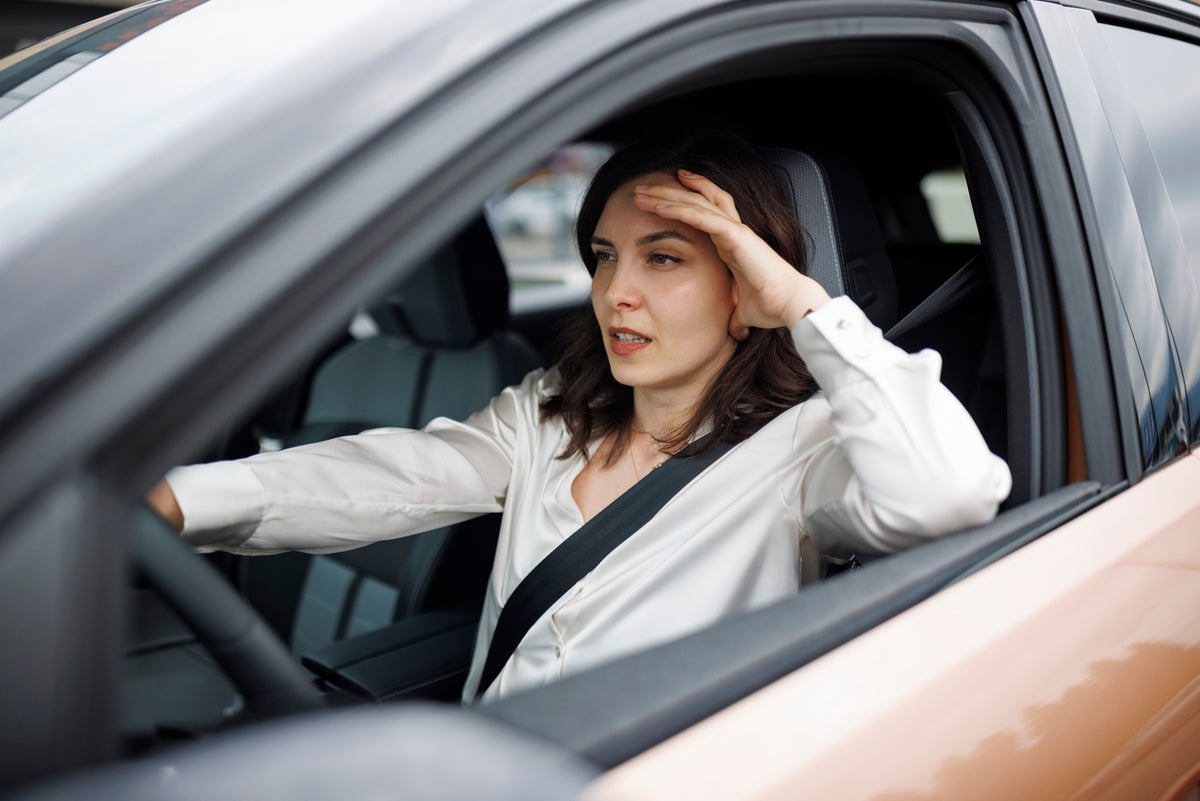
We have all been there. You are running five minutes late. Your palms are sweating on the steering wheel, and you feel that familiar itch to press down on the gas pedal. You weave through traffic, push past the speed limit, and feel a brief rush of control. Surely, you are saving precious time.
But you aren't. For another look, check out: this related article.
In fact, you are basically throwing cash directly out of your car window.
A massive, groundbreaking study published in the peer-reviewed Nature journal Communications Sustainability completely shatters the illusion of the speedy commute. Researchers at the University of Minnesota Twin Cities analyzed a staggering 120 million real-world vehicle trips across the United States. Their findings are a brutal reality check for aggressive drivers. Related coverage regarding this has been shared by Vogue.
When you speed, you don't actually get to your destination much faster. What you do achieve is a spiked fuel bill, higher emissions, and a much higher chance of getting a ticket or ending up in a wreck.
Let's break down the hard math, the physics of wind resistance, and the psychological traps that make us believe speeding works.
The Illusions of the Fast Lane
Most of us are terrible at estimating how much time we actually save by speeding. We use simple, idealized math in our heads. We think that if we drive 80 mph instead of 70 mph on a 10-mile stretch, we must be saving a huge chunk of time.
In reality, real-world driving is not a closed laboratory.
You have traffic lights. You have construction zones. You have slower trucks blocking the passing lane, and you have other drivers who refuse to move. The moment you hit a red light or get stuck behind a school bus, all those seconds you gained by speeding are instantly wiped out.
The Minnesota researchers, led by Ph.D. student Bharat Jayaprakash, looked at actual, real-world driving behavior using GPS data across national road networks. They did not just guess; they analyzed trips with speed limits of 45 mph and higher.
The results were eye-opening. More than 43% of the trips they tracked involved speeding. Drivers spent about 12% of their total driving time going faster than the posted limit.
And what did all that aggressive driving buy them?
Almost nothing.
For the average American daily driving distance of 28.6 miles, staying at or below the speed limit added a measly 54 seconds to the commute. Let that sink in. Less than one minute. You are risking your life, your wallet, and your peace of mind to save less time than it takes to microwave a hot pocket.
The Massive Financial Drain of Speeding
While the time savings of speeding are virtually nonexistent, the financial costs are painfully real.
When you exceed your car’s optimal speed, fuel efficiency drops off a cliff. The physics behind this are simple but unforgiving. As your vehicle moves faster, it has to push through a wall of air.
At lower speeds, internal engine friction and rolling resistance from your tires dominate. But as you speed up, aerodynamic drag becomes your main enemy. Drag force increases with the square of your speed. The power required to overcome that drag increases with the cube of your speed.
This means that pushing your car from 65 mph to 75 mph requires a disproportionate amount of energy. Your engine has to work incredibly hard, burning through fuel at an alarming rate.
The University of Minnesota study quantified this waste on a national scale. If drivers of traditional gas-powered cars simply stuck to the posted speed limits, we would save an average of 6.7 million gallons of fuel every single day.
Let's look at what that means for your wallet.
- Daily National Savings: Collectively, Americans would save roughly $22 million daily based on the fuel prices during the study period. With current gas prices and increased travel, that number is closer to $26 million a day.
- Environmental Impact: Adhering to the speed limit would eliminate 57,000 metric tonnes of carbon dioxide emissions daily. That is equivalent to taking 5.5 million passenger vehicles completely off the road.
This is a massive environmental and economic win that costs absolutely nothing to implement. You do not need to buy a new hybrid. You do not need to install solar panels. You just have to ease your foot off the pedal.
EVs Are Not Exempt From the Laws of Physics
If you drive an electric vehicle, you might think this study does not apply to you. After all, you do not buy gasoline.
That is a dangerous assumption.
While the study focused primarily on internal combustion engines, the researchers also modeled electric vehicle efficiency using data from California, where EV adoption is highest. They found that driving slower is just as beneficial for electric cars.
Electric motors are highly efficient, but they cannot rewrite the laws of aerodynamics. Drag is still drag. When you drive an EV at high speeds, the battery drains dramatically faster.
If you speed in an EV, you will find yourself stopping at charging stations more frequently and waiting longer to juice up. The time you thought you saved by flying down the highway is easily lost while you sit at a charging port waiting for your battery to recover.
The Hidden Costs of a Heavy Foot
The pump is not the only place where speeding drains your bank account. The true cost of driving fast includes several secondary expenses that most drivers ignore until it is too late.
Rapid Brake and Tire Wear
When you speed, you naturally engage in more aggressive acceleration and braking. You fly up to the bumper of a slower car, slam on the brakes, wait for a gap, and stomp on the gas again. This stop-and-go behavior wears down your brake pads and rotors rapidly. It also puts intense friction on your tires, shortening their lifespan and forcing you to buy replacements much sooner than expected.
Insurance Spikes and Speeding Tickets
A single speeding ticket can wreck your monthly budget. Beyond the immediate cost of the fine, the long-term impact on your auto insurance premium is devastating. A moving violation can cause your insurance rates to spike by 20% to 30% for three years or more.
The Ultimate Price
We cannot talk about speeding without talking about safety. The physics that ruin your fuel economy also make crashes far more lethal.
When you travel faster, you cover more distance in the split second it takes you to react to a hazard. Your stopping distance increases exponentially. If you do crash, the energy of the impact is vastly higher.
A minor mistake at 55 mph might result in a dented bumper. The exact same mistake at 75 mph can easily be fatal.
Actionable Steps to Train Yourself to Drive Slower
Knowing the facts is one thing; changing your habits on the road is another. If you want to put cash back in your pocket and lower your daily stress levels, try these practical strategies.
1. Use Your Cruise Control
The easiest way to stop speeding is to take your foot out of the equation. On highways, set your cruise control to the posted speed limit and stay in the right or center lanes. Let the aggressive drivers pass you. You will find that your drive becomes incredibly relaxing when you are no longer constantly scanning for cops or looking for gaps in traffic.
2. Gamify Your Fuel Economy
Most modern cars have a dashboard display that shows your real-time fuel economy (mpg). Keep that screen active. Watch how a slight reduction in speed from 70 mph to 62 mph makes your average mpg climb. Turn fuel efficiency into a game where the prize is keeping your own money.
3. Change Your Departure Routine
We speed because we are rushing. Give yourself a buffer. Leave just five minutes earlier than you think you need to. Because you now know that speeding only saves you about 54 seconds anyway, leaving early is the only real way to guarantee you arrive on time without stress.
4. Reframe Your Commute
Stop viewing your drive as a race to be won. Treat it as a transitional space. Use that time to listen to an audiobook, catch up on a podcast, or enjoy some quiet time. When you are not treating every other car as an obstacle, your commute stops being a source of rage and becomes a peaceful part of your day.
The math is clear, and the science is settled. Speeding is a bad deal. You do not save time, you destroy your car's efficiency, and you pay a premium for the privilege. Next time you feel the urge to press down on the gas, remember that 54 seconds is not worth your hard-earned money. Ease up, stay safe, and keep your cash.