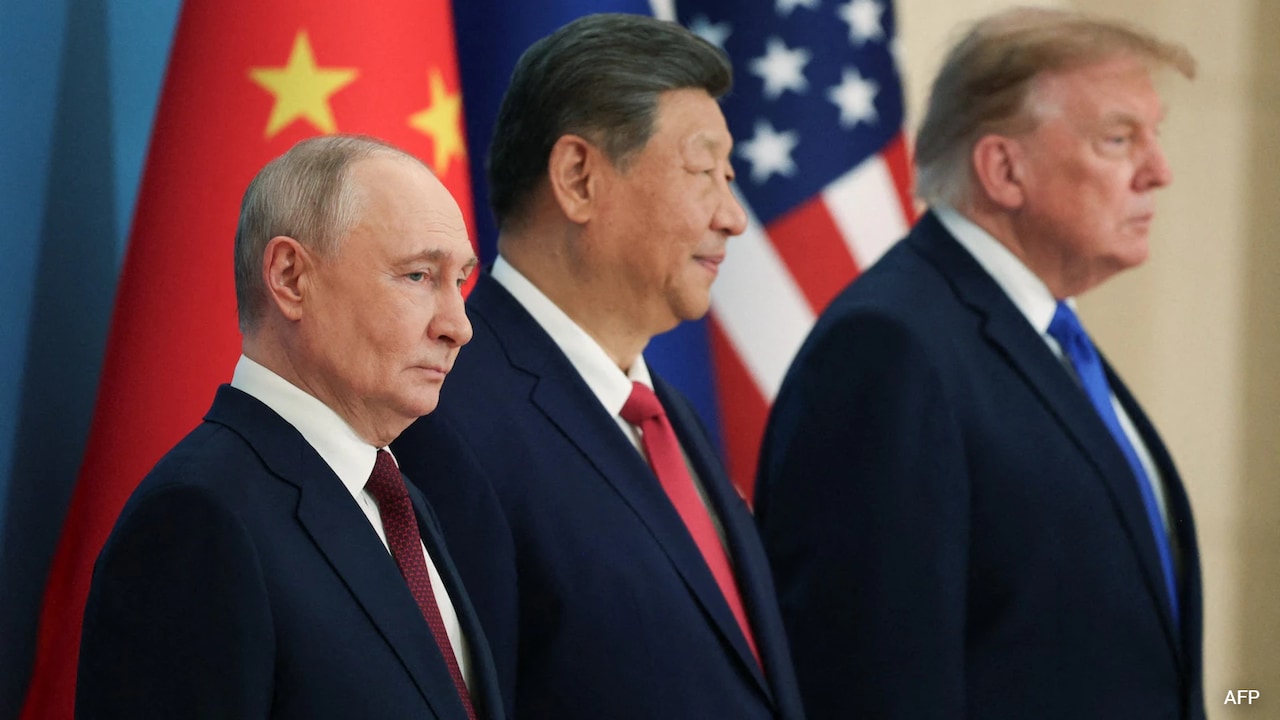
Walk into a room with Xi Jinping, Vladimir Putin, and Donald Trump, and you're looking at three leaders who treat international law like a polite suggestion. When they met on November 19, 2026 on the sidelines of APEC in Shenzhen, the headlines screamed about a new world order taking shape. Honestly, the short communiqué didn't read like a grand treaty. It called for UN reform, complained about the International Criminal Court, nudged energy flows along, and floated nuclear risk talks. Yet the symbolism hit like a cold splash of water. Three major powers sitting together to talk about "strategic stability" and "major-power relations" signals something blunt: might is right is creeping back into global politics as a working rule, not just a cynical joke.
Let's be clear about what that means before anyone panics or cheers. Nobody drew a sharpie map of the globe in Shenzhen and handed out continents like pizza slices. China and Russia aren't a formal military alliance, and Trump doesn't govern by neat grand strategy either. Still, when the leaders of Washington, Beijing, and Moscow act like an informal steering committee, smaller and medium-sized countries feel the draft under the door. If you run a business, manage a supply chain, or care about how borders hold up, you can't afford to pretend the 1990s rules are coming back on their own.
What The Shenzhen Summit Actually Showed About Might Is Right
Most coverage fixated on optics. Who smiled at whom. Who got skipped in the photo op. Who looked tired.
That misses the real shift. Look at how the three capitals operate right now. In Washington, Trump has leaned hard into bilateral deals, tariffs, and transactional pressure on allies and rivals alike, even as domestic politics and midterm headwinds complicate his room to maneuver. In Moscow, Putin is fighting an exhausting war in Ukraine while trying to keep energy revenues and diplomatic legitimacy alive, leaning into backchannel talks and pushing for a European security setup that looks suspiciously like old Cold War zones of control. In Beijing, Xi sits at the top of a tightly controlled system, using trade surpluses, industrial muscle, and diplomatic framing to present China as a co-equal pole with the United States.
Put those three styles together and you get a pattern. Great powers increasingly prefer talking over the heads of everyone else, then sorting out the details later. Look back at recent rounds of talks over Ukraine where European capitals felt left outside the core room, or watch how energy and sanctions get tangled up with broader bargaining chips. As analysis from the International Institute for Strategic Studies points out, a 90-minute trilateral summit may produce thin paper, yet the act of holding it normalizes a club where big players claim special weight.
Here's where I disagree with the most dramatic takes. Calling this a neat "divvying up" of the planet overstates how much control any one of these leaders actually has. Power is messy. Wars drag on, economies bite back, and allies push back when they feel squeezed.
Why Spheres Of Influence Are Tempting Leaders Right Now
Spheres of influence sound retro because they are. For decades after 1991, Western policymakers talked as if borders were frozen in amber and multilateral institutions would smooth out every friction. That model took years of hits—financial crises, stalled trade talks, regional wars, and domestic backlashes—and now it's creaking loudly.
For a leader like Putin, a recognized sphere of influence is survival and pride wrapped into one. If Moscow can win concessions or security arrangements that treat neighboring states as part of its backyard, it looks like strength at home despite massive military and economic costs. For Xi, framing global affairs around major-power balance lets Beijing push back against US-led alliances while positioning China as a pillar of a "multipolar" world—even when Beijing's own behavior favors hierarchy whenever China holds the cards.
And Trump? Transactional politics loves a big deal between top dogs. If Washington thinks it can trade tariff relief, energy stability, or diplomatic cover to lower tensions or get out of messy entanglements, a spheres-style bargain can look tempting on paper.
The catch is obvious once you look past the handshake. Spheres of influence rarely stay peaceful. They create gray zones where local governments get pressured from two directions at once. Think about Eastern Europe, Taiwan and the South China Sea, Central Asia, or the Middle East. When big powers treat smaller countries as pawns or buffers, those countries don't just lie down quietly. They arm up, hedge, cut side deals, or spark crises that pull the big powers right back in.
Middle Powers Are Not Just Passive Victims
A common mistake in geopolitical commentary is treating every country outside Washington, Beijing, and Moscow like a helpless spectator. That's lazy thinking.
Many middle powers—from countries in the Gulf and Southeast Asia to Latin America, Africa, and major Indo-Pacific states—have spent the last decade refusing to lock themselves into rigid blocs. Research from the Institute for Economics & Peace highlights how global influence has fragmented as middle powers build economic weight, control critical raw materials, and practice multi-alignment.
Take how states in the Gulf and Africa have expanded trade, investment, and security ties with one another to hedge against shocks elsewhere, as documented in recent analysis by the Center for Strategic and International Studies. Or look at Central Asian states like Kazakhstan and Uzbekistan, which constantly juggle ties with Russia, China, Europe, and neighboring powers to protect their room to maneuver. Even close US treaty partners in Asia face tough math: balancing American security backing against trade frictions, tariff threats, and high expectations on defense spending.
When superpowers bicker and bargain, smart middle powers don't pick one master if they can help it. They diversify trade, build regional pacts, and keep multiple doors open.
Still, hedging has limits. If a crisis hits a vital shipping lane or a border explodes, "playing all sides" gets harder fast. A country can diversify suppliers for years, yet still get slammed overnight by sanctions, export controls, or war spillover.
What Europe And Smaller States Get Wrong
If you ask me where the biggest blind spot sits right now, it's the gap between economic weight and strategic spine.
Europe is a massive market with deep technology, strong rule of law, and serious wealth. Yet whenever three leaders gather to talk security and global order, European capitals often look divided over defense spending, energy choices, and how tough to be on both Moscow and Beijing. Waiting around hoping Washington will always carry the load—or assuming rules will enforce themselves—is a recipe for getting sidelined.
Smaller states face a different trap: over-relying on a single patron. Relying on one big power for security or cheap credit feels convenient until that patron changes its mind, cuts a side deal, or gets distracted by domestic politics. You see that risk everywhere from sovereign debt traps to single-source energy and defense supply chains.
Let's be fair, though. Small and medium countries don't have infinite budgets or armies. Compromises are real. Sometimes a smaller government has to swallow a bad trade term or keep quiet on a sensitive issue just to keep peace or food and fuel flowing. Pretending otherwise is easy from an armchair.
Practical Next Steps When Power Politics Gets Rough
You don't need a seat at a summit table to adapt to a world where raw leverage matters more. Whether you're running a company, advising policymakers, or just trying to make smart decisions, start with concrete moves:
- Audit single-point dependencies first. Map out where your supply chains, energy inputs, software, or export markets rely on one country or one chokepoint. Build backup suppliers before a tariff or conflict forces a panic switch.
- Price geopolitical risk into contracts and timelines. Stop assuming cross-border shipping, payments, or regulatory approvals will run on autopilot. Build buffers for sanctions shifts, port delays, and sudden policy reversals.
- Strengthen regional and horizontal ties. If you're in business or policy, look beyond the biggest three capitals. Regional trade corridors, standards bodies, and diversified partnerships often give more practical stability than waiting on superpower breakthroughs.
- Watch actions over communiqués. Big summits love lofty language about peace, stability, and reform. Track actual moves—tariffs, troop deployments, pipeline deals, export rules, and alliances—because that's where real power shows up.
A world driven more by might is right isn't inevitable in every corner of life, and law and cooperation haven't vanished overnight. Yet ignoring the return of hard bargaining is a gamble nobody has to take.