Sitting all day is wrecking your body. You know it. I know it. Every fitness tracker notification reminding you to stand up confirms it.
Enter the walking pad. It's basically a shrunken-down, motor-driven belt that slips under your standing desk or hides beneath the sofa. Unlike bulky gym equipment that takes over a spare room, a good walking pad lets you stack up 10,000 steps while clearing your inbox.
Most buyers make a massive mistake. They treat a walking pad like a heavy-duty gym treadmill. It isn't. It is a tool for low-impact movement. If you try to sprint at 10 miles per hour on a slim profile machine, you're going to have a bad time.
What to Look For Before You Buy
You don't need a degree in kinesiology to pick the right machine, but you do need to look past flashy marketing. Motor size matters. A 2.0 CHP motor handles steady walking at 1.5 to 2.5 mph without groaning under your weight. Anything less sounds like a blender full of rocks after two months of daily use.
Deck length is another trap. Cheaper models skimp on belt length. If you're tall or have a natural long stride, you'll clip the motor housing with your toes. Look for a walking surface of at least 40 inches long by 16 inches wide.
Weight capacity tells you a lot about structural integrity. Budget models rated for 220 pounds often wobble when a 180-pound person walks briskly. If you want something that feels solid, look for higher load ratings, even if you weigh less.
The Reality of Working and Walking
Can you actually type while walking? Yes, but there's a learning curve.
At 1.0 mph, typing emails is totally fine. Spreadsheets require a bit more concentration. Once you bump the speed up to 2.0 mph or higher, your arms bounce too much for fine mouse control. Most people find their sweet spot around 1.2 to 1.5 mph for working hours, saving the 2.5 or 3.0 mph sessions for podcasts, phone calls, or watching videos.
Noise is the ultimate dealbreaker. If your walking pad sounds like a jet engine taking off on a Zoom call, your coworkers or family members will banish it to the garage. Brushless motors run significantly quieter than traditional brushed motors. Pay the extra cash for a quiet drive system.
Storage and Space Realities
Manufacturers love to show walking pads sliding effortlessly under every piece of furniture in the house. Reality check: measure the clearance under your bed or couch first. Many modern low-profile frames sit lower than a folded walking pad.
Weight also matters. Even folding pads can weigh 50 to 70 pounds. Wheels help, but hauling a heavy slab of metal up and down stairs every day gets old fast. If you plan to put it away daily, prioritize lightweight models with a slim fold. If it's staying in your home office permanently, weight matters less than stability.
How to Build a Sustainable Habit
Buying the machine is the easy part. Using it consistently requires a system.
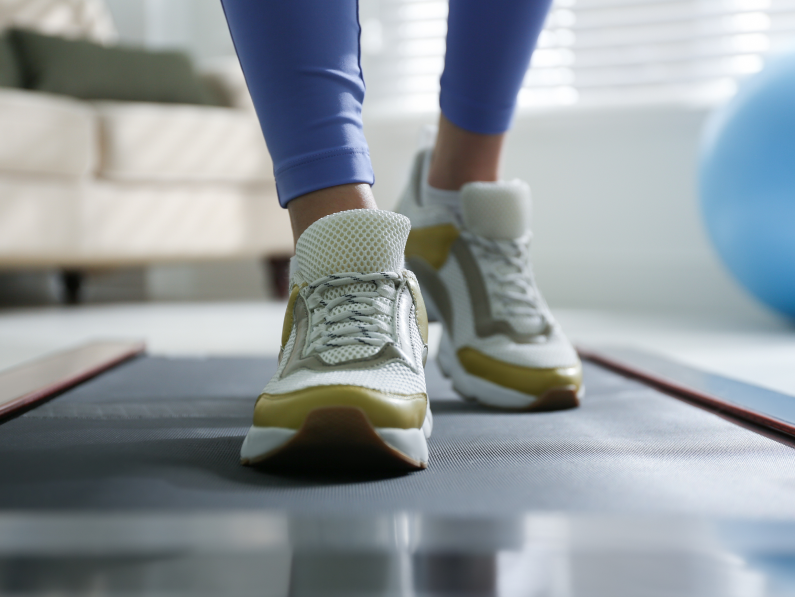
Start small. Don't commit to a two-hour walking block on day one. Your shins and lower back will punish you. Begin with 15 minutes twice a day. Wear proper supportive shoes—walking barefoot or in flat slippers on a hard treadmill deck causes foot fatigue fast.
Keep a water bottle within arm's reach and set your desk at the correct ergonomic height. If your elbows aren't at a 90-degree angle, you'll hunch over, leading to neck strain that ruins the health benefits of the movement.
Stop overthinking your daily step count. Clear a small space, pick a reliable machine that fits your workflow, and start walking while you work.