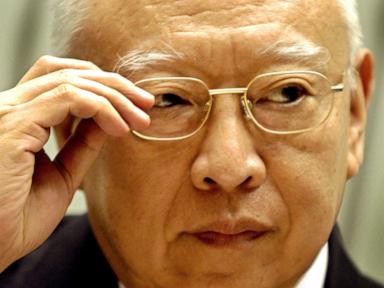
Draped in the red and yellow Chinese national flag, the casket of Tung Chee-hwa left the Hong Kong Funeral Home in North Point as senior Beijing officials and local dignitaries watched in silence. This was only the third state funeral granted in the territory since the historic 1997 handover from British colonial rule. Tung, who passed away on September 8 at the age of 89, was the city’s very first post-colonial leader. His passing marks the final chapter for the pioneer who had to figure out how to pilot a capitalist hub under a socialist superpower's "one country, two systems" framework.
The ceremony brought together the city's current leadership alongside all three of his surviving successors—Donald Tsang, Leung Chun-ying, and Carrie Lam. High-ranking figures from Beijing, including Politburo member Shi Taifeng and Hong Kong and Macau Affairs Office director Xia Baolong, flew in to oversee the proceedings. Current Chief Executive John Lee joined former leaders to act as a pallbearer, carrying the flag-draped casket toward the hearse bound for Cape Collinson Crematorium. For anyone watching Hong Kong’s political evolution, the turnout wasn't just about mourning a former shipping tycoon; it was a carefully calibrated display of political alignment and historical continuity.
Tung took office in 1997 with zero formal political experience. He was a businessman running Orient Overseas Container Line before a Beijing-backed selection committee tapped him to lead the newly minted Special Administrative Region. That background shaped his governance style, which relied heavily on corporate consensus-building rather than retail politics. But reality hit fast. Months into his tenure, the 1997 Asian financial crisis struck, slamming the brakes on Hong Kong's booming economy and plunging the territory into a deep recession.
Things got even harder in 2003. A severe acute respiratory syndrome (SARS) outbreak crippled local tourism and retail, while an attempt to push through national security legislation under Article 23 triggered massive street protests. Those protests forced his administration to back down. By March 2005, facing mounting public discontent and declining confidence from Beijing, Tung stepped down midway through his second term, citing health reasons.
Yet, his political career didn't end there. Beijing immediately absorbed him into national politics, appointing him as a vice chairman of the Chinese People's Political Consultative Conference (CPPCC), a top advisory body where he served until 2023. In that role, he became a senior statesman, later founding the U.S.-China Exchange Foundation and accompanying President Xi Jinping on state visits to the United States.
Critics remember his tenure for economic turbulence, governance struggles, and the intense friction of blending two vastly different legal and political systems. Supporters remember a gentle, refined leader who absorbed the initial shocks of the handover without fracturing the city's core financial plumbing.
State media eulogized him as a renowned patriot and a close friend of the Communist Party. Sunday's service closed the book on an era when the rules of post-colonial Hong Kong were still being written on the fly. As the white minibus carrying top mainland officials drove away from the North Point funeral parlor, the city turned a page on its turbulent foundational years.