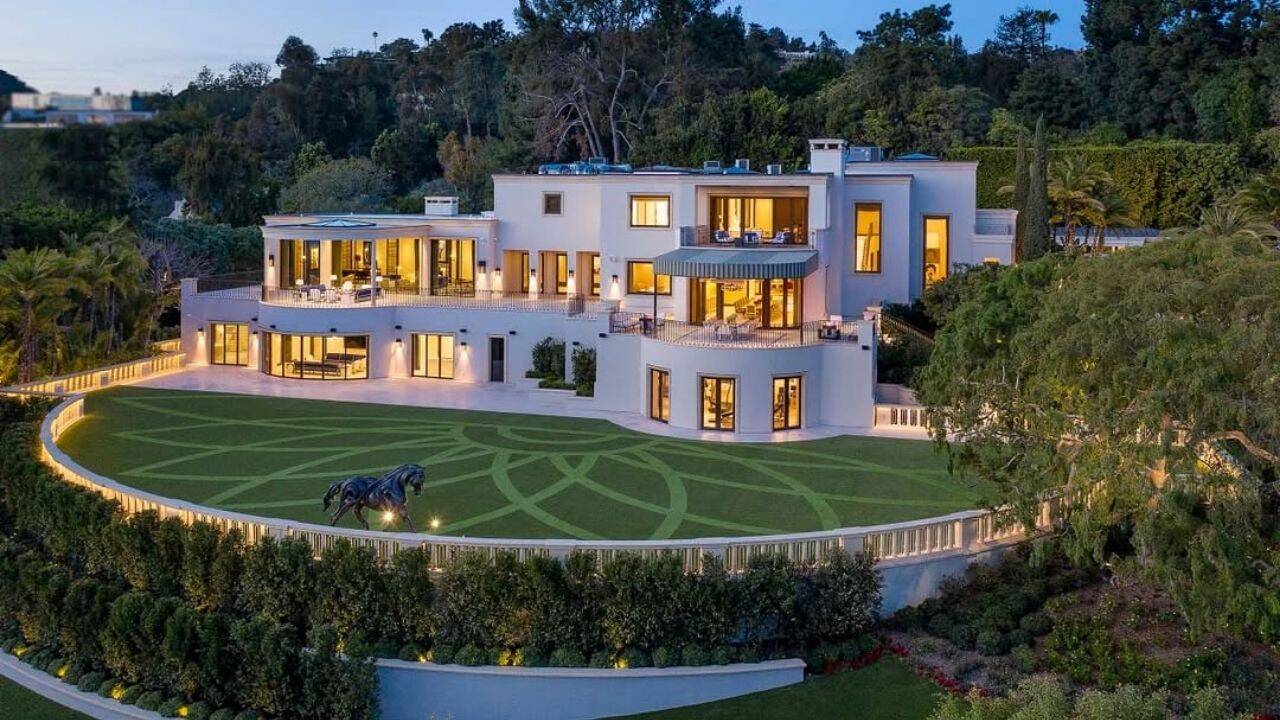
When casino billionaire Steve Wynn finally offloaded his sprawling Beverly Hills estate, it wasn't a celebration. It was a massive financial bath. After dragging on the market for over five years with a staggering peak price tag of $135 million, the grand property known as Villa Lulu sold for just $47.75 million. That is actually $100,000 less than what Wynn paid for it back in 2015, completely wiping out the millions he poured into a massive, multi-year renovation.
If you think luxury real estate always goes up, this deal proves you wrong.
The Anatomy of a Five-Year Real Estate Drag
Wynn bought the 2.7-acre property off lower Benedict Canyon from Guess co-founder Maurice Marciano for $47.85 million. From there, he hired architect William Hablinski and Wynn Resorts design chief Roger Thomas to completely overhaul the place. They expanded the main house to a whopping 27,000 square feet.
The compound became a playground for the mega-wealthy. It boasts 11 bedrooms, a screening room, a wine-tasting cellar, a commercial-grade gym, a tennis court with air-conditioned seating, and a pool complex. There's even an on-site generator powerful enough to run the entire estate for a week.
So why did it take half a decade to sell?
Listing agent Leonard Rabinowitz of Christie's International Real Estate didn't sugarcoat the situation. He pointed straight at California's political climate and proposed billionaire taxes for driving high-net-worth buyers away from the state. When sellers aim for the moon with nine-figure aspirations, they often misjudge a cooling pool of buyers.
The Reality Check for Ultra-Luxury Listings
Sellers at the very top of the market love to test absurd numbers. Wynn initially floated the estate off-market at $135 million, then brought it public at $110 million in 2021. At one point, the price even crept up to $125 million based on wishful thinking.
Reality eventually hit hard. The price cuts started rolling in. By the time the home went pending, it sat at a modest $50 million.
Even though $47.75 million is technically the highest sale recorded in Beverly Hills for 2026, it represents an $87 million plunge from the original high watermark. It shows that even elite architecture and famous owners can't escape basic market economics when a property drags out for too long. Buyers smell desperation, and overpriced properties get stale fast.
Take a close look at your own investment strategies. Overpricing a unique asset doesn't test its value. It just trains the market to ignore you.