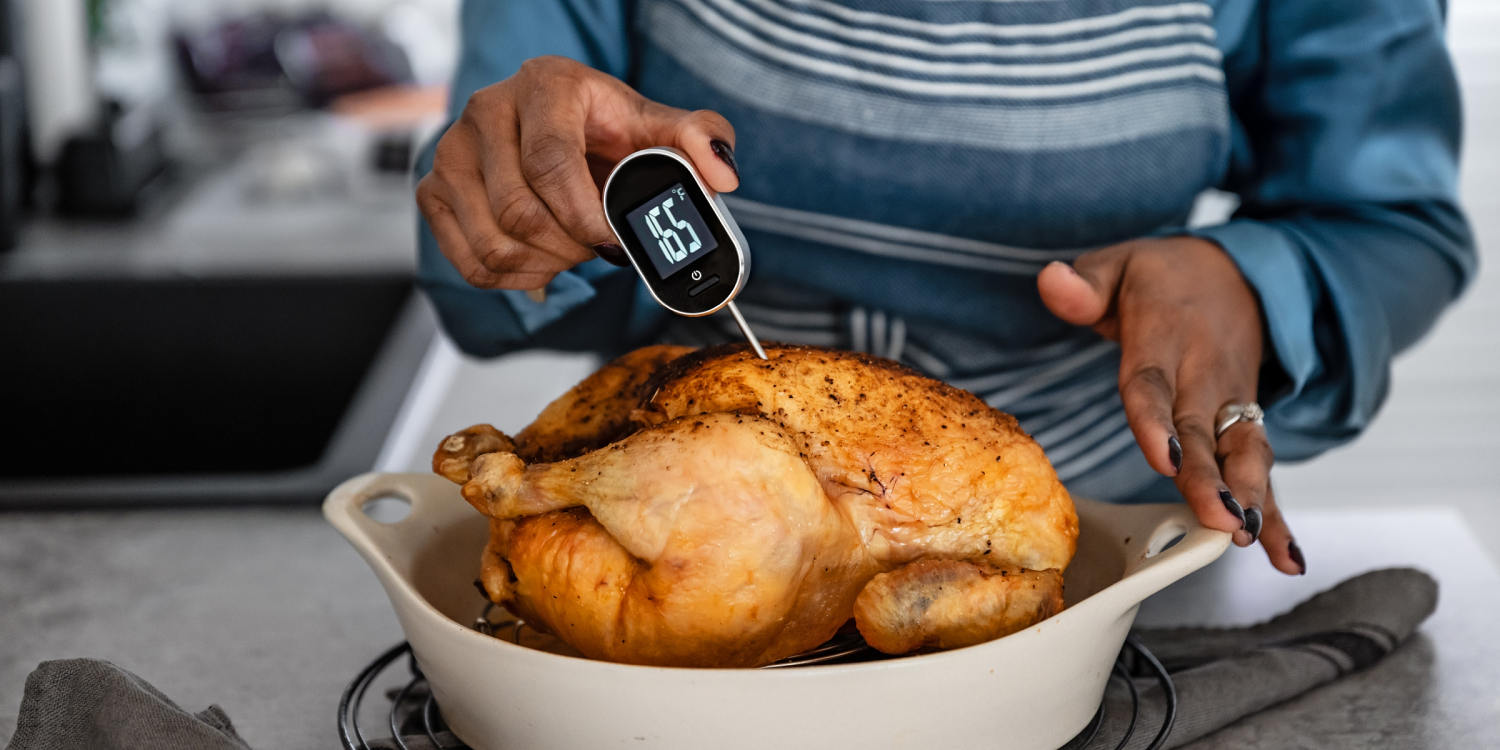
You ruined another expensive ribeye because you cut into it to check if it was done. All the flavorful juices pooled on the cutting board, leaving you with dry meat and a lot of frustration. Cooking meat by color, feel, or prayer is a losing battle. The single best way to end overcooked dinners once and for all is buying a reliable meat thermometer.
If you're still relying on guesswork, you're rolling the dice every time you fire up the grill or preheat the oven. Let's fix that right now.
Why Built-In Oven Dials and Touch Tests Fail
People love to talk about the poke test. You press your thumb and index finger together, feel the fleshy part of your palm, and compare it to the texture of a steak. It sounds intuitive. In reality, it is completely useless unless you happen to have identical muscle density to a chef who has practiced the technique for twenty years.
Oven dials are even worse. They lie to you. Internal oven temperatures fluctuate wildly as the heating element cycles on and off. You might set your oven to 350 degrees, but the actual environment swings by thirty degrees in either direction. Relying on time-per-pound cooking charts leads straight to dry chicken breasts and overcooked pork chops.
What to Look for Before Buying
Before you grab the cheapest digital probe off a random shelf, you need to understand what separates a great tool from junk.
Speed matters. If a thermometer takes ten seconds to register a temperature, the steak continues cooking while you wait. By the time the display numbers stabilize, your medium-rare filet mignon has crossed into medium-well territory. Look for sensors that read accurately in two seconds or less.
Durability is another major factor. Kitchens are chaotic. You'll drop your thermometer on the tile floor, leave it out in a sudden rainstorm while grilling, or splash hot grease across the housing. Water resistance and solid build quality aren't optional features if you actually plan on using the device weekly.
Seven Top-Rated Meat Thermometers Worth Your Money
Market choices are overwhelming, but a few standout tools dominate kitchen counters and backyard smoker setups for good reasons.
ThermoWorks Thermapen One
This is the gold standard for a reason. It gives you an accurate reading in a single second. The display rotates automatically depending on how you hold it, and the build quality is rugged enough to survive years of heavy use. It costs more than cheap alternatives, but you'll never need to buy another instant-read thermometer again.
ThermoPro TP03 Digital Meat Thermometer
If you don't want to drop a lot of cash, this budget-friendly pick gets the job done without fuss. It features a rotating probe and a clear backlit screen. While it takes three to four seconds to settle on a final temperature, it's reliable, cheap, and wildly popular for everyday cooking tasks.
ThermoWorks ThermoPop 2
Think of this as the sibling to the Thermapen. It uses a dial-style head with a bright, rotating digital readout that you can read from any angle. It's splash-proof, incredibly fast, and hits a sweet spot between price and professional-grade performance.
Meater Pro Smart Wireless Meat Thermometer
If you love smoking brisket or roasting large prime ribs for hours, leave-in smart thermometers change the game. You insert the stainless steel probe into the meat and close the oven or smoker door. It connects via Bluetooth to an app on your smartphone, tracking both internal meat temperature and ambient oven heat without any annoying wires getting tangled up.
Alpha Grillers Instant Read Digital Meat Thermometer
A favorite for backyard grill masters, this model features a large, easy-to-read dial and a temperature guide printed right on the body. It reacts quickly, features a handy calibration button, and handles high heat environments without failing.
ThermoWorks Smoke X4
When you are managing multiple cuts of meat at once during a massive backyard cookout, a single probe won't cut it. The Smoke X4 lets you monitor up to four channels simultaneously. It comes with a separate receiver unit that boasts an impressive wireless range, meaning you can sit inside on the couch while keeping an eye on your pork shoulder out on the patio.
OXO Good Grips Chef Precision Digital Thermometer
Ergonomics matter when you're working over a hot stove. OXO designed this model with a comfortable, non-slip grip and a pivoting head that lets you angle the screen for easy viewing no matter how awkward the angle inside your roasting pan might be. It is straightforward, reliable, and easy to clean.
How to Actually Use Your Thermometer Correctly
Buying the best tool won't save your dinner if you use it incorrectly.
Always target the thickest part of the meat. Avoid letting the tip touch a bone or a pocket of pure fat, because bone conducts heat differently and fat renders at higher temperatures, both of which give you false readings. For thin cuts like chicken cutlets or pork chops, insert the probe horizontally from the side so the tip rests precisely in the geometric center of the meat.
Clean the probe immediately after every use with hot, soapy water. Letting raw meat residue dry onto the stainless steel makes it a breeding ground for bacteria and ruins the calibration over time.
Stop cutting your meat open to check for doneness. Trust the digital readouts, pull your protein off the heat a few degrees early to account for carryover cooking, and let it rest. Your dinners will transform overnight.
Check out this video review to see how top meat thermometers perform in real-world kitchen testing
This video provides a helpful visual comparison of popular digital meat thermometers tested on actual cuts of meat to show speed and accuracy side-by-side.