The illusion of peace in the Persian Gulf lasted less than a month. On July 8, 2026, the fragile June ceasefire between Washington and Tehran completely evaporated as U.S. Central Command unleashed a second consecutive night of heavy airstrikes against Iranian military targets. The swift return to open conflict shattered a delicate diplomatic framework and sent global energy markets into an immediate tailspin.
If you are wondering why the situation escalated so quickly, the answer lies in a vital 21-mile-wide chokepoint. The renewed hostilities kicked off after Iran targeted three commercial oil tankers transiting the Strait of Hormuz over a 24-hour window between Monday and Tuesday. The U.S. military responded with what it called retribution strikes. Now, both sides are locked in a dangerous game of brinkmanship that threatens to pull the wider region back into full-scale war.
The Triggering Attacks in the World's Most Critical Chokepoint
The immediate catalyst for the collapse was a series of Iranian strikes on international shipping. According to the United Kingdom Maritime Trade Operations (UKMTO), three separate commercial vessels were hit by unknown projectiles while navigating the narrow strait.
- A large Liquefied Natural Gas (LNG) tanker reported a port-side engine room fire after being struck eight nautical miles east of Limah, Oman.
- A Very Large Crude Carrier (VLCC) suffered a similar strike upon exiting the strait near Khor Fakkan, UAE.
- A third merchant vessel was hit shortly after, prompting the UKMTO to raise the maritime threat level in the region to "severe."
Tehran did not officially claim the hits, but Iranian state media subtly justified the aggression. State broadcasters noted that at least one of the vessels had actively ignored direct warnings from Iranian naval forces. For global shipping firms, it was a terrifying reminder of how vulnerable the global energy supply chain remains. Some 6,000 seafarers on hundreds of vessels suddenly found themselves stranded in the channel, paralyzed by the risk of incoming fire.
Washington Snaps Back with Powerful Retaliation
The American response was swift and heavy. Operating under the direct orders of President Donald Trump, CENTCOM forces launched a barrage of precision strikes aimed at crushing Iran’s coastal defense capabilities.
A U.S. official confirmed that the targets inside Iran included air defense systems, coastal radar units, surface-to-air missile sites, and anti-ship cruise missile installations. The U.S. military also targeted drone launch sites and dozens of fast-attack small boats operated by the Islamic Revolutionary Guard Corps (IRGC).
By Wednesday evening, Iranian state media outlets reported at least 13 massive explosions across southern coastal cities. Blasts rocked the port cities of Bandar Abbas, Chabahar, Konarak, and Sirik. Most notably, explosions were reported near Bushehr, a highly sensitive location hosting Iran’s only civilian nuclear power plant and sitting adjacent to Kharg Island—the economic heart of the country that handles roughly 90% of Iran's crude oil exports.
On social media, Trump was blunt about the strategy. He posted undated video clips of nighttime explosions and issued a stark warning. He noted the strikes were direct retribution for the vessel bombings, adding that if it happens again, things will get much worse.
The Fine Print that Broke the Peace
How did an agreed-upon ceasefire fall apart so spectacularly in just a few weeks? It comes down to a fundamental disagreement over a single clause in the Memorandum of Understanding (MoU) signed on June 18.
The fifth clause of that interim agreement stated that Iran would make arrangements using its best efforts for the safe passage of commercial vessels, without charging fees, for a 60-day negotiating window.
Washington interpreted this as an open guarantee for free, unhindered international navigation. Tehran, however, saw it as a legal acknowledgment of its sole domestic authority to manage, monitor, and approve traffic moving through the Strait of Hormuz. Iranian Foreign Ministry spokesman Esmaeil Baghaei explicitly defended this position, implying that any ship transiting without explicit Iranian sign-off was violating their sovereignty.
When the U.S. Treasury Department abruptly revoked a general license authorizing the sale of Iranian oil on Tuesday, Tehran felt the economic benefits of the deal were gone. They chose to flex their muscles in the strait, and the U.S. chose to blow up the launchpads.
Chaos in Global Markets and Fractured Diplomacy
The immediate economic fallout from the renewed bombing was felt instantly on Wall Street and global energy desks. Brent crude jumped nearly 8% to trade well over $80 a barrel, while West Texas Intermediate surged past $75. Traders are pricing in prolonged disruptions in a waterway that historically carries a fifth of the world’s petroleum.
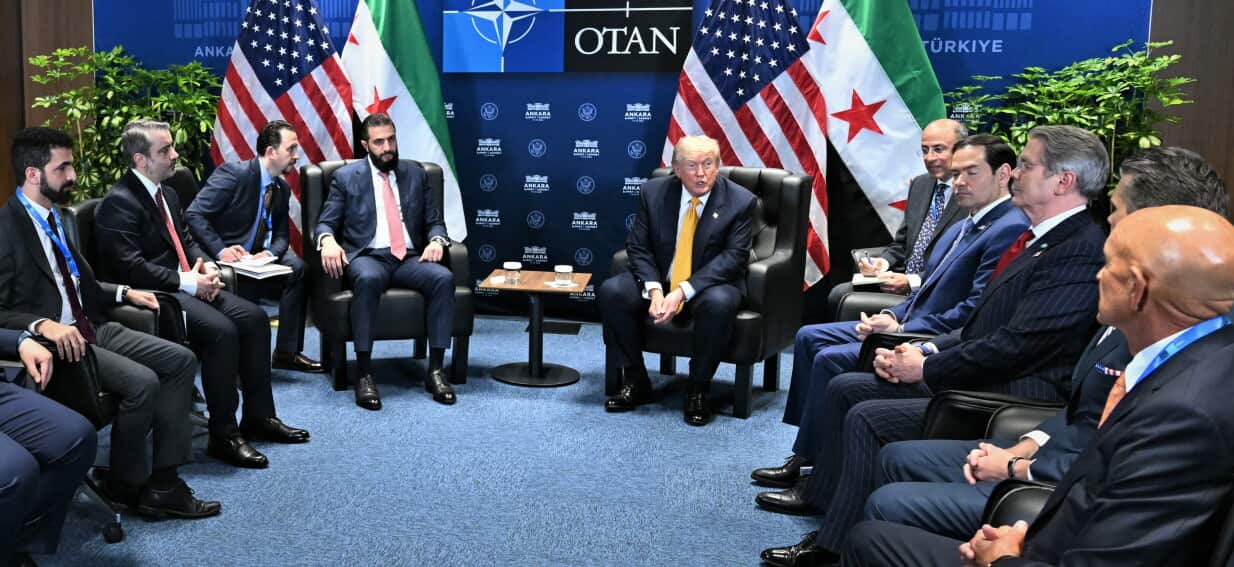
The political fallout is equally messy. Speaking from a NATO summit in Ankara, Turkey, Trump told reporters that as far as he is concerned, the tentative ceasefire is over and continuing talks is a waste of time. He even revived threats to seize Kharg Island or flatten civilian power grids if Iran keeps pushing.
UN Secretary-General António Guterres called the sudden escalation deeply alarming, warning that a return to full-scale war would have catastrophic consequences for the global economy. Meanwhile, Iranian officials are refusing to back down. Parliament Speaker Mohammad Bagher Qalibaf fired back on social media, stating that the era of bullying is over and that Iran will not fold under military pressure.
Your Next Steps to Protect Against Supply Chain Shocks
If your business or investment portfolio relies heavily on global logistics, energy commodities, or retail manufacturing, you can't afford to treat this as a distant geopolitical event. The situation is moving fast, and the ripple effects on fuel prices and shipping routes will hit bottom lines within weeks. Take these practical steps right now to insulate your operations.
- Audit Your Freight Exposure: Reach out to your logistics providers to verify if any of your incoming components or finished goods rely on transit routes through the Middle East or the Suez Canal. Prepare to pivot to alternative, overland, or multi-modal shipping options.
- Hedge Your Energy Costs: If you manage a fleet or run energy-intensive operations, talk to your financial advisors about locking in fuel prices or purchasing energy futures. The volatility in Brent crude isn't going away anytime soon.
- Build Inventory Buffers: Avoid relying purely on just-in-time supply chains for critical components. Increase your safety stock of essential materials by 15% to 20% to account for unpredictable transit delays and port congestion caused by regional security alerts.