The fragile truce in the Middle East just shattered completely. If you thought the ceasefire signed after the explosive opening months of the 2026 Iran war would hold, the latest updates from the Persian Gulf are a brutal reality check. United States Central Command just confirmed a series of powerful airstrikes hitting targets inside Iran, responding directly to a chaotic string of projectile attacks on commercial shipping vessels in the critical Strait of Hormuz.
We are right back where we started, and frankly, anyone watching closely saw this trainwreck coming.
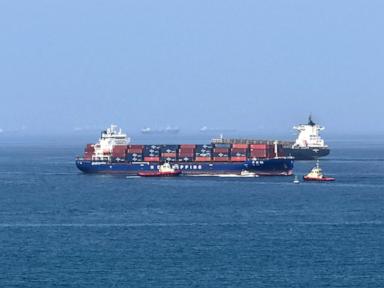
The immediate catalyst for this latest military escalation was the targeting of three commercial oil and liquefied natural gas tankers moving through the narrow waterway. Among the vessels struck was the Al Rekayyat, a Qatari LNG tanker, alongside a Saudi Arabian vessel. Iranian state television tried to play both sides, claiming one of the ships was targeted because it ignored direct warnings, while simultaneously avoiding a formal admission of direct state responsibility.
The response from Washington was swift and multi-pronged. Beyond the immediate deployment of fighter jets and ordnance, the U.S. government revoked a key license that had previously authorized limited Iranian oil sales. This move effectively reinstates a crushing economic blockade, cutting off a desperate revenue stream for a nation already reeling from months of devastating conflict.
The Illusion of a Controlled Ceasefire
Let's look at what is actually happening on the ground and why this ceasefire was always a mirage. When major combat operations kicked off back on February 28 under Operation Epic Fury, the joint U.S. and Israeli bombardment fundamentally altered the region. The death of Supreme Leader Ali Khamenei left a massive power vacuum, throwing the internal dynamics of the Iranian regime into absolute chaos.
Right now, thousands of people are filling the streets of Tehran. Outwardly, they are gathering for mass demonstrations and events linked to the late Supreme Leader. Inwardly, the regime is fighting a desperate internal civil war for its own survival.
When you look at these latest maritime attacks, you aren't seeing a unified state carrying out a calculated foreign policy strategy. You're seeing the messy, dangerous reality of competing factions inside Iran.
The civilian government and moderate elements within the Islamic Revolutionary Guard Corps want to salvage some kind of deal. They want the promised three hundred billion dollars in reconstruction funds. They desperately need sanction relief to prevent a complete domestic implosion. On the flip side, hardline factions within the military apparatus refuse to accept any deal that compromises their historic leverage over global trade.
The biggest win for Iran in this entire conflict has been its ability to squeeze the southern shipping routes. Hardliners know that if they give up control of the Strait of Hormuz, they give up their only remaining shield. They don't care about the economic consequences or the threat of renewed U.S. airstrikes because their entire identity relies on constant resistance.
Why the Southern Shipping Routes Are an Absolute Mess
The geography of the Strait of Hormuz makes it a perfect choke point. It handles roughly a fifth of the world's petroleum liquids. When the truce was initially discussed, there was a vague understanding that the shipping lanes would reopen. The problem is that the devil was always in the details.
Iran claims that the northern, deeper lanes of the strait are completely under its sovereign control. They expect international shipping vessels to adhere to their rules, pay their tolls, and follow their designated routing. When commercial vessels tried to bypass these zones by utilizing southern routes closer to Oman, the hardline factions viewed it as an existential threat to their maritime authority.
The British military's maritime tracking units reported that the three tankers were hit almost simultaneously by land-based or fast-attack boat projectiles. This wasn't an accident. It was a deliberate message sent to international shipping companies: if you don't play by our rules, you won't pass through here safely.
The immediate economic impact hit global markets within minutes. Stock futures dropped sharply following the news of the CENTCOM strikes, mirroring the panic we saw earlier this summer when an American Apache helicopter was downed. Traders hate uncertainty, and right now, the Persian Gulf is nothing but a giant question mark.
What the Airstrikes Actually Accomplish
Washington is trying to project absolute strength, but military experts know that aerial bombing campaigns have distinct limits. The Pentagon can send B-2 stealth bombers and F-35 squadrons to flatten air defense systems and radar installations, just like they did during Operation Midnight Hammer against the nuclear facilities in Natanz and Fordow. They can degrade the conventional military capability of the Iranian state, but they can't bomb an ideology out of existence.
The current strategy relies on the assumption that extreme military pressure will force the Iranian people to rise up and complete the process of regime change. It sounds clean on paper, but history shows it rarely works out that way. When foreign bombs start falling on cities, the immediate reaction of a population is often to rally around the flag, even if they despise the regime running the country.
The White House insists these new strikes are strictly defensive operations designed to protect free navigation in international waters. CENTCOM statements emphasize the "powerful" and targeted nature of the strikes, aiming to wipe out the specific missile batteries and drone launch pads used in the tanker attacks.
We have to acknowledge the legitimate opposing viewpoints here. Critics of the current administration argue that the U.S. never intended to let the diplomacy work. They point to the timing of these military actions, noting that strikes frequently occur right when international mediators, like the Omani foreign ministry, are attempting to broker lasting peace terms. The counterargument, of course, is that you can't negotiate a peace deal with a state that fires missiles at commercial civilian tankers while its diplomats are sitting at the table.
The Next Steps for Maritime Trade and Global Security
If you are looking for immediate actions or clear paths forward, the reality is stark. The shipping sector cannot simply wait for the dust to settle because global supply chains don't have a pause button.
First, commercial shipping lines are already rerouting their fleets. Tankers are being ordered to avoid the Persian Gulf entirely if they don't have absolute, ironclad security escorts. This means taking the long way around Africa, adding massive fuel costs and weeks of delay to global transit times. You can expect consumer prices for energy and manufacturing goods to spike over the next few weeks as a direct result.
Second, international coalition forces will have to transition from reactive strikes to an active, permanent convoy system. If the U.S. and its allies want to keep the Strait of Hormuz open, they can't just launch retaliatory bombings after a ship gets hit. They will have to physically place warships alongside every single commercial convoy moving through the gulf, creating a literal wall of steel.
The situation is incredibly volatile. With thousands of grieving and angry demonstrators filling the streets of Tehran, and U.S. jets still flying sorties over western Asia, the timeline for any real diplomatic solution has been pushed back by months, if not years. The ceasefire is dead in everything but name, and the region is bracing for whatever comes next.