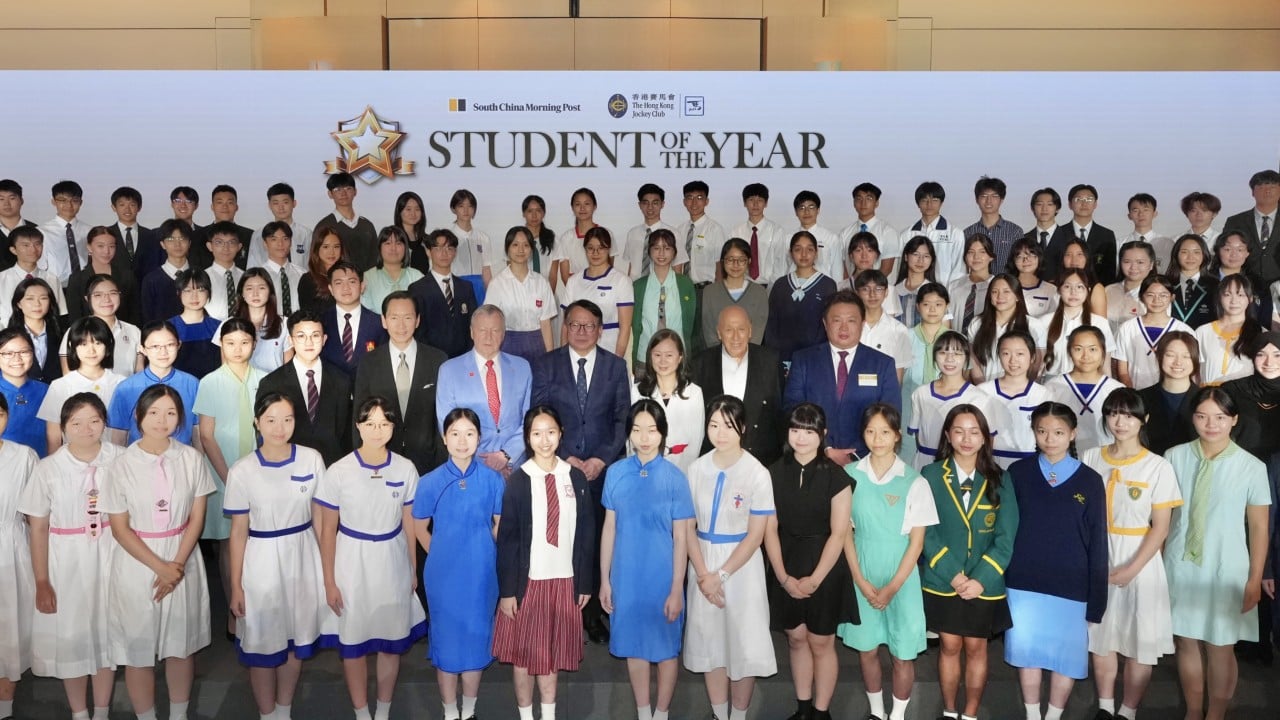
High grades don't cut it anymore. If you look at what it takes to stand out in Hong Kong schools today, the old playbook of memorizing textbooks and acing exams is officially dead. The recent Student of the Year Awards proved exactly that, showing a massive shift in what society actually expects from young people.
This year marked the 45th anniversary of the awards, an event run by the South China Morning Post and sponsored by the Hong Kong Jockey Club. They pulled in a record-breaking 900 nominations from 181 schools. Out of those, 40 students walked away with top honors at the Hong Kong Convention and Exhibition Centre. But if you think these kids just spent their lives staring at flashcards, you're dead wrong. The winners this year are running nonprofits, fighting chronic illnesses, and shifting the way we think about youth leadership.
The biggest news from the event wasn't just who won, though. The organizers dropped a bombshell about where the awards are heading next. Starting next year, they're introducing a category for artificial intelligence literacy and expanding the entire program into the Greater Bay Area. It's a clear signal that the definition of a model student is changing faster than the school curriculum can keep up.
The Shift From Exam Scores to Real World Impact
Look back at how this all started. When the awards launched in August 1973, things were simple. There was only one grand prize. The first winner, Tam Hin-cheung from Queen Elizabeth School, was an active sportsman and a volunteer lifesaver who won a week-long trip to Southeast Asia. Back then, being an outstanding student meant being a well-rounded kid who did some sports on the side.
Today, the expectations have skyrocketed. Take Jayden Tang, a Form Five student from Ying Wa College who took home this year's grand prize. He didn't get it just by keeping his GPA perfect. Tang founded an entire non-governmental organization and student-athlete platform called Health is Wealth. His group coordinates clothing drives and community outreach to support refugees and elderly residents across Hong Kong.
Think about that for a second. A teenager is managing logistics, organizing peers, and navigating the complex world of community service while prepping for university. He wants to study dentistry at the University of Hong Kong later, but he's already doing the heavy lifting of a civic leader right now.
This is the standard now. The education system has long been criticized for producing exam factories, but these awards show that the students themselves are breaking out of that mold. They aren't waiting for graduation to change things. They're doing it from their school desks.
True Resilience Looks Like This
We talk a lot about stress in Hong Kong schools. The pressure is real, and the workload can be crushing. But the story of Hailey Ting Tsz-kiu puts things into perspective. Ting, a Form Five student at Shatin Tsung Tsin Secondary School, won the Best Improvement award this year.
Her path wasn't just about pulling up lagging grades. She had to fight through stage two thyroid cancer and an ovarian tumor. While dealing with life-threatening health crises, she didn't step back. She kept taking on leadership roles at her school and pushing forward.
Honestly, it's easy to look at student awards and think they're just a vanity project for elite schools. But when you see someone like Ting show that level of grit, you realize these awards offer something deeper. They validate the quiet battles that students fight behind the scenes. It's not just about who has the cleanest resume, it's about who refused to quit when everything went wrong.
Why the Move into AI and the Greater Bay Area is Inevitable
The most tactical update from SCMP publisher Tammy Tam was the expansion plan. Adding an AI literacy category next year is a direct response to how kids actually learn and work today.
We are seeing a massive shift in how technology impacts classrooms. Students use AI to study, write code, and organize projects. But there's a dark side to it, like predatory algorithms and academic dishonesty. The new award category isn't just about celebrating tech geeks who know how to build a basic app. It's explicitly designed to reward responsible use of technology. It highlights digital ethics, meaning the city wants students who know how to think critically about data, not just consume it blindly.
Then there's the geographic expansion. Taking the awards into the Greater Bay Area aligns with the broader plan to make Hong Kong a regional talent hub. It means local students will soon compete with the brightest minds from Shenzhen, Guangzhou, and nine other cities.
Some parents might worry that this makes an already competitive environment even tougher. That's a fair point. But the reality is that the workforce these kids will enter doesn't care about borders anymore. Exposing students to a wider pool of talent early on forces them to build a global perspective. Chief Secretary Eric Chan Kwok-ki hit the nail on the head during his speech, stating that the vision requires the government, schools, and families to work together to build a foundation for youth to succeed on a larger stage.
Learning From the Alumni Who Built the City
The longevity of this program offers a unique look at how success plays out over decades. This year's 45th anniversary brought past winners back to the stage, and their career paths show that these early accolades aren't just a fluke.
Look at Raymond Young Lap-moon, who won the grand prize back in 1978 and went on to become the permanent secretary for home affairs. Look at Olympic swimmer Siobhan Haughey, who won the sportsperson category in 2013 and became the most decorated Olympian in Hong Kong history.
Dr. Chan Mui-tong, a general surgeon who won the grand prize in 1985 while studying at Ying Wa College, pointed out that the current crop of students is actually outperforming his generation. He openly admitted that today's winners perform much better than he did at their age.
When a successful surgeon tells you that today's kids are better equipped than he was, you should listen. The alumni network proves that the traits rewarded by these judges—integrity, curiosity, and a willingness to listen—are the exact traits that build lasting careers. Elise Liu, a 2016 performing artist winner and now an accomplished percussion soloist, told the crowd that investing in friendships and staying curious will take you much further than chasing money. It sounds like classic graduation advice, but the data points back it up.
What it Takes to Build a Standout Portfolio Today
If you're a student or a parent looking at these winners and wondering how to get on that stage, you need to change your strategy. The old method of filling a sheet with random extracurricular activities doesn't work. The judges see right through it.
First, focus on depth over breadth. Jayden Tang didn't just join five different clubs; he founded one meaningful organization and stuck with it. The judges want to see sustained commitment. They want to see that you encountered a problem in your community and actually tried to fix it.
Second, connect your passion to a broader societal need. If you love sports, don't just win medals. Figure out how sports can help marginalized communities, just like Tang did with his student-athlete platform. If you love science, look at how data can solve local environmental issues.
Third, prepare for the tech reality. With the AI literacy category opening up next year, start thinking about how you use digital tools responsibly. Learn the ethics of data. Understand how automation changes industries. If you can demonstrate that you use technology to solve human problems ethically, you're already ahead of 90 percent of your peers.
Stop worrying about being perfect on paper. The stories from this year's awards show that the judges value authenticity, resilience, and actionable leadership far more than a spotless report card.
Your Next Steps to Build Real Leadership
Don't wait for a school teacher to hand you a leadership title. Start building a track record of impact right now by following these steps.
Find one specific issue in your neighborhood or school that genuinely bothers you, whether it's food waste, elderly isolation, or a lack of peer tutoring.
Gather two or three classmates who share the same concern and design a simple, low-cost solution that you can execute over the next three months.
Document your results with real numbers, noting how many people you helped, how many items you collected, or how many hours you volunteered.
Learn the basics of digital tools and generative technology, focusing heavily on how to verify information and use data ethically in your school projects.



.jpg)