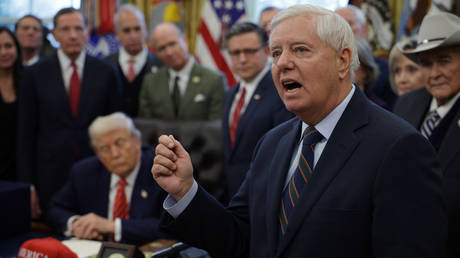
Washington just lost one of its most unpredictable operators. Senator Lindsey Graham of South Carolina has died at 71. His office confirmed early Sunday morning that he passed away on Saturday night, July 11, 2026, following a brief and sudden illness.
The news is a massive shock to the political system. Just days ago, Graham was in Kyiv meeting with Ukrainian President Volodymyr Zelenskyy, looking healthy and talking about a new round of economic pressure against Russia. Hours later, an emergency call for cardiac arrest went out to his residence. Now, he is gone.
You can love him or hate him—and millions of people did both—but you couldn't ignore him. Graham was a fixture in American politics for over three decades. He was a hawk who never met a military intervention he didn't like, a fierce defender of Israel, and a master at rewriting his own political identity whenever the winds shifted. His absence leaves a giant hole in the Senate, especially at a time when the Republican party is fiercely debating its own future direction.
From Trump Critic to Inner Circle Confidant
If you want to understand how American politics changed over the last decade, look no further than Graham's relationship with Donald Trump. It was a rollercoaster.
Back in 2016, Graham ran a brief presidential campaign. He didn't mince words. He called Trump a "jackass" and deemed him completely unfit for office. He swore he would never support him. When Trump made disparaging comments about John McCain—Graham's closest friend in the Senate—Graham blasted him using heavy profanity.
Then, everything flipped.
Within a couple of years, Graham became Trump's regular golf partner and one of his fiercest defenders in Congress. He went from a leading voice of the old-school Republican establishment to the guy whispering foreign policy advice into the president's ear on Air Force One.
A lot of political analysts called it rank opportunism. Critics accused him of sacrificing his principles just to stay close to power. But if you look at how Graham operated, it was a deliberate strategy. He realized early on that Trump wasn't a temporary blip for the GOP; he was the new reality. Graham knew that if he wanted to keep influencing American foreign policy, he had to have a seat at the table. So, he bought a ticket for the train.
Trump paid tribute to him early Sunday, calling him a true patriot and noting that he was always working. That tells you everything about how successful Graham was at reshaping his bond with the head of his party. He made himself indispensable.
The Last of the True Foreign Policy Hawks
Graham was an old-school cold warrior who believed American military might should be used to enforce global order. That view used to be the default setting for the Republican party, but the rise of the America First movement changed the game. Suddenly, Graham found himself fighting a two-front war: one against foreign adversaries and another against isolationists inside his own tent.
Consider his relentless backing of Ukraine. While a growing wing of his party wanted to cut off aid to Kyiv, Graham was packing his bags and flying into a war zone. He visited Ukraine 10 times after the Russian invasion began. Zelenskyy noted that Graham was always there when it mattered most. He was literally staying at the Hilton in Kyiv this week, hammering out a sanctions package with Congressman Michael McCaul.
His commitment to Israel was even stronger. Israeli Prime Minister Benjamin Netanyahu mourned him as a beloved personal friend and a great patriot. Graham believed that the security of Israel and the United States was entirely linked. Whenever Israel faced intense international scrutiny, Graham was the loudest voice on Capitol Hill telling the critics to back off.
With Graham gone, the isolationist wing of the GOP has one less massive obstacle in its way. There aren't many senators left who are willing to buck public opinion to vote for billions in foreign military assistance. His passing will likely accelerate the party's shift toward domestic isolationism.
The Senate Power Vacuum and the Budget Fight
Graham wasn't just a talking head on Sunday morning news shows; he held real institutional power. He was serving as the Chairman of the Senate Budget Committee.
In a Senate where Republicans hold a razor-thin majority, that chairmanship is everything. The Budget Committee controls the reconciliation process—the exact legislative mechanism that allows a party to pass major tax laws and spending cuts with a simple majority, completely bypassing a Democratic filibuster. Graham was the point man directing those legislative fights.
His death throws a wrench into the current legislative calendar. Republicans were right in the middle of pushing through key pieces of their domestic agenda, and now they have to pause to figure out who takes the gavel. Senate Majority Leader John Thune is facing a chaotic week trying to keep the caucus together while managing the fallout.
On top of that, Graham was actually up for re-election this November. He was trying to secure a fifth term in the Senate. Interestingly, he wasn't having an easy ride. He was facing a serious primary challenge from Paul Dans, a key figure behind Project 2025. That primary contest was exposing the deep, bitter fractures within the modern conservative movement. Now, that primary race is irrelevant, and the entire political map of South Carolina is reset.
What Happens to His Seat Now
The immediate question is who takes over his spot representing South Carolina.
According to state law, South Carolina Governor Henry McMaster has the power to appoint an interim senator to fill the vacancy. That appointee will hold the seat until a special election can be organized to determine who finishes out the remainder of the term, or in this case, who takes over for the upcoming election cycle.
McMaster is a staunch conservative, so there is no danger of the seat flipping to a Democrat in the short term. But the selection process will spark an absolute civil war within the state's Republican party.
Every ambitious politician in South Carolina is going to be eyeing that phone call. Will McMaster choose a traditional conservative who aligns with Graham's internationalist approach, or will he bow to pressure from the grassroots populist wing and appoint someone who rejects Graham's worldview entirely? Whichever way he goes, it will signal where the state's political center of gravity truly lies.
Actionable Next Steps for Political Observers
The next 72 hours will determine how Washington adapts to this unexpected loss. If you are tracking the political and financial implications of Graham's passing, here is what you need to watch immediately.
- Monitor the Senate Budget Committee assignment: Keep a close eye on who John Thune selects to replace Graham as chair. If a hardline fiscal hawk takes the seat, expect upcoming budget reconciliation bills to become far more aggressive on spending cuts, potentially rattling markets.
- Watch the South Carolina gubernatorial announcements: Governor McMaster will likely make an interim appointment quickly to avoid leaving the seat empty during crucial votes. Look at the appointee's background. An isolationist pick will confirm that the old Guard GOP is officially dead in the South.
- Track the foreign aid debate: Keep tabs on the pending Russia sanctions bill that Graham was working on just before his death. Without his personal leadership and deal-making skills, that package could easily stall or get watered down in committee.
The era of the old Republican foreign policy consensus didn't end when John McCain died, but with Lindsey Graham's passing, it feels like the door has finally shut for good. Washington is moving into a much more protectionist, fractured future, and the fight to fill the void he left behind starts right now.