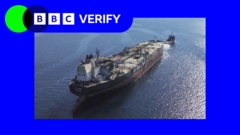
Imagine steering a supertanker packed with two million barrels of Saudi crude oil through the Red Sea. Suddenly, your communications console flashes a direct warning. Turn back immediately, or face missile strikes.
That isn't a plot point from a political thriller. It happened over the last 48 hours to multiple commercial vessels.
At least seven major oil tankers and cargo ships have spun around mid-transit in the Red Sea and Gulf of Aden. Ships like the Xin Long Yang, the Rodos, and the Amazon executed sharp U-turns, switched off their AIS transponders, and pointed their bows toward the Suez Canal or safer open ocean.
Why? Yemen's Houthi rebels officially declared a naval blockade against Saudi Arabia. In emails sent directly to shipping operators, the group warned that any vessel loading or discharging cargo at Saudi ports is a target.
If you think this is just another brief flare-up in the Middle East, think again. This single move threatens to snap the back of the global oil trade.
The Supply Chain Trap Nobody Prepared For
To understand why these ship reversals are sending shockwaves through energy markets, you have to look at the map.
For months, the Strait of Hormuz—the world's most critical oil transit route—has been practically shut down due to intense hostilities between the US, Israel, and Iran. That closure cut off roughly 10 percent of the world's oil supply almost overnight.
Saudi Arabia thought it had a bulletproof backup plan.
The kingdom built a massive East-West pipeline that transports millions of barrels of crude across the desert to Yanbu, a major terminal port on the Red Sea. From Yanbu, tankers could safely load up and sail south through the Bab el-Mandeb Strait, delivering oil to thirsty markets in China, India, and Europe.
It worked. Until now.
By threatening Yanbu and forcing tankers to abandon the Bab el-Mandeb Strait, the Houthis just shut the backdoor. Maritime security experts at Windward call it a double-ended pincer movement. Iran chokes the eastern route through Hormuz, while its proxy in Yemen chokes the western route through the Red Sea.
Saudi Arabia's relief valve is stuck shut.
What Actually Happened On The Water
Let's look at the actual ship movements from maritime tracking data provided by Kpler and Lloyd's List.
The Xin Long Yang, a massive Very Large Crude Carrier operated by China's Cosco Shipping, had just loaded two million barrels of crude at Yanbu. It was cruising south toward Asia. Suddenly, on Tuesday morning, it halted near the border of Yemeni waters, executed a complete turnaround, and headed back north.
The Rodos and the Amazon, both managed by Greece's Dynacom Tankers, were carrying hundreds of thousands of barrels of Saudi crude destined for India. Both ships aborted their southward journeys, flipped around, and redirected toward the Suez Canal.
It isn't just oil tankers taking hit after hit.
The Liu Jiang Kou, a specialized vehicle carrier operated by Cosco, was heading into the Red Sea toward Jeddah. The Houthi-run Humanitarian Operations Coordination Center sent a stark email directly to the ship's operator stating its transit clearance was revoked. The email warned that continuing would result in targeting anywhere within reach of Yemeni weapons. The ship turned around immediately.
Other vessels, like the Hong Kong-flagged New Prime and the Indian tanker Desh Viraat, pulled similar maneuvers in the Arabian Sea before even reaching the narrow strait.
Most of these vessels turned off their location transponders shortly after making their turns. Darkness on the tracking screens means high anxiety in the boardrooms of London and Houston.
Why Chinese And Neutral Vessels Aren't Safe
Many market watchers assumed Chinese-owned or Greek-managed vessels would enjoy safe passage. After all, Beijing has maintained diplomatic ties with Tehran, and Houthis have previously signaled they wouldn't target neutral nation shipping.
That assumption was dead wrong.
The Houthis aren't targeting ships based on vessel ownership right now. They're targeting cargo and destination. The warning sent out to maritime companies specifically bans any vessel from interacting with Saudi Arabian ports.
If a ship touches a dock in Yanbu or Jeddah, its flag state won't save it. That realization forced Chinese shipping giant Cosco and several European fleet owners to pull their hulls out of harm's way immediately.
The Brutal Math Of Longer Voyage Routes
When a tanker carrying crude to Asia can't use the Bab el-Mandeb Strait, what happens next?
The options are bad and expensive.
Option one is sailing north through the Suez Canal, entering the Mediterranean, heading past Gibraltar, and sailing all the way around the entire continent of Africa. That detour adds thousands of nautical miles and two to three weeks of extra travel time to every single journey.
Option two is doing the long loop around Africa right from the start.
Both options tie up oil tankers for much longer periods. When ships spend weeks longer at sea, the global supply of available tankers dries up. Tanker charter rates skyrocket. War-risk insurance premiums shoot through the roof.
Who pays for that extra cost? You do, at the gas pump.
Brent crude crude prices quickly jumped past $80 per barrel following the U-turns. Energy analysts at Pickering Energy Partners warn that if this Red Sea blockade holds, crude could easily push past $100 per barrel.
What Needs To Happen Next
If you manage logistics, trade energy, or operate a fleet, sitting on your hands isn't an option. Here are the immediate steps industry leaders are taking to survive this shock.
Reroute Volumes To European Customers
If crude is already stuck at Yanbu on the Red Sea, sending it north through the Suez Canal to Europe makes far more economic sense than shipping it all the way around Africa to Asia. Expect Saudi Aramco to swap supply contracts, sending Red Sea crude west to Mediterranean buyers while trying to satisfy Asian contracts from other sources.
Secure Long-Term Tanker Charters Immediately
Spot rates for crude carriers are about to spike sharply. Fleet charterers who haven't secured long-term tonnage agreements need to lock in rates now before shipping lines pass on insurance surcharges and fuel penalties.
Factor In Mandatory War-Risk Surcharges
Insurance underwriters are actively adjusting risk zones around the Bab el-Mandeb Strait and the southern Red Sea. Operating in these waters requires specialized war-risk coverage, which can add tens of thousands of dollars per day to vessel operating costs.
Prepare For Extended Transit Windows
Supply chains relying on energy or manufacturing inputs passing through the Middle East must adjust lead times upward by at least 15 to 21 days. Inventory buffers need to expand now to avoid sudden factory shutdowns in downstream markets.