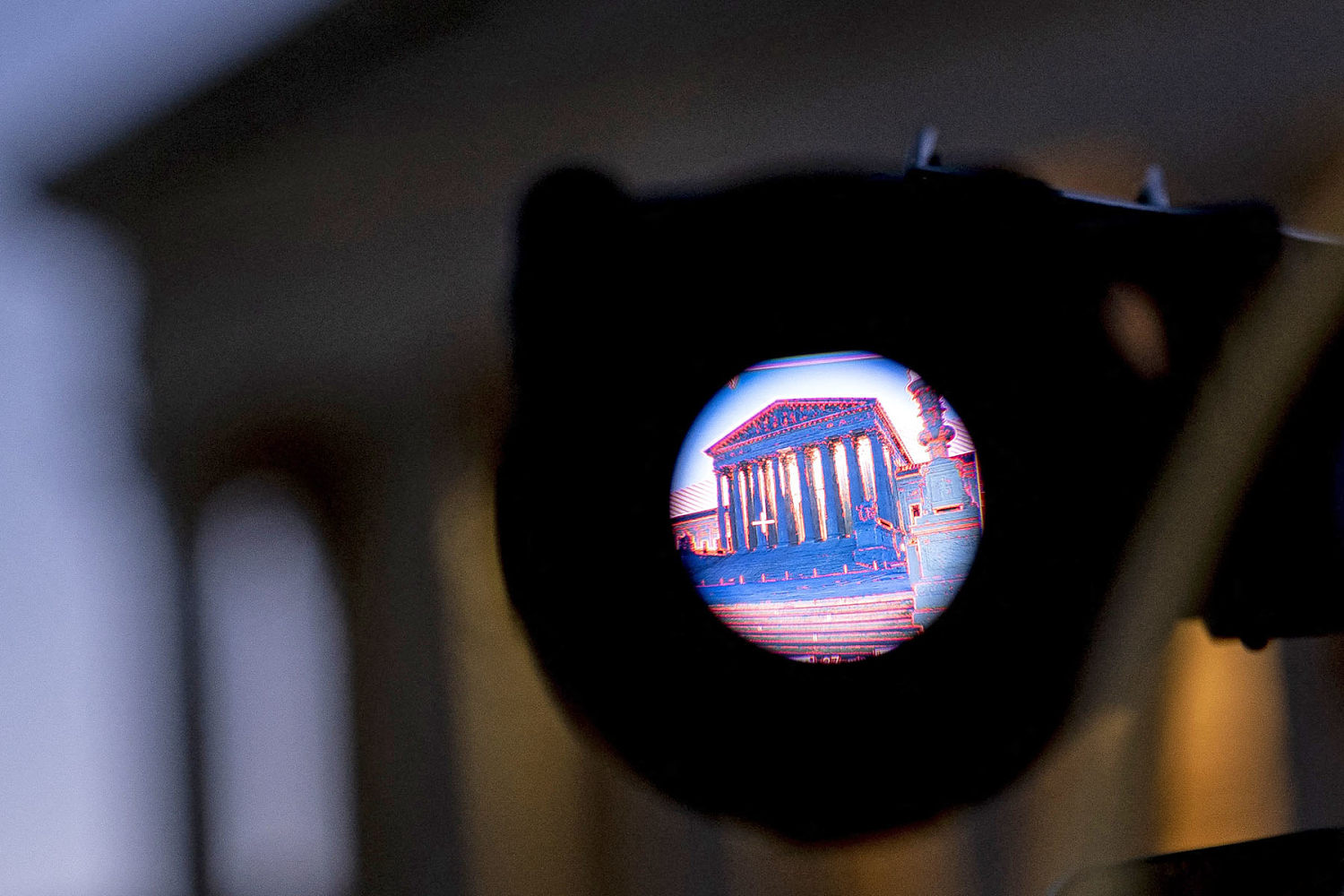
Campaign advertising is an expensive game. When the Supreme Court steps into a battle over broadcast pricing right before an election cycle, millions of dollars hang in the balance.
An 8-1 emergency decision by the high court recently blocked a lower court ruling, handing a massive temporary victory to Republican campaign committees. The core issue revolves around television and radio ad discounts. Federal law guarantees that legally qualified candidates can buy broadcast ad time at the "lowest unit charge" during the weeks leading up to an election. Broadcasters cannot charge candidates more than their best corporate rates.
But what happens when political parties buy ads in coordination with those candidates? That question triggered a fierce legal scramble.
The FCC Guidance That Started a Firestorm
Back in March, the Federal Communications Commission's Media Bureau issued a public notice with a major twist. The agency reminded broadcasters that these rock-bottom ad rates shouldn't apply only to individual candidate committees. Instead, the guidance extended the lowest unit charge benefit to political party committees and joint fundraising operations running coordinated advertisements.
For national committees like the National Republican Congressional Committee and the National Republican Senatorial Committee, this was a windfall. It meant they could stretch tens of millions of dollars much further across television and radio networks.
Democrats hated it. Several Democratic congressional candidates—including figures like North Carolina's Roy Cooper—pushed back hard. They argued that the Communications Act strictly reserves those special discount rates for candidates alone, and claimed the FCC overstepped its legal boundaries by expanding the perk to political parties.
The Appeals Court Shuts It Down
The legal battle accelerated quickly. In late August, the Fourth Circuit Court of Appeals sided with the Democratic candidates in a 2-1 decision. The court struck down the FCC's guidance, ruling that political parties had no business grabbing candidate-only discount rates.
Local TV and radio stations immediately began scrambling. Broadcasters started rescinding contracts and jacking prices back up for party-backed spots.
Republicans panicked. Committees had already locked in massive media buys based on the FCC's original March notice. Facing an immediate financial squeeze as the crucial 60-day general election window opened, GOP campaign lawyers sprinted to the Supreme Court for emergency intervention.
Why the Supreme Court Intervened
The Supreme Court didn't waste time. In a per curiam opinion, the justices voted 8-1 to issue a stay blocking the Fourth Circuit's mandate, reinstating the FCC's policy for the immediate future.
The justices pointed out a practical reality: if the lower court ruling stayed in place, Republican committees would suffer irreparable harm. Broadcasters were already tearing up contracts, forcing campaigns to pay drastically higher prices and severely limiting their ability to reach voters.
Justice Ketanji Brown Jackson stood alone in dissent, arguing that the underlying lawsuit was valid because federal agencies shouldn't be allowed to stonewall judicial review through bureaucratic delay.
What This Means for Future Elections
This emergency stay keeps the FCC’s expanded discount framework alive while the underlying litigation crawls forward. It highlights a recurring truth in modern American politics: campaign finance rules are constantly weaponized through administrative guidance and emergency appeals.
When national party committees can pool resources and access candidate-level advertising discounts, financial power shifts. Parties that excel at central fundraising gain a distinct tactical edge on the airwaves.
Keep an eye on how broadcasters adapt over the coming weeks. Stations are caught in the middle of a shifting regulatory maze, trying to honor complex ad contracts while federal courts and agencies play tug-of-war over who qualifies for a discount. Expect more legal challenges before any permanent settlement is reached.


